 English
 Lietuvių
 Latviešu
 Eesti
 Polski
 Русский
 Українська
 Deutsch
 Nederlands
 Čeština
 Slovenčina
 Svenska
 Norsk
 Dansk
 Suomi


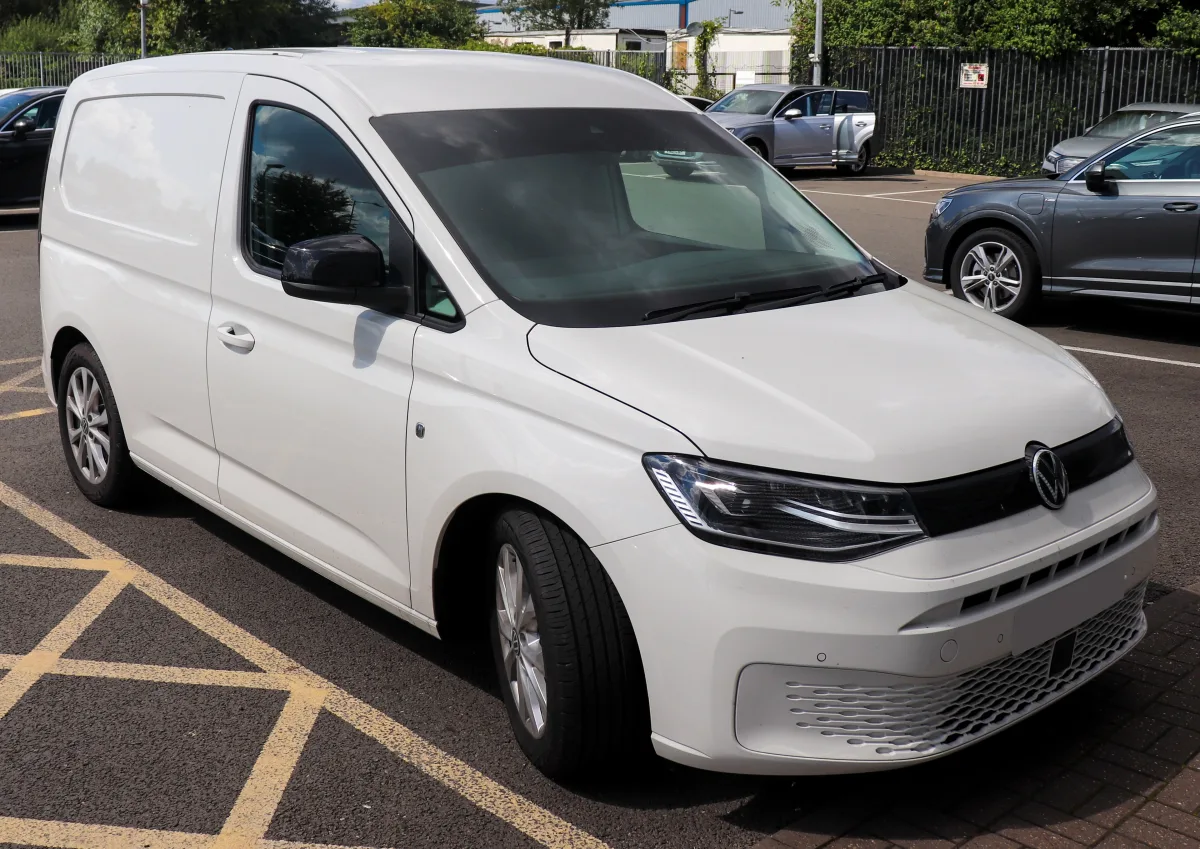
Volkswagen Caddy: III, IV and V generations, engines and trims
The Volkswagen Caddy is a compact van and people carrier, popular with both businesses and families. We look at how the III, IV and V generations differ, which engines are most common, how the versions vary and what to check when buying a used Caddy.






Caddy in brief
In the used market, you'll mostly find III generation (2003–2015), refreshed IV generation (2015–2020) and the latest V generation (from 2020) Caddys. Each generation is offered as a cargo van and people carrier with rear seats, while the longer Maxi version accommodates more cargo or up to 7 passengers.
The Caddy is praised for its practicality, sliding side doors and car-like driving experience. Since it shares many components with other Volkswagen models, spare parts and experienced mechanics are plentiful.
III, IV and V generation — how they differ
The III generation is the cheapest and most basic Caddy, but most cars are now old and often hard-worked. The 2010 facelift brought a new front end and more modern common-rail diesel engines.
The IV generation (2015–2020) is technically close to the III generation but features a more modern look, a better-equipped interior, more safety systems and more economical engines. It's a good compromise between price and modernity.
The fifth generation (from 2020) is built on the MQB platform, just like the Golf VIII. It's wider, quieter, features a digital cockpit, and comes with a host of driver-assistance systems, offering a more comfortable ride than its predecessors. This is the priciest Caddy, but it's also the closest to being a true compact car.
Engines and transmissions
In the third generation, the 1.9 TDI was common, later joined by the 1.6 and 2.0 TDI diesel engines, as well as the 1.2 TSI petrol engine. The fourth generation primarily featured the 2.0 TDI (around 75–150 HP), 1.0 and 1.4 TSI petrol engines, and there were also TGI versions powered by natural gas.
The fifth generation offers 2.0 TDI diesel engines (around 75–122 HP), a 1.5 TSI petrol engine, and TGI gas engines; later, a plug-in hybrid eHybrid was introduced. Most cars come with a manual transmission, but DSG versions are also available.
Four-wheel drive 4Motion was offered with more powerful diesel engines—such Caddy models are rare but handy for driving on rough roads.
What to check when buying a used Caddy
Many Caddys were used as workhorses, so check the service history and maintenance records. Inspect the cargo area floor and walls, the tailgate, the twin rear doors, and the rear suspension—these often show signs of wear from heavy use.
For diesel cars, check the diesel particulate filter (DPF), the EGR valve, and for newer models, the AdBlue system. The DSG transmission should shift smoothly, and early 1.2 TSI engines were known for timing chain issues.
Check the sliding doors — their runners and locks often wear out. Inspect the body of older third-generation cars for rust in the wheel arches, sills, and door bottoms.


Versions and trims
Names and equipment vary by market and year; we list the most commonly found Caddy versions in Europe.
Furgonas (Kasten / Cargo)
All generationsCargo version without rear seats.
- Separate cargo area
- Often — one or two sliding doors
- At the rear — liftgate or double-hinged doors
Trendline
Fourth generationBase passenger Caddy trim.
- Often — steel wheels
- Often — manual air conditioning
- Simpler multimedia system
Comfortline
Fourth generationThe most popular passenger Caddy choice.
- Often — light-alloy wheels
- Often — automatic climate control and parking sensors
- More cubbyholes and more comfortable seats
Life
V generationThe base V generation passenger configuration.
- Digital cabin and more modern multimedia
- Often — light-alloy wheels
- Often — adaptive cruise control
Style
V generationThe best-equipped V generation version.
- Higher-class interior trim
- Often — LED headlights
- Often — larger multimedia screen
Maxi
All generationsLonger version with a larger cargo area.
- More space for cargo or luggage
- The passenger version — often with 7 seats
- Available as both a van and a passenger variant
Comparison of versions
| Furgonas (IV) | Comfortline (IV) | Life (V) | Style (V) | |
|---|---|---|---|---|
| Who's it for? | Work and cargo | Family and daily use | Modern family car | More comfort |
| Alloy wheels (most common) | Steel | Often light alloy | Often light alloy | Light alloy |
| Interior | Two seats, cargo area | Five or seven seats | Five or seven seats, digital | Five or seven seats, plusher trim |
| Engine | Most commonly 2.0 TDI | 2.0 TDI, TSI | 2.0 TDI, 1.5 TSI | 2.0 TDI, 1.5 TSI |
| Price in the used market (relatively) | Budget-friendly | Budget-friendly | Mid-range | Premium |
For most buyers, the best choice is the fourth-gen Caddy with the 2.0 TDI engine: it's practical and affordable. The fifth-gen is worth considering if comfort and modern features are key.
Pros
- Practical interior and sliding doors
- Economical diesel engines
- Wide range and choice of spare parts
- Drives much like a regular car
Cons
- Many high-mileage vehicles
- Often pricier than rivals in the used market
- The base model's interior is basic and noisier
Frequently asked questions
What's the difference between the Caddy and the Caddy Maxi?
The Caddy Maxi is the longer version: the van can carry more cargo, while the people carrier variant can accommodate a third row of seats and transport up to 7 people. The tech and trim levels are essentially the same.
Is the Caddy a good family car?
Yes, the people carrier Caddy is a practical family car: the sliding doors make it easy to park in tight spots, and the boot is spacious. Look for a people carrier variant with rear windows and seats, rather than a converted van.
Which Caddy engine is the best?
Most often, the 2.0 TDI diesel is the most sensible choice, especially if you do a lot of out-of-town driving or carry cargo. For city driving, consider the petrol TSI, as the diesel particulate filter needs longer journeys.
Updated 2026-10-09 · Trim levels and equipment vary by market and model year — check the equipment of the specific car. · Translated automatically


