 English
 Lietuvių
 Latviešu
 Eesti
 Polski
 Русский
 Українська
 Deutsch
 Nederlands
 Čeština
 Slovenčina
 Svenska
 Norsk
 Dansk
 Suomi


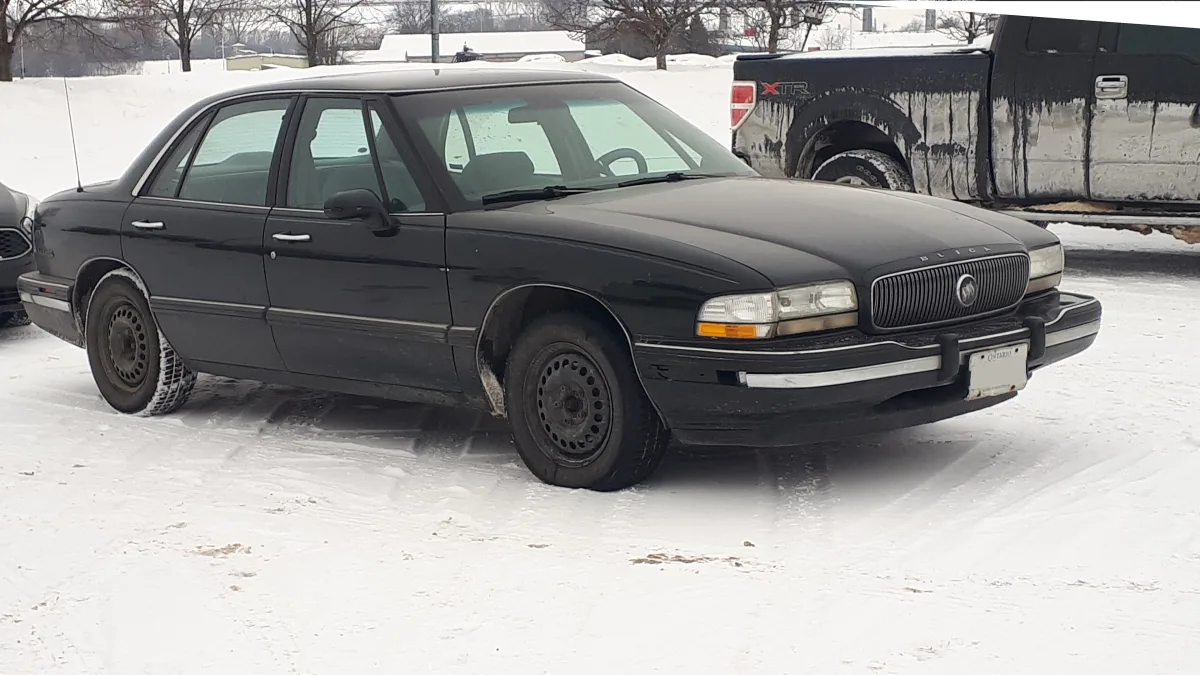
Buick LeSabre: generations, engines and what to know when buying from the USA
The Buick LeSabre is a large front-wheel-drive American sedan renowned for its comfort and space over many years. In this article, we look at the latest generations, engines, and what to check if you're considering this car in Lithuania.






LeSabre in brief
The LeSabre is Buick's full-size sedan, produced from 1959 to 2005. The latest generation, from 1992 onwards, features front-wheel-drive sedans with spacious interiors and a smooth ride, prioritising comfort above all.
In Lithuania, the LeSabre is often imported from the USA, so the equipment and trim names reflect the US market. It's not your everyday European-style car—it's large, less manoeuvrable, and thirsty.
Which generation to choose
The 1992–1999 generation stands out with its rounded shapes and simple technology. It's an affordable, spacious option, but most cars are old, so the technical condition is crucial.
The 2000–2005 generation is newer and safer, with a more modern interior. Choose a car with the best service history, as condition is more important than the generation.
Engines and transmissions
In the latest generations, the standard engine is the 3.8-litre V6 petrol unit. It's known for longevity if well-maintained and pairs well with a large, smooth sedan.
The transmission is automatic, with front-wheel drive. There was no manual option.
What to check when buying a used LeSabre
First and foremost — the automatic gearbox: it should shift smoothly, without judders or jolts. Ask for the service history, as repairs can be expensive.
The 3.8-litre engine is prone to coolant leaks from the intake manifold gaskets, so check for any signs of fluid and ensure the engine warning light isn't illuminated. Also, inspect the electric windows, power steering, suspension, and body for corrosion. For an imported car, it's essential to check the history and look for signs of accidents.


Trim levels
Names and equipment vary by market and year; we list the versions most commonly found in Europe.
Custom
1992–2005The base version with the 3.8-litre V6.
- 3.8-litre V6 engine
- Often — electric windows and mirrors
- Often — cloth seats
Limited
1992–2005The higher-spec version with more luxurious equipment.
- 3.8-litre V6 engine
- Often — leather seats
- Often — automatic climate control
Gran Touring
Around 1996–2005A sportier package with a firmer suspension.
- Firmer suspension
- Often — light alloy wheels
- Sportier seats
LeSabre trim comparison
| Custom | Limited | Gran Touring | |
|---|---|---|---|
| Who it's for | For everyday comfortable driving | For those seeking more comfort | For those who enjoy sportier driving |
| Engine | 3.8-litre V6 | 3.8-litre V6 | 3.8-litre V6 |
| Interior | Cloth, simpler trim | Often leather, more luxurious trim | Sportier seats |
| Price in the used market (relatively) | € | €€ | €€ |
The LeSabre is ideal for those who prioritise space and comfort. Choose based on technical condition, not just trim level.
Pros
- Very spacious and comfortable interior
- A reliable, high-mileage-capable V6 engine
- Smooth and quiet ride
- Often affordable considering its size
Cons
- Large and not very manoeuvrable, harder to park
- High fuel consumption
- Parts may need to be sourced from abroad
Frequently asked questions
Does the Buick LeSabre have a manual transmission?
No, the latest models only come with an automatic transmission.
What engine does the LeSabre have?
The latest models typically feature a 3.8-litre V6 petrol engine.
Is the LeSabre suitable for Lithuanian roads?
Yes, if the car is in good condition. However, its size, smooth ride, and fuel consumption are better suited to long, relaxed journeys than city driving.
Updated 2026-10-19 · Trim levels and equipment vary by market and model year — check the equipment of the specific car. · Translated automatically


