 English
 Lietuvių
 Latviešu
 Eesti
 Polski
 Русский
 Українська
 Deutsch
 Nederlands
 Čeština
 Slovenčina
 Svenska
 Norsk
 Dansk
 Suomi


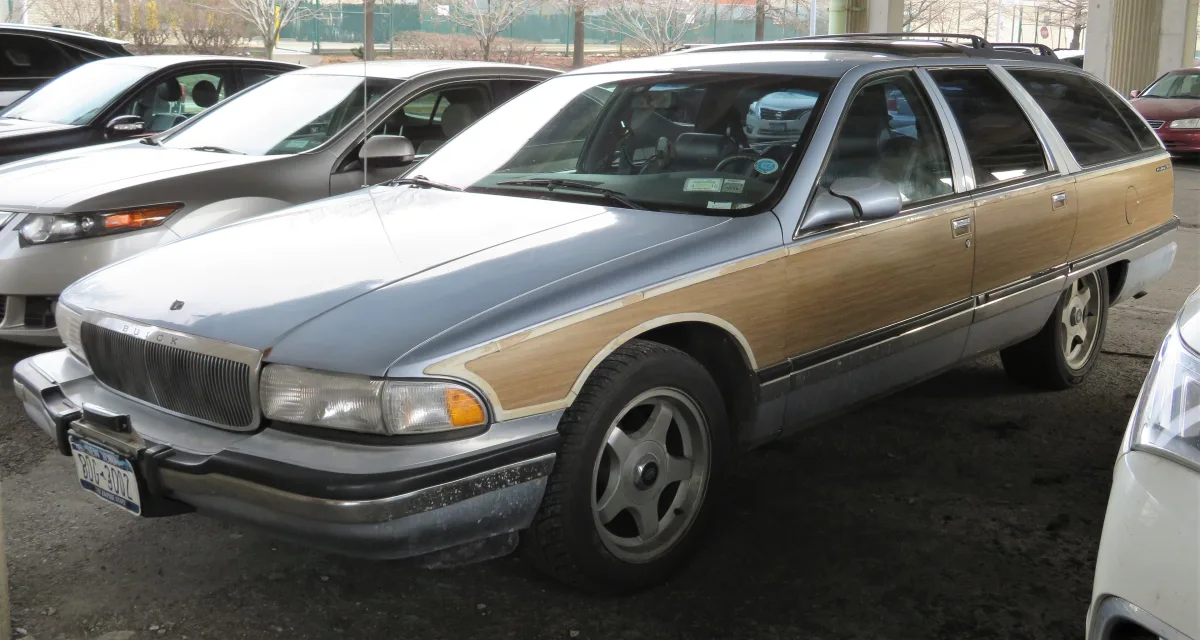
Buick Roadmaster 1991–1996: V8 sedan and Estate Wagon
Buick Roadmaster — a large American rear-wheel-drive sedan and station wagon, produced from 1991–1996. It's rare in Lithuania, usually imported from the USA. In this article, we'll look at the body styles, engines, and what to check before buying.






Roadmaster in brief
The Roadmaster is the last of the traditional big Buicks with rear-wheel drive and a separate frame. The name is older (1930–1950s Roadmaster), but in this article, we're talking about the 1991–1996 model.
It was offered as a four-door sedan and station wagon (Estate Wagon) with more space. It's a smooth, comfortable car for long journeys and hauling.
Which version to choose
The sedan is better for personal use, while the Estate Wagon is ideal for families and larger loads, as it has a big boot and often an extra rear seat.
Later models (1994–1996) are more sought after, as they have a more powerful engine and more modern features.
Engines and transmission
Early models had a smaller V8 (around 5.0 litres), later came the 5.7-litre V8. From 1994, the 5.7-litre LT1 V8 was used, with around 260 hp.
The transmission is a four-speed automatic, with rear-wheel drive. Due to its large size and V8 fuel consumption, it's quite thirsty.
What to check when buying a used Roadmaster
The LT1 engine's distributor (Opti-Spark) is well-known for issues if it gets wet or contaminated with oil. Ask for the service history and check if the engine runs smoothly.
Check the frame and body for rust, and inspect the suspension and brakes. Verify the import car's history, accidents, and mileage through US databases.
Check the electrical equipment — windows, seats, air conditioning — as some of it might be outdated.


Trim levels
Names and equipment vary by market and year; we list the versions most commonly found in Europe.
Roadmaster
1991–1996The base sedan version.
- V8 engine
- Rear-wheel drive
- Spacious interior
Limited
1992–1996The more luxurious version.
- Often — leather interior
- More comfort features
- Often — alloy wheels
Estate Wagon
1991–1996Estate with a large boot.
- Spacious boot
- Often features wood-effect side trim
- Ideal for families
Comparing versions
| Roadmaster | Limited | Estate Wagon | |
|---|---|---|---|
| Who it's for | Smooth daily driving | Comfort and luxury | Families and cargo |
| Body style | Saloon | Saloon | Estate |
| Engine | V8 | V8 | V8 |
| Price in the used market (relatively) | € | €€ | €€ |
Many buyers are after a tidy late-model sedan or estate with a known history. The key is the condition of the engine and gearbox.
Pros
- Spacious, comfortable interior
- Rear-wheel drive and a powerful V8
- Practical Estate Wagon variant
- Robust body construction
Cons
- High fuel consumption
- Not officially sold in Europe, parts harder to find
- May have issues with outdated electrical systems
Frequently asked questions
What engines did the Roadmaster have?
Early models had around a 5.0-litre V8, later a 5.7-litre V8, and from 1994 the 260hp LT1.
Was the Roadmaster sold in Europe?
Officially, no. Cars found in Lithuania are usually imported from the USA.
How do the sedan and Estate Wagon differ?
The Estate Wagon is an estate with a larger boot, while the sedan has a conventional boot.
Updated 2026-10-21 · Trim levels and equipment vary by market and model year — check the equipment of the specific car. · Translated automatically


