 English
 Lietuvių
 Latviešu
 Eesti
 Polski
 Русский
 Українська
 Deutsch
 Nederlands
 Čeština
 Slovenčina
 Svenska
 Norsk
 Dansk
 Suomi


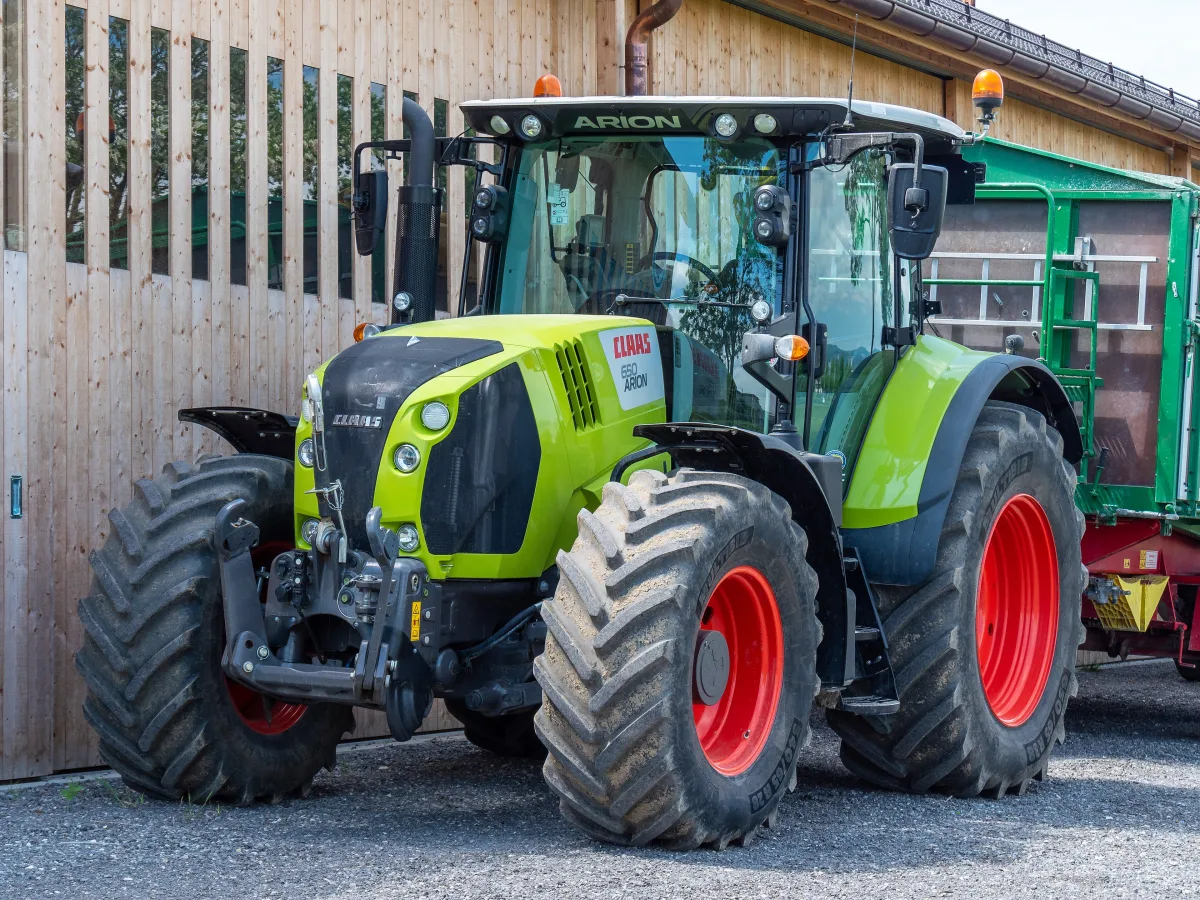
Claas Arion: 400, 500 and 600 series tractors, engines and what to check
Claas Arion — versatile mid-range tractors, produced since 2002. We look at the Arion 400, 500 and 600 series, engines, transmissions and what to check when buying a used Arion.






Arion in brief
Claas Arion — versatile tractors from the German manufacturer, designed for crop cultivation, forage preparation and loader work. Nominal power, depending on the series, ranges from around 90 to over 200 HP.
The Arion is valued for its ease of use, good visibility and relatively affordable price in the used market. Often chosen in farms where Claas technology is already in use.
Series
The Arion 400 is a lower-power tractor (around 90 to 140 HP), suited to smaller farms and loader work. The Arion 500 is mid-range, while the Arion 600 is a high-power tractor for universal tasks.
Over time, the series has been updated several times, so engine emissions standards and cab designs differ. Therefore, before purchasing, it's essential to determine the exact model year and production date.
Engines and transmissions
Arion engines are four or six-cylinder diesels (Perkins or FPT), meeting various Stage standards. Newer models use SCR technology with AdBlue.
Transmissions are semi-automatic stepped (Quadrishift, Hexashift) and stepless CMATIC. Choice depends on the series and trim level.
What to check when buying a used Arion
Check the engine hours, oil and coolant leaks, turbocharger, SCR/AdBlue system, and hydraulic operation. Ask for the service history.
Check the gearbox shifts, clutch, front and rear axle play, lifting mechanism, and cabin electronics. Inspect the wheels, load-securing points, and body.


Versions and trims
Names and equipment vary by market and year of production; we list the versions most commonly found in Europe.
Arion 400
from 2002 onwards and later generationsLower-powered tractors for farms and work with a loader.
- Often — Quadrishift gearbox
- Often — simpler cabin
- Lower price in the used market
Arion 500
later generationsMedium-powered versatile tractors.
- Often — Hexashift gearbox
- Often — comfortable cabin
- Often — more hydraulic options
Arion 600
later generationsHigh-powered tractors for versatile work.
- Often — Hexashift or CMATIC gearbox
- Often — comfortable cabin
- Often — enhanced electronics
Arion su CMATIC
Later yearsSmooth gear changes with a seamless gearbox.
- Seamless gearbox
- Often — automatic working mode
- Costlier maintenance
Arion series comparison
| Arion 400 | Arion 500 | Arion 600 | |
|---|---|---|---|
| Who it's for | Small and medium-sized farms | Versatile work | Larger farms |
| Power | Around 90–140 HP | Average | Larger |
| Transmission | Manual | Semi-automatic | Semi-automatic or CVT |
| Price in the used market (relatively) | € | €€ | €€€ |
The Arion 400 is great for smaller operations, the Arion 500 for versatile work, and the Arion 600 for larger tasks. Always check the service history.
Pros
- Easy to handle with a good view of the field
- Affordable in the used market
- Wide range of models and power options
- Reliable mechanics
Cons
- Smaller service network than John Deere or New Holland
- Newer models feature more complex electronics
- A significant difference in models between generations can be confusing
Frequently asked questions
What sets the Arion 400, 500, and 600 apart?
The power and trim levels differ: the 400 series has lower power, the 500 has mid-range, and the 600 has higher. Higher series offer more comfort and electronics.
Which gearbox should you choose for the Arion?
Quadrishift and Hexashift are semi-automatic and proven. CMATIC is automatic, more convenient, but pricier to maintain.
Is the Arion suitable for towing a trailer?
Yes, especially the Arion 400 and 500 series. Before buying, check the front axle and trailer hitch points.
Updated 2026-10-21 · Trim levels and equipment vary by market and model year — check the equipment of the specific car. · Translated automatically


