 English
 Lietuvių
 Latviešu
 Eesti
 Polski
 Русский
 Українська
 Deutsch
 Nederlands
 Čeština
 Slovenčina
 Svenska
 Norsk
 Dansk
 Suomi


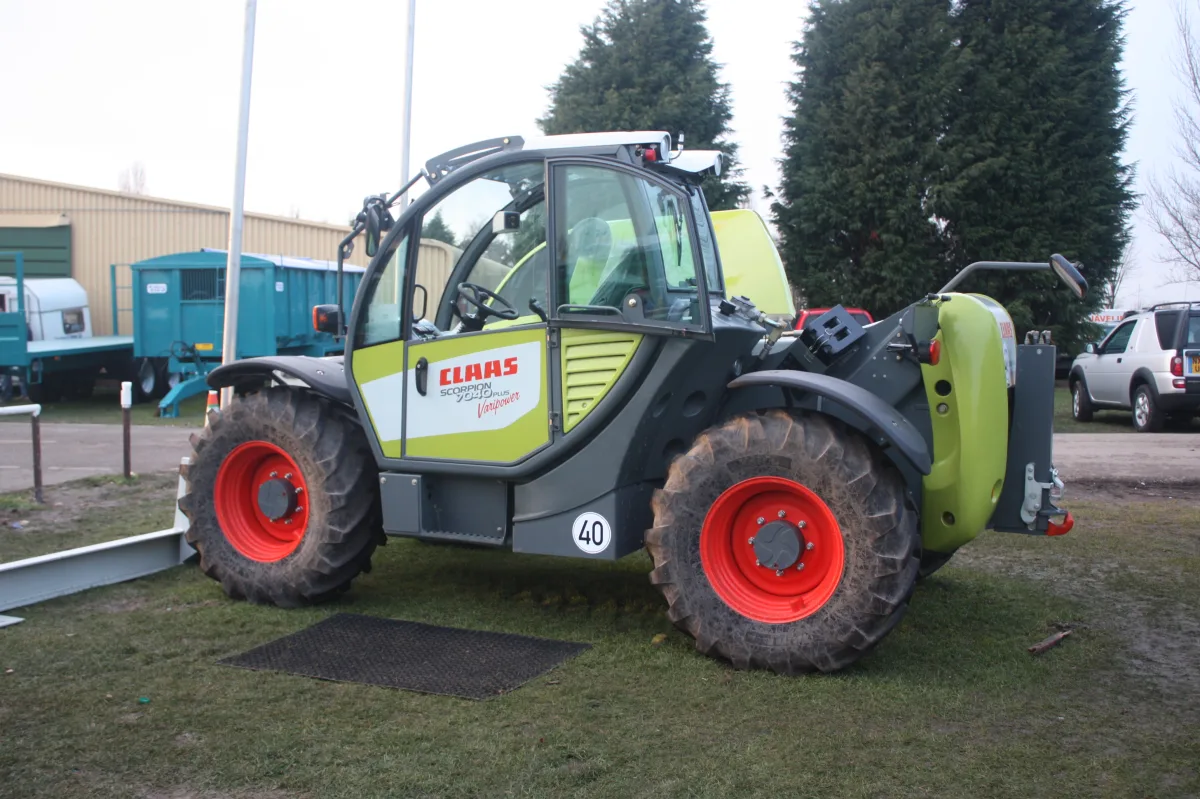
Claas Scorpion: telescopic handlers, their designation and what to check
The Claas Scorpion series of telescopic handlers has been in production since 2005 and is widely used in agriculture, construction, and warehousing. We look at the main models, their designation, and what to check when buying a used handler.






Scorpion in brief
The Scorpion is a telescopic handler with an extendable boom, designed for lifting and moving hay, silage bales, grain, pallets, and other loads. It can be fitted with forks, buckets, bale grapples, and other attachments.
Popular in the used market are both older models (e.g., 6030, 7030, 7040) and newer ones (732, 736, 741, 746, 756). Often, these are reliable and versatile tools for farms where a lot of lifting is required.
Model designation
The numbers of newer Scorpion models usually indicate two properties: the first digit is the approximate lifting height (in metres), and the last two digits are the lifting capacity (in tenths of tonnes). For example, 732 means approximately 7 m height and 3.2 t capacity, while 756 means approximately 7 m and 5.6 t.
Larger models, such as the 960, are designed for higher lifts and heavier loads. Always check the exact lifting specifications in the handler’s manual and documentation.
Transmission and equipment
Most Scorpions feature a hydrostatic transmission, allowing smooth speed changes, and four-wheel drive. Often, there are several driving modes: all-wheel, front-wheel, and ‘crab’ mode.
The cab usually has rollover protection and guards against falling objects, while newer models feature load control that warns of overloading.
What to check when buying a used Scorpion
Inspect the tipping mechanism: wear on the sliding joints, straightness of the tipping arm, and play when extended. Check the hydraulic cylinders, hoses, and fittings for any oil leaks.
Test all functions of the tipping mechanism, including end-of-travel stops and load control. Inspect the frame and mountings for cracks, especially around the tipping arm pivot and crossmembers.
Check the wheel rims, brakes, and tyre condition. Review the service history and ensure that hydraulic and gear oil has been changed according to the manufacturer's intervals.


Versions and series
Names and equipment vary by market and year; we provide a general overview by model classes.
Scorpion 6030 / 7030
Early generationSmaller class loaders — around 3 tonnes lifting capacity.
- Compact dimensions
- Often — simpler equipment
- Lower price
Scorpion 7040
Early generationMid-size class — around 4 tonnes lifting capacity and 7 metres reach.
- Versatile use on the farm
- Often — reliable hydrostatic transmission
- A wide range of cab choices
Scorpion 732 / 736
Newer generationNewer generation compact models — around 3.2–3.6 t.
- Often — a more modern cab
- Improved hydraulics
- Often — load control
Scorpion 741 / 746 / 756
Newer generationMore powerful models — around 4.1–5.6 t.
- Higher payload capacity
- Suitable for heavy loads
- More expensive maintenance
Scorpion 960
Latest generationHigher class model for taller lifts.
- Higher lifting height
- Often — advanced control system
- Higher price
Scorpion class comparison
| 732 / 736 | 741 / 746 / 756 | 960 | |
|---|---|---|---|
| Who it's for | For smaller businesses and light loads | For heavy loads and intensive work | For high lifts and large capacities |
| Approximate lifting capacity | 3.2–3.6 t | 4.1–5.6 t | Over 5 t |
| Approximate lifting height | Around 7 m | Around 7 m | Over 7 m |
| Control | Standard | Enhanced | More modern |
| Price in the used market (relatively) | €€ | €€€ | €€€ |
Most farms will be fine with the 732–746 class Scorpion. If you're working with heavy loads or frequent lifting, consider the 756 or 960.
Pros
- Versatile use — hay, grain, pallets
- Hydrostatic transmission ensures smooth driving
- A wide range of cab choices
- Suitable for farms and construction
Cons
- Repairing the needle bearings and cylinders can be expensive
- Due to heavy use, often has a high hour count
- Heavy loads require caution and proper load management
Frequently asked questions
What does the Scorpion model number mean?
The first digit roughly indicates the lifting height in metres, and the last two digits indicate the lifting capacity in tens of tonnes. For example, 732 — about 7 m and about 3.2 t.
Who is the Scorpion for?
The Scorpion is used for lifting and moving loads — hay, rolls, grain, pallets — in farms, warehouses, and construction sites.
What to check for wear?
The most important things are the throttle slide, cylinders, barrels and frame. Wear manifests as throttle play, oil leaks and heavier handling.
Updated 2026-10-21 · Trim levels and equipment vary by market and model year — check the equipment of the specific car. · Translated automatically


