 English
 Lietuvių
 Latviešu
 Eesti
 Polski
 Русский
 Українська
 Deutsch
 Nederlands
 Čeština
 Slovenčina
 Svenska
 Norsk
 Dansk
 Suomi


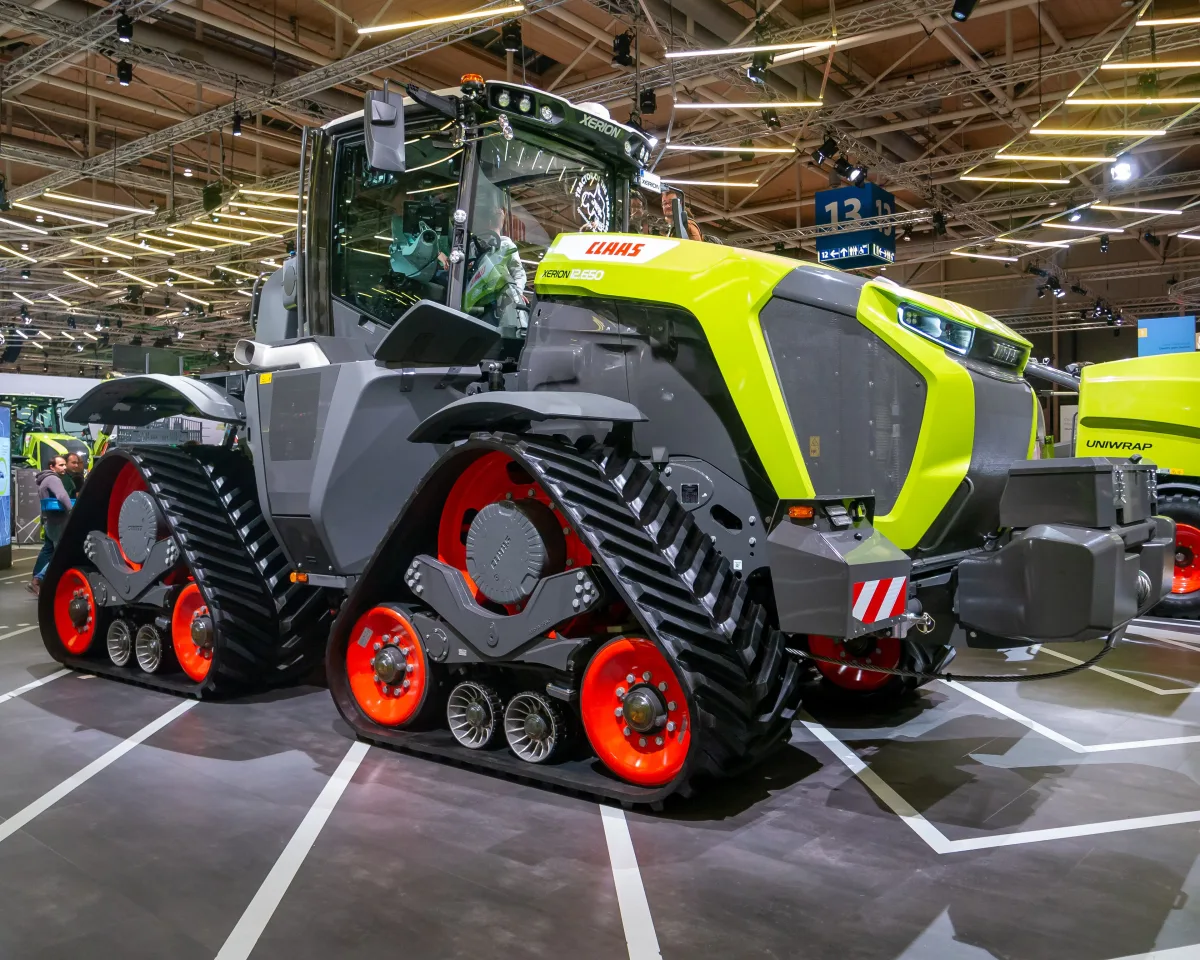
Claas Xerion: powerful articulated tractors, engines and what to check
Claas Xerion — extremely powerful articulated tractors with four identical wheels or tracks, produced since 1997. We review the Saddle Trac and Trac VC versions, engines, transmissions and what to check when buying a used Xerion.






Xerion in brief
Claas Xerion — a specially designed articulated tractor for large farms, deep soil cultivation, sowing and heavy transport. Nominal power ranges from around 300 to over 600 HP.
The Xerion stands out with four equally sized wheels or tracks and high traction. It's expensive and rare on the used market, but highly effective for heavy-duty work.
Versions and series
The Xerion is produced in two main configurations: Saddle Trac and Trac VC — differing in cabin layout and work suitability. There are also versions with wheels and rubber tracks (Terra Trac).
The series has been updated several times, so engine standards and cabin appearance vary. Before purchasing, it's essential to determine the exact series and year of manufacture.
Engines and transmissions
The Xerion is powered by robust six-cylinder diesel engines (often Caterpillar), meeting various Stage standards. Newer models use SCR technology with AdBlue.
Transmissions are either manual or semi-automatic (often ZF). Due to high power, it's crucial to change the oil regularly and monitor temperature.
What to check when buying a used Xerion
Check the engine hours, oil and coolant leaks, the turbocharger, SCR/AdBlue system, and hydraulic operation. Request a full service history.
Check the transmission operation, steering mechanism, tire or belt wear, axle play, and cabin electronics. Due to the complex construction, repairs can be expensive, so additional diagnostics are recommended.


Versions and trims
Names and equipment vary by market and production year; we list the versions most commonly found in Europe.
Xerion Saddle Trac
from 1997One of the main configurations for heavy-duty work.
- Four wheels of equal size
- High towing capacity
- Often — manual transmission
Xerion Trac VC
later yearsAlternative configuration with a different cabin setup.
- Four wheels of equal size
- Often — enhanced electronics
- Often — comfortable cabin
Xerion su juostomis
depending on the trimVersion with belted tires.
- Tyre tracks
- Less soil compaction
- Check tyre wear
Xerion su aukštesne įranga
depending on the trimWith additional technologies.
- Often — GPS steering systems
- Often — enhanced electronics
- Often — additional hydraulics
Xerion configuration comparison
| Saddle Trac | Trac VC | Su juostomis | |
|---|---|---|---|
| Who it suits | For deep soil cultivation | For heavy work and versatility | For soil protection |
| Chassis | Wheels | Wheels | Tyres |
| Coupling | High | High | Highest |
| Price in the used market (relatively) | €€€ | €€€ | €€€ |
The Xerion is only suitable for large farms or service providers who need high traction. In all cases, service history and additional diagnostics are crucial.
Pros
- High power and traction
- Four wheels of equal size
- Versatility for heavy work
- Distinctive design
Cons
- Very high price
- Complex and expensive repairs
- Rare in the used market
Frequently asked questions
How does the Xerion differ from conventional tractors?
The Xerion is an articulated tractor with four wheels or tracks of equal size, designed for heavy work and high traction.
Is the Xerion suitable for a small farm?
No, this is high-power, high-cost equipment, beneficial only for large areas or service providers.
What does Saddle Trac and Trac VC mean?
These are the two main Xerion configurations, which differ in cabin layout and work suitability.
Updated 2026-10-21 · Trim levels and equipment vary by market and model year — check the equipment of the specific car. · Translated automatically


