 English
 Lietuvių
 Latviešu
 Eesti
 Polski
 Русский
 Українська
 Deutsch
 Nederlands
 Čeština
 Slovenčina
 Svenska
 Norsk
 Dansk
 Suomi


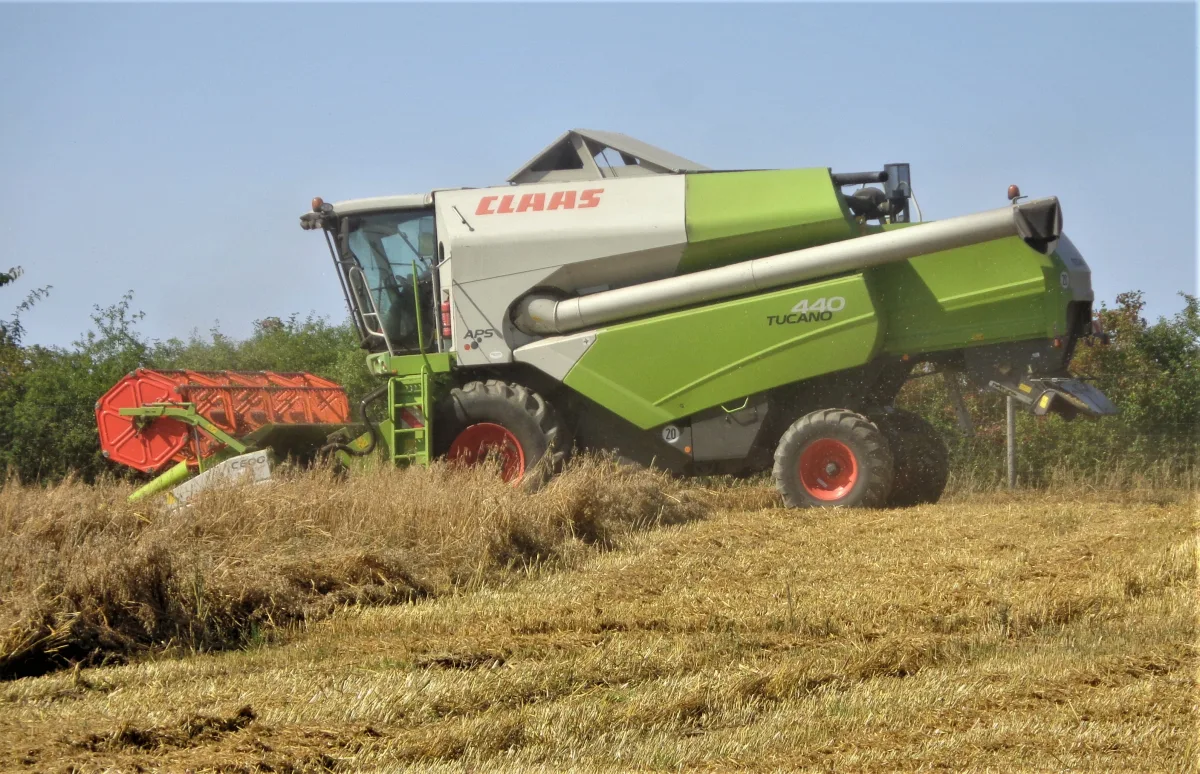
Claas Tucano: combine generations, threshing system and what to look for when buying
The Claas Tucano is a series of combines for medium and large farms, produced since 2007. We look at the main versions, the threshing system, and what to check when buying a used combine.






Tucano in brief
The Tucano is a conventional combine with straw walkers, designed for harvesting cereals, rapeseed, and other crops. The series includes several power classes, denoted by three-digit numbers — for example, Tucano 320, 430, or 450.
Earlier model years are popular in the used market, often cheaper than similar-class combines from other manufacturers. The number in the name indicates the approximate class — the higher the number, the more powerful the combine.
Which version to choose
Smaller models (e.g., 320–340) are suitable for smaller and medium-sized farms, while larger ones (430–570) are for extensive fields and service providers. Larger classes often require a more powerful tractor and transport.
For used combines, condition is more important than class: threshing drum, engine, and header hours, as well as previous owners' maintenance.
Engines and threshing system
The Tucano is powered by diesel engines, with power depending on the class. Newer models meet stricter environmental standards, so they have an SCR system with AdBlue.
The threshing system consists of a threshing cylinder, counter-cylinder, and straw walkers. Grain is cleaned with sieves and a fan. Most models feature grain moisture and yield measurement functions, while more powerful ones offer automatic setting adjustment.
What to check when buying a used Tucano
Ask for the engine and threshing cylinder hour meters. They should match the overall condition of the combine and its service history. Inspect the threshing cylinder and counter-cylinder: wear should be even.
Check the sieves, fan, grain pan, and belt and chain tension. Ensure the grain tank and unloading auger don't leak grain.
Test the hydraulics, wheel gears, and cabin equipment. Inspect the header (if purchased together) for knife, belt, and conveyor wear.


Versions and series
Names and equipment vary by market and year; we provide a general overview by power classes.
Tucano 300 serija
Early generationSmaller class combines are more compact and affordable.
- Smaller grain tank
- Often a narrower header
- Suitable for smaller farms
Tucano 400 serija
Mid-range generationMid-class combines are a popular choice.
- Greater efficiency
- Often — a wider front
- More automatics
Tucano 500 serija
Later generationLarger class combines — for big farms and service providers.
- More power
- Larger tank
- More advanced control system
Tucano su Terra Trac
By modelTracked version — lower ground pressure.
- Tracks instead of front wheels
- Less soil compaction
- More expensive maintenance
Tucano class comparison
| 300 serija | 400 serija | 500 serija | |
|---|---|---|---|
| Who it's for | For smaller farms | For medium and large businesses | For large businesses and service providers |
| Refinement | Mid-range | More spacious | Most spacious |
| Fuel tank | Smaller | Mid-range | Most spacious |
| Control | Simpler | Extended | Most advanced |
| Price in the used market (relatively) | Budget-friendly | Mid-range | €€€ |
For smaller farms, consider the 300 or 400 series Tucano. For larger plots, the 500 series is the way to go if the budget allows.
Pros
- A wide range of power classes to choose from
- Excellent harvesting quality
- Wide availability of parts and services
- Often cheaper than competitors in the used market
Cons
- Older models have less automation
- Maintenance for larger classes is expensive
- Some models may have a high hour count
Frequently asked questions
How does the Tucano differ from the Lexion?
The Tucano is a mid-range combine harvester with straw walkers, while the Lexion is a higher, more powerful line, with the largest models featuring a rotary or hybrid threshing system. Tucanos are typically suited to medium-sized farms.
Is the Tucano suitable for harvesting rapeseed?
Yes, the Tucano is used for both grains and rapeseed, but the header needs to be adapted to the crop. Before buying, check which headers are included.
Which Tucano models are the most popular?
In the used market, you often come across 400 series models as they are versatile and widely available. It's worth checking the specific listing for exact information.
Updated 2026-10-21 · Trim levels and equipment vary by market and model year — check the equipment of the specific car. · Translated automatically


