 English
 Lietuvių
 Latviešu
 Eesti
 Polski
 Русский
 Українська
 Deutsch
 Nederlands
 Čeština
 Slovenčina
 Svenska
 Norsk
 Dansk
 Suomi


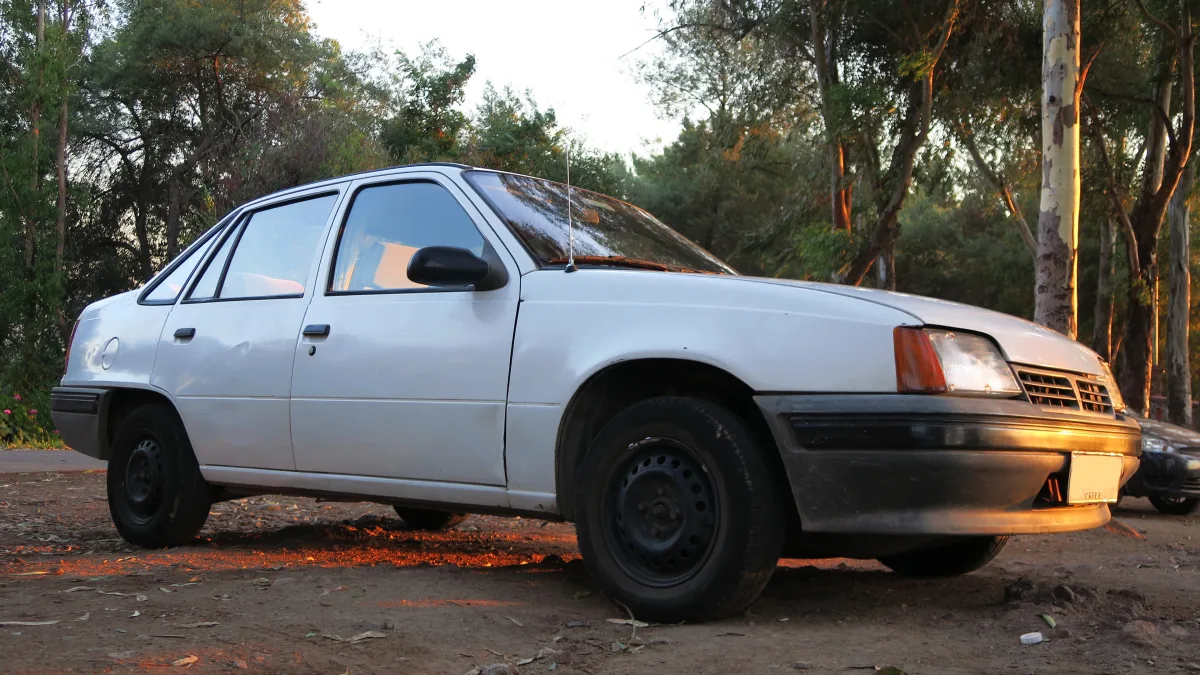
Daewoo LeMans: A compact car based on the Opel Kadett E
The Daewoo LeMans was a compact car produced in South Korea from 1986 to 1997, based on the Opel Kadett E. We'll look at its history, body styles, engines, and what to check if you're interested in this old but straightforward car.






LeMans in brief
The LeMans was essentially an Opel Kadett E with a Daewoo badge, produced under a General Motors license. It was offered as a three- and five-door hatchback and a four-door sedan, with straightforward and well-known technology at the time.
In many countries, the model had different names—such as the Daewoo Racer or Pointer—and in North America, it was known as the Pontiac LeMans. Over a million first-generation LeMans were produced before it was replaced by the improved Cielo.
Body styles
The three-door hatchback was the sportiest option, with some versions featuring opening rear windows. The five-door version had sedan-style rear doors, making the rear roof section more sloping.
The four-door sedan was the most practical for families, offering a larger boot and easier access to the rear seats. Your choice largely depends on how you plan to use the car.
Engines and transmissions
The LeMans came with straightforward petrol engines: 1.5, 1.6, and 2.0 litres. Several engine variants were produced, so it's best to check the exact power and code on the specific car.
Gearboxes come in 4 or 5-speed manual and 3-speed automatic. The car is front-wheel drive, and the technology is simple, so a manual repair can often be handled by a non-specialist service.
What to check when buying a used LeMans
First off — corrosion. Age often affects the sills, wings, arches, and floor. Check if the body hasn't been repaired and if there are no uneven gaps.
Inspect the engine: oil and coolant leaks, electrical installation, ignition system. Finding parts and specialists can be tricky, so make sure the car is in good condition and doesn't require major investments.


Body styles
Daewoo LeMans trim names vary by market, so we list the body types.
Trijų durų hečbekas
1986–1997The sportiest body variant.
- Often — a sportier design
- Often — rear windows that open
- Smaller rear seat
Penkių durų hečbekas
1986–1997More practical for families.
- Five doors
- More space in the rear seat
- Less steep rear roof section
Keturių durų sedanas
1986–1997The classic sedan variant.
- Separate boot
- More boot space
- Often — simpler trim
Body style comparison
| 3 durų | 5 durų | Sedanas | |
|---|---|---|---|
| Who it's for | For new drivers | For families | For practical use |
| Common gear ratios | Compact | Compact | Compact |
| Interior | Basic | Basic | Basic |
| Engine | 1.5–2.0-litre petrol | 1.5–2.0-litre petrol | 1.5–2.0-litre petrol |
| Price in the used market (relatively) | € | € | € |
The body type should suit your needs: three doors for a sportier feel, five doors or a sedan for more practical use. Most importantly, it should be in good condition with minimal rust.
Pros
- Simple and well-known technology
- Low running costs
- Easy to maintain
- Not flashy
Cons
- An old car with a risk of corrosion
- Finding parts and specialists might be challenging
- Safety and comfort standards differ from modern cars
Frequently asked questions
What’s the connection between the Daewoo LeMans and Opel?
The LeMans is essentially an Opel Kadett E, produced in South Korea under a General Motors license.
How does the LeMans differ from the Cielo?
The Cielo (from 1994) is the second, improved generation that retained the overall Opel base.
Is the LeMans suitable for daily use?
It’s a simple and affordable car, but due to its age and safety standards, it should be chosen carefully.
Updated 2026-10-21 · Trim levels and equipment vary by market and model year — check the equipment of the specific car. · Translated automatically


