 English
 Lietuvių
 Latviešu
 Eesti
 Polski
 Русский
 Українська
 Deutsch
 Nederlands
 Čeština
 Slovenčina
 Svenska
 Norsk
 Dansk
 Suomi


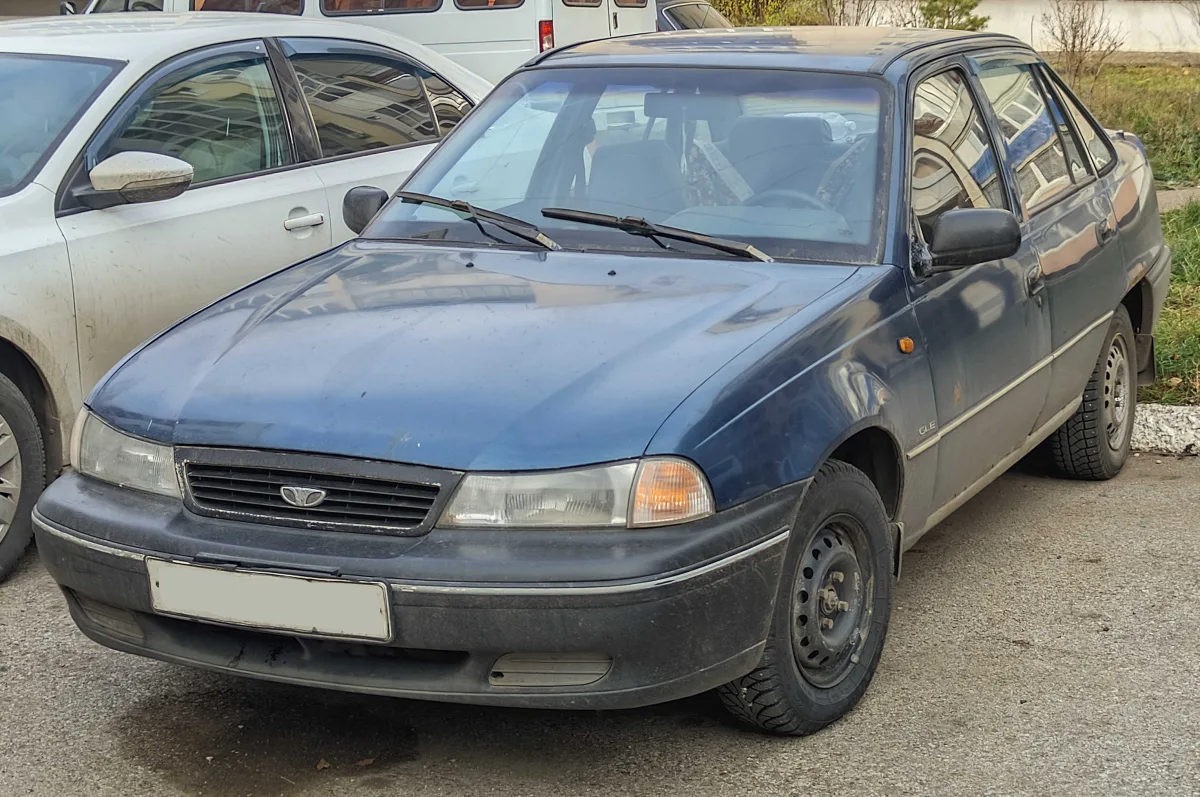
Daewoo Nexia: A budget sedan and hatchback based on the Opel Kadett E
Daewoo Nexia — A budget compact sedan and hatchback that debuted in 1994, based on the Opel Kadett E. Here, we look at its engines, bodies, and what to check when hunting for a used Nexia.






Nexia in brief
Nexia — A straightforward compact car with technology borrowed from the Opel Kadett E. Available as a three- or five-door hatchback and a four-door sedan.
The car was popular as a budget and hassle-free choice in many countries. In Lithuania, it's well-known, as plenty of these cars made their way here.
Which version to choose
In Europe, the Nexia was sold from around 1994 to 1997, but in Uzbekistan, it was produced until 2016. Uzbek versions differ slightly, so decide which version you'll buy.
When buying a used Nexia, the most important thing is the technical and body condition. Most cars are old, so pay close attention to rust and engine condition.
Engines and gearboxes
The most common engines are 1.5-litre petrol units, offering around 75hp and around 90hp (16-valve). The gearbox is a five-speed manual, with an automatic available in rare cases.
The technology is simple, and the choice of parts is quite wide, as many components are similar to those of the Opel Kadett E and other Daewoo models.
What to check when buying a used Nexia
Inspect the sills, floor, wheel arches, and boot floor — rust often shows up here first. Check if the engine starts easily and runs smoothly.
Pay attention to the history of the seatbelt replacement, suspension, and brakes, as well as the operation of the clutch.


Trim levels
Names and equipment vary by market and year; we describe the most commonly encountered versions.
Nexia 1.5 (8 vožtuvų)
1994–1997Base version with around 75 HP engine.
- Around 75 HP
- Five-speed manual gearbox
- Basic trim
Nexia 1.5 (16 vožtuvų)
1994–1997More lively version with around 90 HP engine.
- Around 90 HP
- Often — better dynamics
- Often — more comfort features
Hečbekas (3 ar 5 durų)
1994–1997Practical body with opening rear hatch.
- Three- or five-door body
- More boot space
- Same technology as the sedan
Sedanas
1994–1997A classic four-door body
- Four-door body
- Separate boot
- Same technology as the hatchback
Trim comparison
| 1.5 (8v) | 1.5 (16v) | Hečbekas | Sedanas | |
|---|---|---|---|---|
| Who it's for | For the budget-conscious buyer | For spirited driving | For practical daily use | For fans of the classic body style |
| Engine | 1.5-litre, around 75hp | 1.5-litre, around 90hp | 1.5-litre | 1.5-litre |
| Body | Hatchback or sedan | Hatchback or sedan | 3 or 5 doors | 4 doors |
| Price in the used market (relatively) | € | € | € | € |
For most buyers, a 1.5-litre engine with a sound body is enough. The 16-valve version is livelier, and choose the body type according to your needs.
Pros
- Affordable to buy and maintain
- Simple technology and readily available parts
- Practical body variants
- Easy to repair
Cons
- Corrosion is a common issue
- Cozy comfort and safety features
- Old age and inconsistent technical condition
Frequently asked questions
Is the Nexia based on the Opel?
Yes, technically it's derived from the Opel Kadett E, so many parts are similar and easy to find.
Is the Nexia reliable?
It's a simple but old car. Reliability depends on its service history and body condition.
Which body style to choose?
Most will prefer the hatchback for its practicality, while the sedan is ideal if you like a separate boot.
Updated 2026-10-21 · Trim levels and equipment vary by market and model year — check the equipment of the specific car. · Translated automatically


