 English
 Lietuvių
 Latviešu
 Eesti
 Polski
 Русский
 Українська
 Deutsch
 Nederlands
 Čeština
 Slovenčina
 Svenska
 Norsk
 Dansk
 Suomi


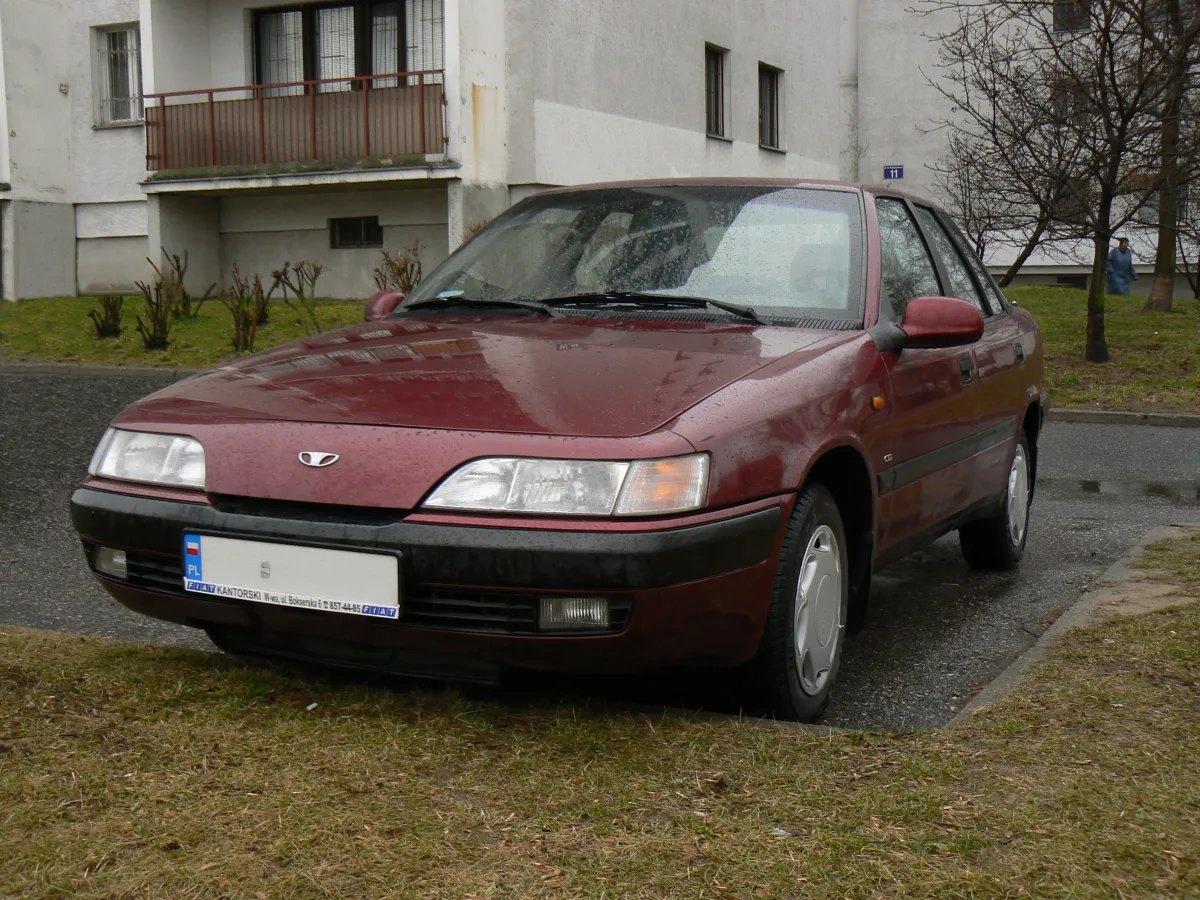
Daewoo Espero: engines, features and what to know when buying
The Daewoo Espero is a mid-size sedan that was first produced in South Korea in the 1990s. Today, it's a rare old car, so in this article we'll look at its features, engines, and the key points to check before buying.






The Espero in brief
The Espero is a four-door sedan with a spacious interior and a large boot. Its body design was created by the Italian studio Bertone, and its technical base is similar to contemporary Opel models, so many mechanical parts may be simple and familiar to mechanics.
Today, the Espero is often bought as a cheap, straightforward car or as a unique older model for collectors. It features a simple construction with minimal complex electronics.
Which version to choose
The Espero was produced in one generation until around 1999, so the choice mainly depends on the engine and trim, rather than the generation.
When choosing, look for the best-condition example with an undamaged body and service history. Due to its age and rarity, some cars are in poor condition, so the cheapest option might end up being the most expensive.
Engines and gearboxes
The Espero was sold with four-cylinder petrol engines — roughly 1.5L, 1.8L, and 2.0L in capacity. The most powerful 2.0L engine offers significantly better performance, but also higher fuel consumption.
The gearbox is either manual or automatic. Diesel engines were not offered for this model.
What to check when buying a used Espero
Check the body for rust: look at the sills, wheel arches, door bottoms, and rear wings. Rust is the main issue for a car of this age.
Check the engine's operation when cold and hot, the timing belt change records, the cooling system, and for any oil leaks. The automatic gearbox should shift smoothly.
Finding parts can take time, as the model is no longer in production, and some parts are specific. Before buying, check if you can source the necessary components, especially for the body and interior.


Trim levels
Names and equipment vary by market and year; we list the most commonly found versions and trims in Europe.
Espero
1990–1999The sole generation; equipment depended on the market and year.
- Four-door saloon body style
- Petrol engines ranging from 1.5 to 2.0 litres
- Often — electric windows and air conditioning in higher trims
Engine comparison
| 1,5 l | 1,8 l | 2,0 l | |
|---|---|---|---|
| Who's it for | Ideal for daily commuting | Suitable for versatile use | Best for spirited driving |
| Fuel consumption | Lowest | Average | Highest |
| Price in the used market (relatively) | € | € | € |
For most buyers, the best choice is the best-condition car, not a specific engine. Among the 1.8-litre engines, there's often a sensible compromise.
Pros
- Spacious interior and large boot
- Simple construction
- Low purchase price
- Distinctive, rare old model
Cons
- Common rust issues
- Hard to find some parts
- High mileage and age
Frequently asked questions
What engines were available in the Espero?
Four-cylinder petrol engines, around 1.5L, 1.8L and 2.0L were available. Diesel versions were not offered.
Is the Espero suitable for daily driving?
It could be, if the example is well-maintained. Due to its age, expect more frequent repairs and parts hunting.
Who designed the Espero?
The body design was created by the Italian design studio Bertone.
Updated 2026-10-19 · Trim levels and equipment vary by market and model year — check the equipment of the specific car. · Translated automatically


