 English
 Lietuvių
 Latviešu
 Eesti
 Polski
 Русский
 Українська
 Deutsch
 Nederlands
 Čeština
 Slovenčina
 Svenska
 Norsk
 Dansk
 Suomi


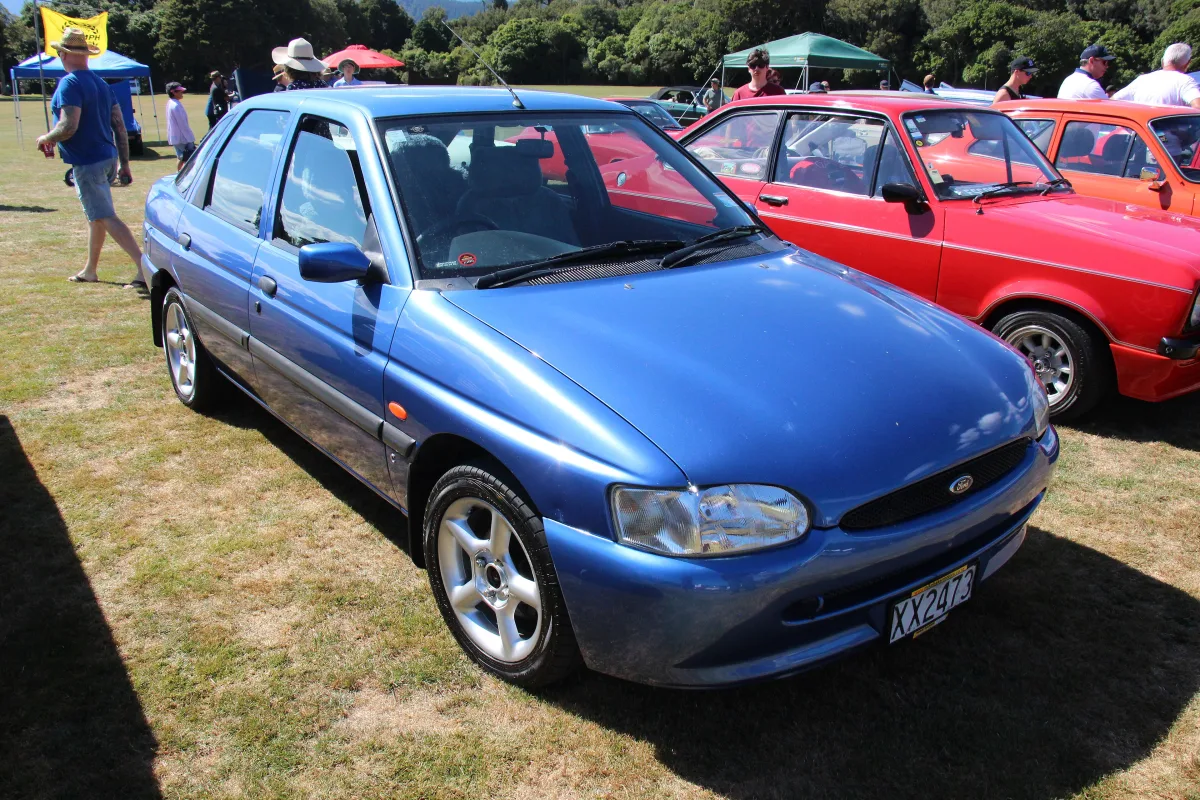
Ford Escort: generations, engines and trims
The Ford Escort is one of Europe's longest-running and most popular compact cars. This article focuses mainly on the 1990–2000 models, which are the most common in the used market, as well as the engines, trims, and what to check when buying.






Escort in brief
The Escort was produced for over thirty years across several generations and was one of Europe's most popular family cars. Body styles included the hatchback, saloon, estate, and convertible, plus sporty versions like the XR3i, RS2000, and RS Cosworth.
The most relevant used market buyers will find are the fifth (1990–1995) and sixth (1995–2000) generations. These are basic, affordable cars, but they are now quite old, so condition is key.
Which generation to choose
The fifth generation (from 1990) replaced the previous model and featured a more modern design, new engines, and better safety. It's often the cheapest option, but some cars may have significant condition issues.
The sixth generation (1995–2000) was updated with a revised front end, improved interior, and equipment. If you're after the best daily driver, this is the generation to go for and look for well-maintained examples.
Engines and gearboxes
Petrol engines include 1.3, 1.4, 1.6, and 1.8-litre units, with sporty versions getting a 2.0-litre turbo. Power ranges from around 60 to 150hp, depending on the version.
1.8-litre diesel engines (including turbodiesels) are economical but not particularly swift. They're suited to relaxed driving and long distances.
The gearbox is usually manual, though some cars have an automatic.
What to check when buying a used Escort
Inspect the body for rust: sills, wheel arches, door bottoms, and the boot floor. Older Escorts can be troublesome in this regard.
Check the engine's timing belt change history, brakes, suspension, and electrical equipment. Older cars often have minor faults.
For sporty versions (XR3i, RS), thoroughly check if the car hasn't been modified or used for racing, and ask for all documents.


Trim levels
Names and equipment vary by market and year; we list the most commonly found names in Europe.
L
Fifth and sixth generationsBase trim with standard equipment.
- Often — steel wheels
- Often — basic interior trim
- Standard audio system
LX
Fifth and sixth generationsMid-range trim with more comfort features.
- Often — electric windows
- Often — central locking
- Better interior trim
Ghia
Fifth and sixth generationsThe top-of-the-range comfort version
- Often — air conditioning
- Often — alloy wheels
- Often — additional interior trim
XR3i
2nd generationSportier version with 1.8 16V engine
- Often — sport seats
- Often — alloy wheels
- Sportier looks
Trim comparison
| L | LX | Ghia | XR3i | |
|---|---|---|---|---|
| Who it's for | Ideal for economical driving | For everyday use | For comfort | For a sporty style |
| Most common wheels | Alloy | Alloy or steel | Steel | Steel |
| Interior | Basic | Better trim | Comfortable | Sporty |
| Engine | 1.3–1.4 | 1.4–1.6 | 1.6–1.8 | 1.8 16V |
| Price in the used market (relatively) | € | € | € | €€ |
The price of this older model largely depends on its condition. Most buyers will be happy with at least a slightly rusty LX or Ghia with a 1.6 engine, while the XR3i and RS are for enthusiasts.
Pros
- Simple technology and affordable maintenance
- Plenty of parts and mechanics familiar with this model
- Wide range of body styles and engines
- Affordable in the used market
Cons
- An old car, often with rust issues
- Safety levels lag behind modern cars
- Sport versions may have been modified or poorly maintained
Frequently asked questions
Which Escort generation is best?
Most buyers will be happy with the sixth generation (1995–2000), as it was updated and has better equipment. However, the specific condition of the car is most important.
Which Escort engine is best?
Most will be happy with the 1.6 petrol for its simplicity, and the 1.8 diesel for its economy. The sporty 1.8 16V and 2.0 are for enthusiasts.
Is the Escort suitable for daily use?
Yes, if you find a good and well-maintained example. You should expect that an older car will require more attention than newer ones.
Updated 2026-10-19 · Trim levels and equipment vary by market and model year — check the equipment of the specific car. · Translated automatically


