 English
 Lietuvių
 Latviešu
 Eesti
 Polski
 Русский
 Українська
 Deutsch
 Nederlands
 Čeština
 Slovenčina
 Svenska
 Norsk
 Dansk
 Suomi


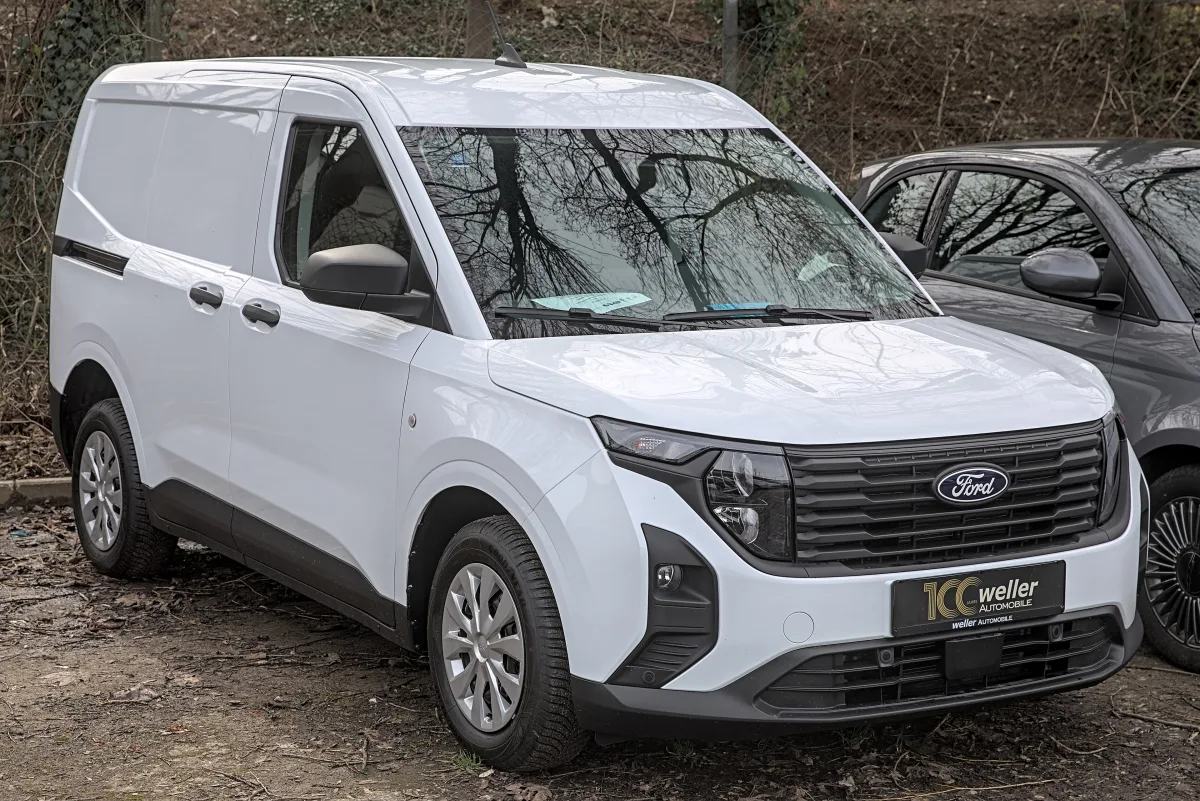
Ford Transit Courier: generations, engines and trims
Ford Transit Courier — the smallest van in the Transit family, designed for city deliveries and tradespeople. We look at the first and second generations, engines, the electric E-Transit Courier and what to check when buying used.






Transit Courier in brief
Transit Courier — a compact van that was first built on the Fiesta platform. Available as a van and the passenger Tourneo Courier version, designed for city deliveries and tradespeople.
Thanks to its compact size, it’s easy to manoeuvre in narrow streets, and the cargo area is spacious enough for most urban tasks.
Generations — what’s the difference
First generation (2014–2023) — a straightforward, economical design with 1.0 EcoBoost petrol and 1.5 TDCi diesel engines. This is the most common generation on the used market.
Second generation (from 2023) — a fresh design, more modern interior and additional driver-assistance systems. An electric version, the E-Transit Courier, is also available, with a range of over 250 km according to the manufacturer.
Engines and gearboxes
In the first generation, the most common engine is the 1.5 TDCi diesel (around 75–100 hp) and the 1.0 EcoBoost petrol (around 100 hp), with the 1.6 TDCi occasionally seen. Gearbox — manual.
In the second generation, the 1.0 EcoBoost petrol, 1.5 EcoBlue diesel and electric powertrain are offered. Gearboxes — manual or automatic, depending on the trim.
What to check when buying a used Transit Courier
Body: Check the lower edges of the sliding doors, rear door fastenings, and the cargo area floor. Commercial vehicles are often heavily used, so repairs and repainting are not uncommon.
If it's a diesel engine, check for issues with the injectors, turbo, DPF, and EGR, especially if the vehicle has mostly been driven in the city. For the petrol EcoBoost, check the cooling system and look out for any fluid leaks.
Inside the cabin, check the seats, air conditioning, electrical functions, and storage compartments. Check the ride quality against the service records.


Trims and versions
Trim names vary by market and year; below are the versions most commonly found in Europe.
Base
First generationThe base trim — simple and the most affordable.
- Steel wheels
- Basic interior trim
- Often — no air conditioning
Trend
First generationThe most popular mid-range trim.
- Often — air conditioning and electric windows
- Basic multimedia
- Adequate overall equipment
Limited
First and second generationsA higher trim with more comfort.
- Often — lightweight alloy wheels
- Often — parking sensors and climate control
- Better interior trim
Sport
First and second generationsSporty-looking version.
- Sporty wheels and trim
- Often — additional lights
- Sportier seats
E-Transit Courier
From 2023Electric version for urban deliveries.
- Electric drivetrain
- Zero tailpipe emissions in the city
- Range depends on load and speed
Comparison of Transit Courier versions
| Base | Trend | Limited | Sport | |
|---|---|---|---|---|
| Who it's for | Everyday use | Daily driving | Comfort | Style |
| Wheels (most common) | Steel | 15–16 inch | 16 inch | 16–17 inch |
| Interior | Basic trim | Adequate equipment | Better interior trim | Sportier trim |
| Engine | 1.5 TDCi, 1.0 EcoBoost | 1.5 TDCi, 1.0 EcoBoost | 1.5 TDCi, 1.0 EcoBoost | 1.5 TDCi, 1.0 EcoBoost |
| Price in the used market (relatively) | € | € | €€ | €€ |
For most buyers, the best bet is the Trend or Limited with a diesel engine. The Sport is worth considering for its looks, while the Base is the way to go when the lowest price is the priority.
Pros
- A compact, city-friendly van
- Economical and straightforward
- Plenty of spare parts and servicing options
- Electric version in the new generation
Cons
- Small cargo area compared to larger vans
- Diesel DPF and EGR maintenance in city driving
- Older models typically have high mileage
Frequently asked questions
Is the Transit Courier suitable for a tradesman?
For small jobs and light tools — yes. If you need more cargo space or room for long items, it's worth looking at the Transit Connect or Transit Custom.
Which generation is best when buying used?
The first generation (2014–2023) is the most common and affordable, but the second generation is more modern and has newer features. Choose based on your budget and the actual condition of the vehicle.
Is the E-Transit Courier worth considering?
If routes are predictable and there's space for loading, then yes — costs and noise are lower. For long journeys, diesel or petrol might be more convenient.
Updated 2026-10-21 · Trim levels and equipment vary by market and model year — check the equipment of the specific car. · Translated automatically


