 English
 Lietuvių
 Latviešu
 Eesti
 Polski
 Русский
 Українська
 Deutsch
 Nederlands
 Čeština
 Slovenčina
 Svenska
 Norsk
 Dansk
 Suomi


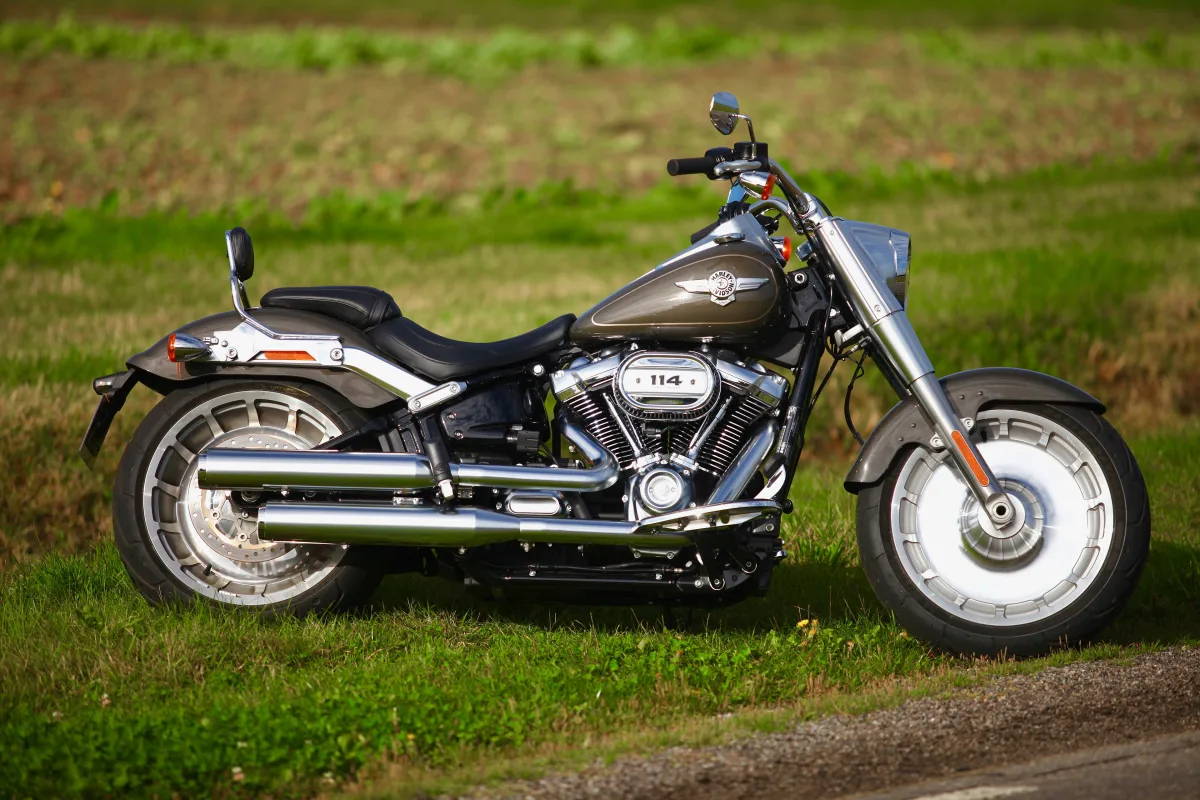
Harley-Davidson Fat Boy: generations, engines, and what to check when buying
Harley-Davidson Fat Boy — produced since 1990, this cruiser with distinctive full-fat tyres is one of the most recognisable models in the Softail family. We look at the generations, engines, trims, and what to check before buying a used one.






Fat Boy in brief
Fat Boy — the Harley-Davidson Softail cruiser stands out with its wide full-fat tyres, bulky design, and low seat height. It's considered one of the most iconic models, with a silhouette recognised worldwide.
This model is perfect for those who want a stylish, powerful cruiser for both road and city riding. It's not suited to long journeys with lots of luggage, but it's more than adequate for short trips.
Which generation to choose
The earliest Fat Boy models (1990–1999) feature Evolution engines and are valued as classics. From 2000 onwards, Twin Cam engines were introduced (88, 96, and 103 cubic inches), which are simpler and cheaper, but it's important to check if recommended engine updates have been carried out.
Since 2018, the entire Softail range has been redesigned: a new, lighter frame, hidden shock absorbers, and the Milwaukee-Eight engine (107 or 114 cubic inches). This generation of Fat Boy is more modern but pricier; all generations are popular in the used market.
Engine and transmission
The engines are large-displacement V-twin units with plenty of low-end torque. Twin Cam engine capacities range from around 1450 to 1690 cm³, while the Milwaukee-Eight is around 1750 to 1870 cm³.
Manual gearbox (six-speed in newer models). Due to its hefty weight, manoeuvring at low speeds requires experience, but it's comfortable and smooth on the road.
What to check when buying a used Fat Boy
It's crucial to know the engine's history. The "Twin Cam" engines are notorious for timing chain tensioner issues, so ask if they've been replaced. Check the oil leaks, service history, and listen for any unusual noises.
Inspect the wheels (full-fat wheels are hard to clean, so check for corrosion marks), suspension, brakes, and wheel bearings. Check the electrical equipment and lighting, and if there's ABS, ensure it works flawlessly.


Trims and versions
The main Fat Boy generations are listed; equipment depends on the year and market.
Evolution Fat Boy
1990–1999The first Fat Boys with the Evolution engine.
- Classic design
- Often — high mileage
- Often — collector's value
Twin Cam Fat Boy
2000–2017Generation with "Twin Cam" engines.
- 88, 96 or 103 cubic inch engine
- Full-fat wheels
- A crucial engine condition check
Fat Boy (nuo 2018)
from 2018The redesigned Softail generation with the Milwaukee-Eight engine
- 107 or 114 cubic inch engine
- A new, lighter frame
- More modern equipment
Specialios ir ribotos versijos
various yearsVersions with special paint, wheels, or detailing
- Special colours and graphics
- Often — different wheels
- Often — higher collectible value
Comparing generations
| Evolution | Twin Cam | Nuo 2018 | |
|---|---|---|---|
| Who it suits | For classic enthusiasts | The budget-friendly Fat Boy | For those who value newer technology |
| Engine | Evolution | 88–103 cu. in. | 107 or 114 cu. in. |
| Frame | Classic Softail | Classic Softail | New, lighter |
| Price in the used market (relatively) | Mid-range | Mid-range | High-end |
Most buyers will find a well-maintained Twin Cam Fat Boy to their liking; the 2018-onwards generation is for those who value more modern technology, while the Evolution is for classic enthusiasts.
Pros
- Iconic, distinctive design
- High torque and smooth ride
- Low, comfortable seating position
- Holds its value well
Cons
- Bulky and harder to manoeuvre at low speeds
- Lacks comfort for long journeys with luggage
- Maintenance and parts are pricier than many competitors
Frequently asked questions
What sets the Fat Boy apart from other Softail models?
The Fat Boy stands out with its full-figured tyres and beefy design, while other Softail models have a different look and tyres.
What category licence do you need?
This is an A category motorcycle, as the engine capacity and power exceed A2 limits.
Is the Fat Boy suitable for a passenger?
Yes, but the passenger seat is usually small, so for long journeys with a passenger, touring Harley models are more suitable.
Updated 2026-10-21 · Trim levels and equipment vary by market and model year — check the equipment of the specific car. · Translated automatically


