 English
 Lietuvių
 Latviešu
 Eesti
 Polski
 Русский
 Українська
 Deutsch
 Nederlands
 Čeština
 Slovenčina
 Svenska
 Norsk
 Dansk
 Suomi


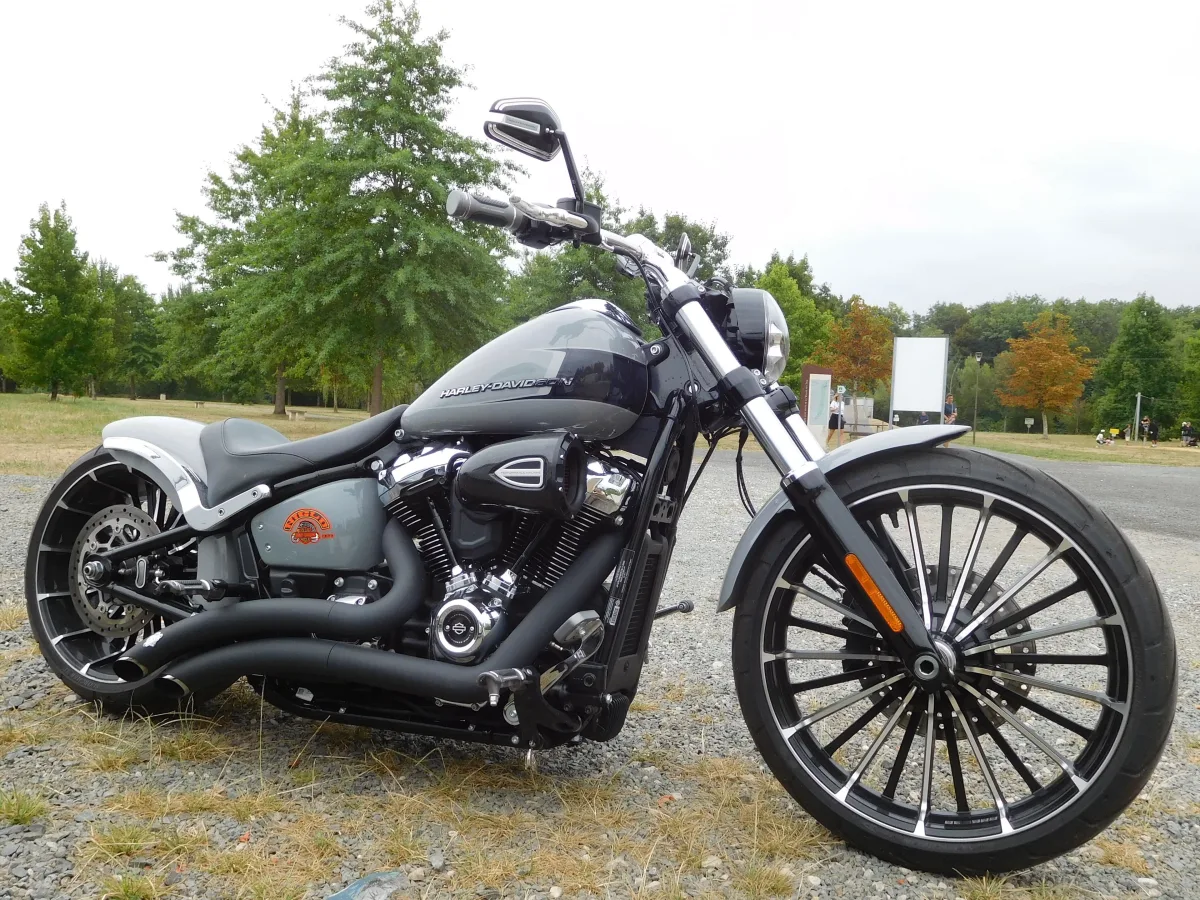
Harley-Davidson Breakout: Softail generations, engines, and what to check
Harley-Davidson Breakout — a Softail motorcycle in dragster style with a wide rear tyre and striking appearance. We look at the generations, engines, and what to check when buying a used Breakout.






Breakout in brief
The Breakout debuted in 2013 as a striking custom motorcycle with a 21-inch front wheel, wide rear tyre, and a low, long silhouette. It's designed for those who prioritise style and a bold character.
Due to its wide rear tyre and long wheelbase, it's not the easiest to handle, but it looks great and stands out among other cruiser-class motorcycles.
Generations — what's the difference
The first generation (2013–2017) uses the Twin Cam 103 engine and an older Softail frame with hidden shock absorbers. This is the classic version with a pronounced vibration character.
The second generation (from 2018) features a new frame and the Milwaukee-Eight engine (107, later 114 cubic inches). It's lighter, more precise to ride, and has more modern electronics. The latest versions also come with a 117 cubic inch engine.
Engine and transmission
The first generation — Twin Cam 103 cubic inches (around 1690 cc). The second generation — Milwaukee-Eight: 107 cubic inches (around 1746 cc), 114 cubic inches (around 1868 cc) and a larger variant in the latest versions.
The transmission is a 6-speed manual, with power to the rear wheel via a belt drive, so there's no need for chain maintenance.
What to check when buying a used Breakout
Check for wear on the wide rear tyre and the condition of the rear suspension. Inspect common modifications: steering, exhaust, seats, and headlights, as these are often changed.
The engine should run smoothly, without leaks around the cylinder heads and the main gasket. For first-generation engines, ask about the “Twin Cam” timing chains.
Check the belt, brakes, wheel bearings, and battery. Due to the long wheelbase and low seating position, look for signs of scraping.


Trim levels and versions
Names and equipment vary by market and year; below are the main versions.
Breakout (Twin Cam 103)
2013–2017First generation with an older frame.
- 103 cubic inch Twin Cam engine
- Wider rear tyre
- Often – modified
Breakout 107 / 114
From 2018Second generation with a new frame and Milwaukee-Eight engine.
- 107 or 114 cubic inch Milwaukee-Eight engine
- Hidden rear shock absorber
- Often – ABS and electronic traction control
Breakout 117
Latest versionsTop-of-the-range model
- 117 cubic inch Milwaukee-Eight engine
- Modern electronics
- Often — higher trim level
Comparing Breakout generations
| Twin Cam 103 | 107 / 114 | 117 | |
|---|---|---|---|
| Who it's for | For classic style enthusiasts | For more modern tech | For those needing more power |
| Engine | 103 cubic inch | 107 or 114 cubic inch | 117 cubic inch |
| Price in the used market (relatively) | €€ | €€€ | €€€ |
Budget pick — a well-maintained first-gen Breakout. Newer generations are more modern, but pricier.
Pros
- Distinctive, standout styling
- Low seat height and long silhouette
- Belt-driven transmission — low maintenance
- Powerful V-twin engine
Cons
- Wide rear tyre makes handling tricky
- Limited comfort on long rides
- Refurbished bikes can hide issues
Frequently asked questions
Is the Breakout suitable for beginners?
It's heavy and has a wide rear tyre, so it's not the easiest first bike. You'll need an A licence and caution.
What's the difference between the first and second-gen Breakout?
The second-gen has a new frame and Milwaukee-Eight engine, so it rides more precisely and has modern electronics. The first-gen is simpler and cheaper.
Is the Breakout good for touring?
Not ideal — it lacks wind protection, and the seat is low and firm. Fine for short trips, but for longer journeys, consider a touring motorcycle.
Updated 2026-10-21 · Trim levels and equipment vary by market and model year — check the equipment of the specific car. · Translated automatically


