 English
 Lietuvių
 Latviešu
 Eesti
 Polski
 Русский
 Українська
 Deutsch
 Nederlands
 Čeština
 Slovenčina
 Svenska
 Norsk
 Dansk
 Suomi


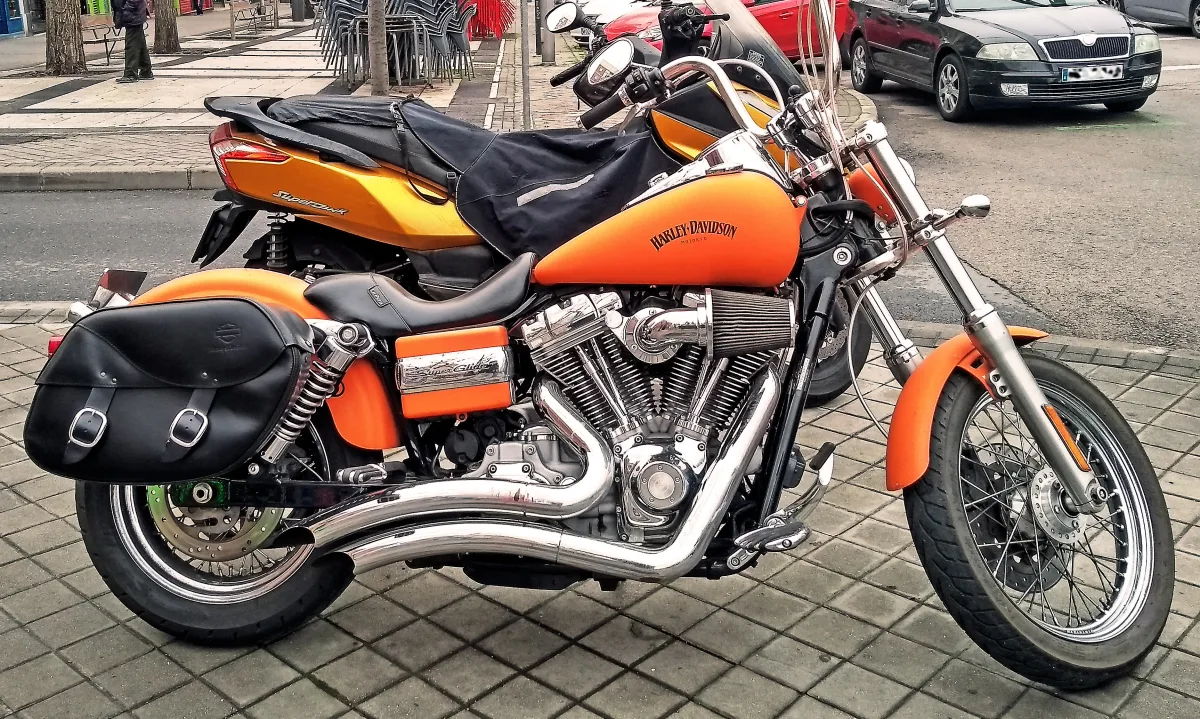
Harley-Davidson Super Glide: generations, engines, and what to check
Harley-Davidson Super Glide — a Harley-Davidson model that has been in production since 1971 and became one of the first factory 'custom' motorcycles. We look at the generations, engines, and what to check when buying a used motorcycle.






Super Glide in brief
Super Glide — the classic Harley-Davidson cruiser, best known as the flagship model of the Dyna family. It combines a classic look with a comfortable riding position and simple construction.
The 1971 FX Super Glide combined the larger frame of the FL model with the front end of the Sportster. The model later evolved into the Dyna family.
Generations — what's different
The first-generation Super Glide had Shovelhead engines, later Evolution. From 1991, the Dyna frame with rubber engine mounts appeared, reducing vibration.
Later generations feature Twin Cam engines — initially 88 cubic inches, and from 2007, 96 cubic inches. The six-speed transmission arrived in 2006 for Dyna models.
Engine and transmission
Engines — V-twin, air-cooled, ranging from 1340 cc to over 1500 cc. They boast a strong torque and the classic Harley sound.
Transmission — manual, belt-driven. The motorcycles are easy to handle but heavy.
What to check when buying a used Super Glide
The timing chain tensioners on Twin Cam engines are a known weak spot — ask if they've been replaced. Check for oil leaks and engine noise.
Check the seatbelt and airbags, brakes, rear shock absorbers, and wheels. Inspect the charging system and battery.
Check for non-original modifications, especially to the exhaust system and engine tuning. Verify documents and service history.


Trim levels and versions
Trim levels vary by year; below are the main versions.
FX Super Glide
From 1971The first models with Shovelhead engines.
- Shovelhead engine
- Classic styling
- Collector value
Evolution Super Glide
1984–1999With Evolution engine.
- Evolution engine
- Often — Dyna frame from 1991
- More reliable construction
Twin Cam Super Glide
From 1999With the Twin Cam engine.
- Twin Cam 88 or 96
- Often — a 6-speed gearbox later on
- More powerful performance
Super Glide Custom
By the yearStyle version.
- Often — more chrome
- Often — a different seat
- The same engine
Comparing generations of the Super Glide
| Evolution | Twin Cam 88 | Twin Cam 96 | |
|---|---|---|---|
| Who it's for | For classic enthusiasts | For daily driving | For comfortable driving |
| Engine | Evolution 1340 | TC 88 | TC 96 |
| Vibration | Larger | Smaller | Smaller |
| Maintenance | Basic | Chain needs checking | Chain needs checking |
| Price in the used market (relatively) | €€ | €€ | €€€ |
Most buyers will be happy with Twin Cam models that have a good history, while classic enthusiasts might prefer earlier generations.
Pros
- Classic Harley look
- Strong torque
- Wide range of customisation options
- Holds its value well
Cons
- Hefty weight
- Vibrations in earlier versions
- Twin Cam chain tensioners
Frequently asked questions
What's the difference between Super Glide and Dyna?
The Super Glide is a member of the Dyna family — Dyna means frame and family.
What's the weak point of the Twin Cam?
The known weak point is the chain tensioners on the timing chain.
Is it suitable for long journeys?
Yes, but with a more comfortable seat and windshield.
Updated 2026-10-21 · Trim levels and equipment vary by market and model year — check the equipment of the specific car. · Translated automatically


