 English
 Lietuvių
 Latviešu
 Eesti
 Polski
 Русский
 Українська
 Deutsch
 Nederlands
 Čeština
 Slovenčina
 Svenska
 Norsk
 Dansk
 Suomi


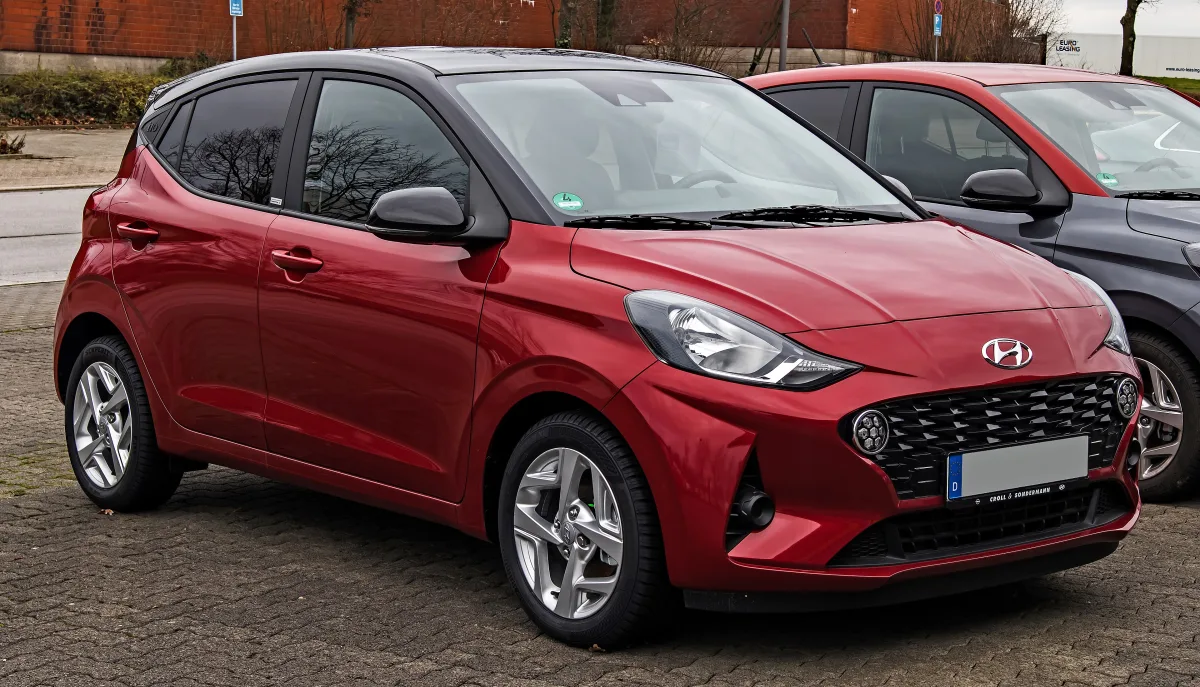
Hyundai i10: three generations, engines and trims
The Hyundai i10 is a compact city car that has been in production since 2007 and is praised for its simple technology and low running costs. We look at how the three generations differ, which engines you'll find, how the trims vary and what to check before buying a used one.






i10 in brief
The i10 is Hyundai's smallest model in Europe – a five-door hatchback designed for the city. In Europe, versions with small petrol engines are most common, all with front-wheel drive and a straightforward design.
This is one of the most sensible choices for a first car or a second family runabout: fuel consumption is low, parts aren't expensive, and the car handles and parks easily in the city. Rivals include the Kia Picanto, Toyota Aygo, Volkswagen up! and Fiat Panda.
Which one to choose
First generation (2007–2013, refreshed in 2010) – a simple, tall small car with a spacious interior for its size. Today, it's the cheapest i10, but the trim is basic and there are fewer safety systems than in newer generations.
Second generation (2013–2019) built in Turkey: it's larger, quieter and much better quality inside. This is the most popular generation in the used market – the cars are sufficiently modern and often have a low mileage.
Third generation (from 2019, updated in 2023) — lower and wider, with more modern multimedia, more driver-assistance systems, and a sporty N Line version. Some cars may still have a manufacturer's warranty — worth checking in the service booklet.
Engines and transmissions
In the first generation, you'll often find 1.1 and 1.2-litre petrol engines (around 65–85 hp), later joined by a 1.0-litre engine. The second generation is primarily powered by three-cylinder 1.0 (around 66 hp) and four-cylinder 1.2 (around 87 hp) engines.
The third generation offers 1.0 and 1.2-litre naturally aspirated engines (around 67–84 hp), while the N Line version gets a 1.0 T-GDi turbocharged engine (around 100 hp).
Transmissions come as a 5-speed manual or automatic. In the first and second generations, the automatic is a classic 4-speed, so fuel consumption is higher. In the third generation, it's replaced by an automated manual (AMT), which shifts more slowly and less smoothly.
What to check when buying a used i10
The i10 is often used in the city, so check the clutch (for slippage and excessive wear), brakes, and suspension — short trips and frequent braking wear them out faster. Test the gear shifting, especially in automatic versions.
For older cars, inspect the underbody, sills, and wheel arches for rust. Ask if the engine oil has been changed regularly, as the condition of the small engine heavily depends on maintenance.
Check the running history via service records, and the bodywork for painted-over details and uneven gaps, as city cars often suffer minor incidents.


Trims
Names and equipment vary by country and year; we list the most common trims found in Europe.
Classic
Second and third generationsThe base trim is the most basic and affordable.
- Steel wheels are often fitted
- Manual air conditioning is common
- A basic audio system
Comfort
Second and third generationsThe most popular choice offers a good balance of price and features.
- Air conditioning and electric windows
- Multimedia with phone connectivity is common
- Heated seats and steering wheel are often included
Style
Second and third generationsThe top standard trim comes with more comfort features.
- Light-alloy wheels
- Automatic climate control and navigation are often included
- Often — rear-view camera
N Line
Third generationSporty-looking version with a more powerful engine.
- Sporty bumpers and 16-inch alloy wheels
- Sportier interior trim
- 1.0 T-GDi turbocharged engine
Third-gen trim level comparison
| Classic | Comfort | Style | N Line | |
|---|---|---|---|---|
| Who it suits | At the lowest price | For daily city driving | For comfort | For a sporty look |
| Wheels (most common) | 14-inch, steel | 14–15-inch | 15–16 in., light alloy | 16 in., light alloy |
| Interior | Base | More comfort features | Larger screen, more features | Sportier trim |
| Engine | 1.0 naturally aspirated | 1.0–1.2 naturally aspirated | 1.0–1.2 naturally aspirated | 1.0 T-GDi, around 100 hp |
| Price in the used market (relatively) | Budget | Mid-range | Mid-range | Premium |
For most buyers, the best choice is the Comfort or Style with the 1.2-litre engine and manual gearbox. The N Line is worth considering if you often drive in the city and want more power.
Pros
- Low fuel consumption and affordable maintenance
- Simple, reliable technology
- Easy to manoeuvre and park in the city
- Spacious interior for a car of this size
Cons
- Weak atmospheric engines in the city
- Slow and jerky AMT or old 4-speed automatic gearbox
- Small boot
Frequently asked questions
Which i10 generation is best to buy used?
For many buyers, the best choice is the second generation (2013–2019): it is modern enough, high-quality and cheaper than the third generation. If newer features and driver assistance systems are important, go for the third generation.
Which i10 engine is better — the 1.0 or 1.2?
In the city, the 1.0-litre engine is sufficient, but the 1.2-litre four-cylinder engine runs quieter and accelerates more smoothly in urban areas. If you often drive on the motorway, opt for the 1.2 or N Line version with the turbocharged engine.
Is it worth buying an i10 with an automatic gearbox?
It is worth it if you mostly drive in the city and value comfort. However, bear in mind that the older 4-speed automatic gearbox increases fuel consumption, and the third generation's AMT shifts slower than a conventional automatic.
Updated 2026-10-09 · Trim levels and equipment vary by market and model year — check the equipment of the specific car. · Translated automatically


