 English
 Lietuvių
 Latviešu
 Eesti
 Polski
 Русский
 Українська
 Deutsch
 Nederlands
 Čeština
 Slovenčina
 Svenska
 Norsk
 Dansk
 Suomi


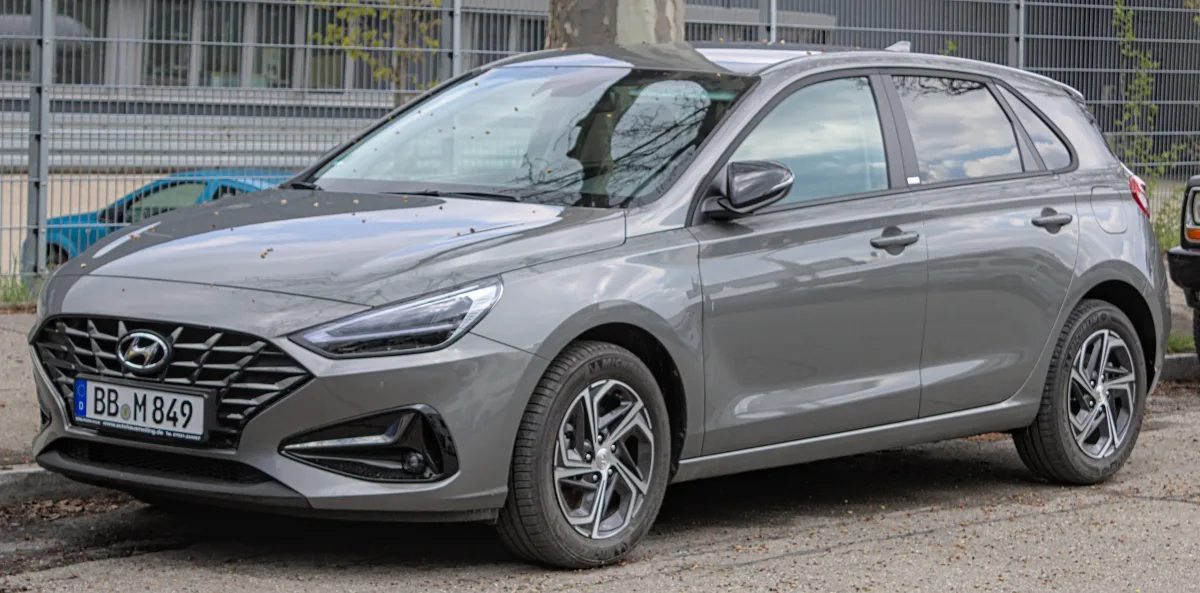
Hyundai i30: GD and PD generations, engines and trims
Hyundai i30 — a compact car designed for Europe, competing with the Volkswagen Golf, Ford Focus and Kia Ceed. We focus on the two most recent generations — GD (2012–2017) and PD (from 2017): how they differ, which engines are most common and what to check when buying used.






i30 in brief
The first i30 generation (FD) debuted in 2007. The model is developed at Hyundai's European Technical Centre in Germany, and cars destined for Europe are mainly produced at Hyundai's plant in Nošovice, Czech Republic.
i30 is offered as a 5-door hatchback and estate; the GD generation also had a 3-door version, while the PD generation introduced the 5-door fastback i30 Fastback and the sportiest version — i30 N.
In many European countries, Hyundai offers a 5-year unlimited mileage warranty on new cars, which transfers to the next owner if the car is serviced according to the manufacturer's requirements. It's worth checking if the warranty is still valid for a newer PD.
GD vs PD — what's the difference
The GD generation (2012–2017) is a reliable, well-equipped and easy-to-maintain car. In 2015, it was refreshed: the front was redesigned, a 7-speed dual-clutch automatic transmission was introduced and the sportier i30 Turbo version with a 1.6 T-GDi engine (186 hp) was added.
The PD generation (from 2017) is a more refined, quieter and safer car with smaller turbocharged petrol engines and more driver assistance systems. The 2020 update brought a new front, larger screens and 48V mild hybrids.
For a smaller budget, a well-maintained GD post-2015 facelift is a good choice, but for many buyers, the best option is the PD, especially post-2020 facelift.
Engines and transmissions
The GD typically comes with 1.4 and 1.6 petrol engines (1.6 GDi — around 135 hp) and 1.4 and 1.6 CRDi diesels (around 90–136 hp).
The PD, up until 2020, features the 1.0 T-GDi (120 hp), 1.4 T-GDi (140 hp), 1.4 MPi (100 hp), and 1.6 CRDi (around 95–136 hp). Post-facelift, it offers the 1.0 T-GDi (120 hp), 1.5 DPi (110 hp), 1.5 T-GDi (160 hp) with a 48V system, and 1.6 CRDi (115–136 hp). The i30 N has a 2.0 T-GDi engine (250–280 hp).
Transmissions include a 6-speed manual or 7-speed dual-clutch (7DCT). Light hybrids also offer the smart manual iMT, where the clutch is electronically controlled. From 2021, the i30 N can be found with an 8-speed dual-clutch transmission.
What to check when buying a used i30
The 7DCT should shift smoothly, without juddering or vibration; with a manual, check the clutch and dual-mass flywheel. In diesels, especially those driven mostly in the city, check the diesel particulate filter (DPF) and EGR.
For direct-injection petrol engines (GDi, T-GDi), it's crucial to change the oil on time — ask for the service history. The i30 N is often driven enthusiastically, so carefully assess the brakes, tyres, clutch, and suspension.
Check the mileage against service records and MOTs, and verify the remaining warranty and recall campaigns with an official Hyundai dealer using the VIN.


Trim levels
Hyundai trim names vary by country and year; we list the names used in Germany, which are often found among cars imported to Lithuania.
Select
PDThe base PD trim is simple and the most affordable.
- Often, smaller alloy wheels
- Essential safety systems
- A more basic infotainment system
Trend
PDThe most popular choice — a good balance of price and convenience.
- Light-alloy wheels
- Often — navigation and a rear-view camera
- Often — heated seats and steering wheel
Premium
PD up to 2020The top standard trim for comfort enthusiasts.
- Often — LED headlights
- Often — leather seats
- Often — keyless entry
N Line
PDA sporty-looking version without a sporty engine.
- Different bumpers and alloy wheels
- Sport seats and N Line interior
- Often — the more powerful 1.4 or 1.5 T-GDi engine
i30 N
PDSporty version for driving pleasure.
- 2.0 T-GDi engine (250–280 hp)
- Adaptive suspension and sport brakes
- 18–19 inch alloy wheels
Comparison of PD generation trims
| Select | Trend | N Line | i30 N | |
|---|---|---|---|---|
| Who it's for | For the sensible buyer | For daily driving | Sporty looks | For driving pleasure |
| Alloy wheels (usually) | 15–16 model year | 16–17 model year | 17–18 model year | 18–19 model year |
| Interior | Base | More comfort features | Sport seats | Sport seats, N trim |
| Engine | 1.0 T-GDi, 1.4 MPi or 1.5 DPi | 1.0–1.5 T-GDi, 1.6 CRDi | 1.0–1.5 T-GDi, 1.6 CRDi | 2.0 T-GDi, 250–280 hp |
| Price in the used market (relatively) | € | €€ | €€ | €€€ |
Most buyers will find the Trend with a 1.0 or 1.5 T-GDi or 1.6 CRDi engine to be the best choice. The N Line is worth considering for its styling, while the i30 N is only if you're after a truly sporty car.
Pros
- Good balance of price and features
- Long factory warranty with no mileage restrictions
- Wide range of body styles — hatchback, estate, and Fastback
- Simple maintenance and readily available spare parts
Cons
- The ride and interior aren't as refined as pricier competitors
- The base 1.4 MPi engine is rather weak
- The used market offer is smaller than that of the Golf or Octavia
Frequently asked questions
Which i30 generation is best to buy used?
For many buyers, the best choice is the PD generation, especially after the 2020 refresh: modern, well-equipped, and often with remaining factory warranty. For a tighter budget, a well-maintained GD is a good fit.
How do the i30 hatchback, estate, and Fastback differ?
The estate has a significantly larger boot, making it ideal for families. The Fastback is lower, with a more elegant five-door liftback silhouette and a larger boot than the hatchback. The mechanics and engines are essentially the same.
Which i30 engine to choose?
Ideal for city drivers is the 1.0 or 1.5 T-GDi petrol engine, while those who cover more miles outside the city should consider the 1.6 CRDi diesel. The diesel particulate filter needs longer journeys to function properly.
Updated 2026-10-09 · Trim levels and equipment vary by market and model year — check the equipment of the specific car. · Translated automatically


