 English
 Lietuvių
 Latviešu
 Eesti
 Polski
 Русский
 Українська
 Deutsch
 Nederlands
 Čeština
 Slovenčina
 Svenska
 Norsk
 Dansk
 Suomi


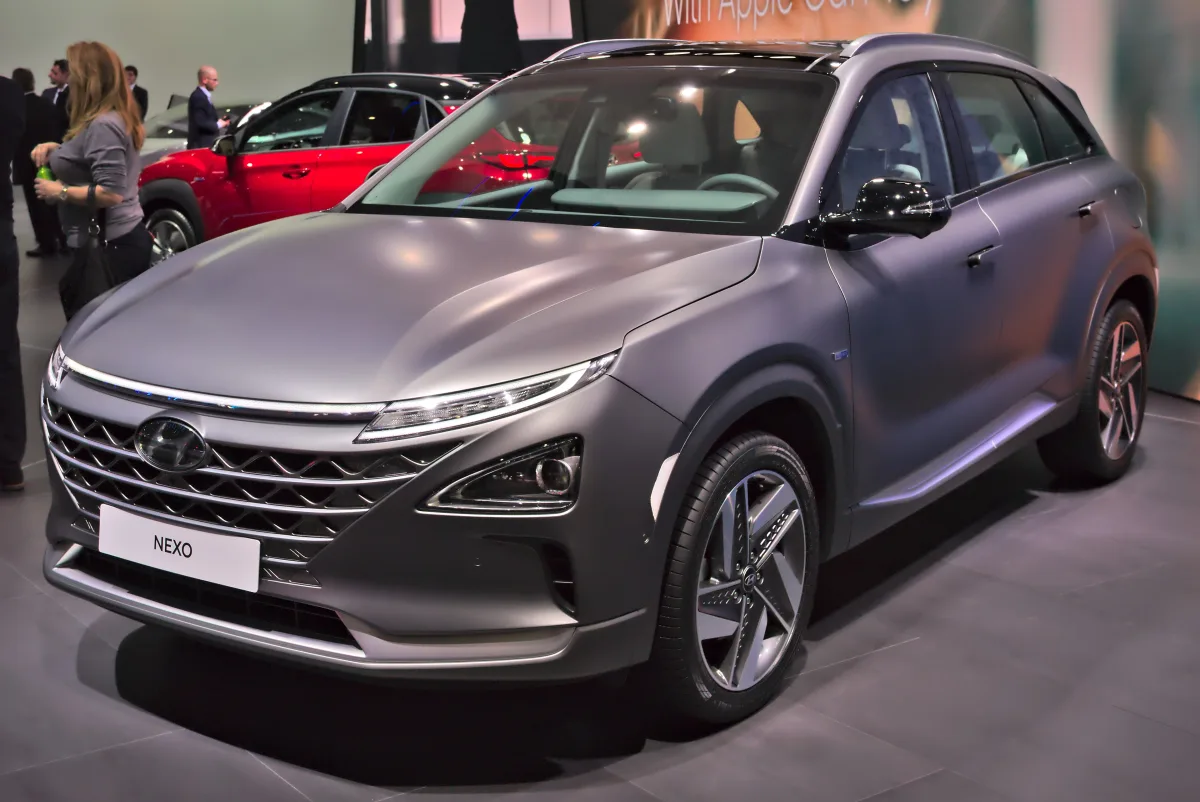
Hyundai Nexo: hydrogen fuel cell SUV, generations and buying
The Hyundai Nexo is a hydrogen fuel cell-powered SUV that was introduced in 2018. It's not your typical electric car or hybrid; it generates its own electricity from hydrogen. We'll look at the technology, generations, and the most important question for Lithuanian buyers: where to fill up.






Nexo in brief
The Nexo is a compact SUV with an electric motor powered by a fuel cell battery. Hydrogen is stored in high-pressure tanks (700 bar), and the only emissions are water vapour. Additionally, the car has a small battery pack.
The first generation has been in production since 2018, with a new generation set to arrive in 2025 featuring a longer range and revised design. The Nexo is only sold where there are hydrogen refuelling stations.
Which generation to choose
The first generation has been tested in daily use for several years now. The claimed range according to WLTP is around 600–660 km. The condition of the hydrogen tanks and fuel cell battery are the most important buying criteria.
The second generation features larger tanks, a more powerful engine, and a refreshed interior, with a longer range. There are very few used examples on the market so far.
Technology and driving
The first-generation Nexo has an electric motor producing around 163 hp (120 kW) and front-wheel drive. Acceleration is average, and the ride is very quiet. Like other electric cars, there's no multi-speed gearbox.
Refuelling with hydrogen takes just a few minutes, but it can take longer if there's a queue at the pump. It's important to know that hydrogen can be expensive, and the refuelling network is limited.
What to check when buying a used Nexo
First, find out if you have somewhere to refuel with hydrogen: in Lithuania, the network of public hydrogen stations is practically non-existent, so real-world use is very limited without prepared infrastructure. For an imported car, local service support is essential.
Request all service records, check the expiry dates of the hydrogen tanks, and ensure that mandatory inspections have been carried out. Parts and specialists for this car are highly specific.


Trim levels
Trim names vary by market; in the US, Blue and Limited are offered, while other markets have different packages.
Blue
First generationThe base US trim.
- Often — LED headlights
- Often — core safety features
- Often — standard multimedia
Limited
First generationHigher trim with more equipment.
- Often — leather upholstery
- Often — enhanced safety package
- Often — larger screen and navigation
Trim comparison
| Blue | Limited | |
|---|---|---|
| Who it's for | Base model | More kit |
| Wheels (most common) | 17-inch | 19-inch |
| Interior | More basic | Leather |
| Gearbox | Fuel cell and electric motor | Fuel cell and electric motor |
| Price in the used market (relatively) | Mid-range | High-end |
The Nexo is only worth buying if you have reliable access to hydrogen refuelling. Without it, this car is practically useless.
Pros
- Zero emissions, just water vapour
- Quick hydrogen refuelling
- Very quiet driving experience
- Cutting-edge technology and comfort
Cons
- There are practically no public hydrogen stations in Lithuania
- Hydrogen is expensive and the refuelling network is limited
- It's a rare car that requires specialist maintenance
Frequently asked questions
Is the Nexo an electric car?
Yes, it's powered by an electric motor, but it gets its electricity from hydrogen fuel cells, not just an externally chargeable battery.
How far can the Nexo travel on a full tank?
The declared range for the first generation according to WLTP is roughly 600–660 km. The second generation offers even more.
Can the Nexo be used in Lithuania?
Practically no, as Lithuania's network of public hydrogen refuelling stations is practically non-existent. The car is only useful where this infrastructure exists.
Updated 2026-10-14 · Trim levels and equipment vary by market and model year — check the equipment of the specific car. · Translated automatically


