 English
 Lietuvių
 Latviešu
 Eesti
 Polski
 Русский
 Українська
 Deutsch
 Nederlands
 Čeština
 Slovenčina
 Svenska
 Norsk
 Dansk
 Suomi


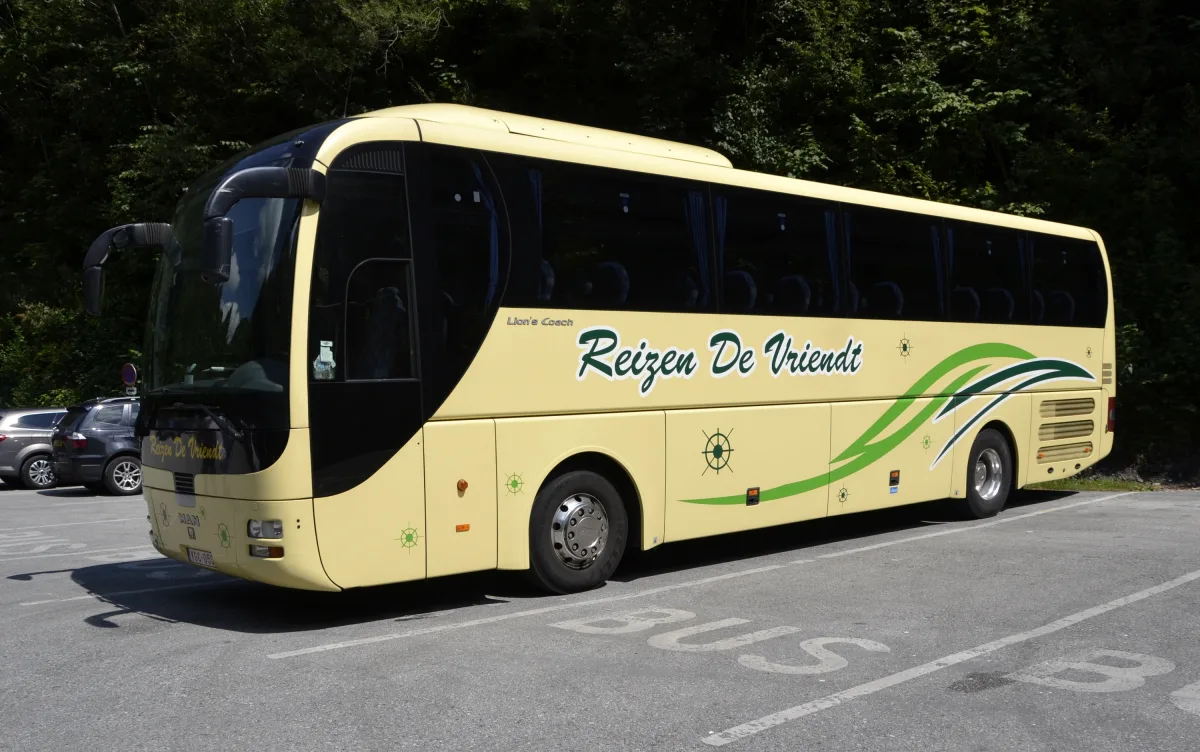
MAN Lion’s Coach: tourist coach, generations, engines and inspection
MAN Lion’s Coach — the tourist and long-distance coach whose roots date back to 1996. We look at the generations, versions, engines, seating capacity and what to check when buying used.






Lion’s Coach in brief
MAN Lion’s Coach — the tourist and long-distance coach that drivers use for excursions, international trips and regular routes. It comes with two or three axles, making it suitable for various passenger numbers.
The model is praised for its robust construction, comfortable interior and economical engines. In the used market, the Lion’s Coach is one of the most popular German tourist coaches.
Generations and versions — what’s the difference
The Lion’s Coach traces its roots back to the mid-1990s when the Lion’s Star was introduced. The model evolved over time, with newer generations offering a more modern design, more economical engines and safety systems. The used market features various generations of the vehicle.
The coach is offered in several length versions — from around 12 to nearly 14 metres. There are also designations “C” and “L”, indicating different versions with three axles or greater length. Seating capacity usually ranges from 49 to 60, depending on the length.
Trim levels vary: the base version has simpler seats, while higher-end trims offer more legroom, a toilet, a kitchenette and multimedia.
Engines and transmissions
The Lion’s Coach is powered by MAN six-cylinder diesels. Newer versions use around 10 and 12-litre engines that meet Euro 6 standards, with power ranging roughly from 360 to over 480 HP. Earlier models comply with Euro 3–5 standards.
Transmissions are manual, automated (TipMatic), or automatic. Automated gearboxes are convenient for long journeys but require regular maintenance.
What to check when buying a used Lion’s Coach
Firstly, check the service history and tachograph data. Buses often rack up high mileage, so ask for a full service book and inspection documents. Check the air suspension, brakes, and tyres.
The engine and transmission should run smoothly, without vibration or juddering. Check the AdBlue and SCR system, particulate filter, cooling system, and air conditioning — climate control is vital on long trips.
Inspect the interior: seats, trim, luggage compartment, steps, and windows. Check the body for corrosion and repainted parts, and the electrical equipment for blown fuses. Match the numbers with the documents.


Versions
Names and equipment vary by market and year; we list the most common European variants.
Lion’s Coach (12 m)
1996–The standard version for touring and long-distance travel.
- Two-axle variant
- Around 49–55 seats
- A wide range of trim levels
Lion’s Coach L
1996–The longer version for more passengers.
- More seating capacity
- Often three-axle
- Often — a toilet and kitchenette
Lion’s Coach C
1996–Alternative version with a different length and layout
- Different length and boot space
- Often the same technical base
- Suitable for long journeys
Lion’s Coach Euro 6
1996–Newer versions with Euro 6 engines
- Updated engines
- Additional safety systems
- Often pricier in the used market
Comparison of the main Lion’s Coach versions
| 12 m | L | Euro 6 | |
|---|---|---|---|
| Who it’s for | For standard touring | For large passenger numbers | For long journeys |
| Axle | Two | Two or three | Two or three |
| Seating capacity (usually) | Around 49–55 | Around 55–60 | Around 49–60 |
| Price in the used market (relatively) | Mid-range | High-end | High-end |
Most drivers will find the standard 12m version sufficient, while those needing more space should opt for the L. Newer Euro 6 versions are ideal for long journeys. The key is the service history.
Pros
- Robust build and comfortable interior
- Economical engines
- Wide range of spare parts and service options
- Wide range of variants
Cons
- AdBlue and SCR system can be costly
- Many used coaches have high mileage
- Repairing an automated gearbox can be expensive
Frequently asked questions
How many seats does the Lion’s Coach have?
It depends on the length and layout of the cabin, usually around 49–60 seats. The exact number is specified in the technical documents.
What does C and L mean in the name?
These are designations for different versions, related to length, number of axles, and layout. Check the specific differences in the coach’s documents.
Is it worth buying a Lion’s Coach with high mileage?
If there is a full service history and the coach is mechanically sound — yes. However, a high-mileage coach will need more maintenance, so haggle on the price.
Updated 2026-10-21 · Trim levels and equipment vary by market and model year — check the equipment of the specific car. · Translated automatically


