 English
 Lietuvių
 Latviešu
 Eesti
 Polski
 Русский
 Українська
 Deutsch
 Nederlands
 Čeština
 Slovenčina
 Svenska
 Norsk
 Dansk
 Suomi


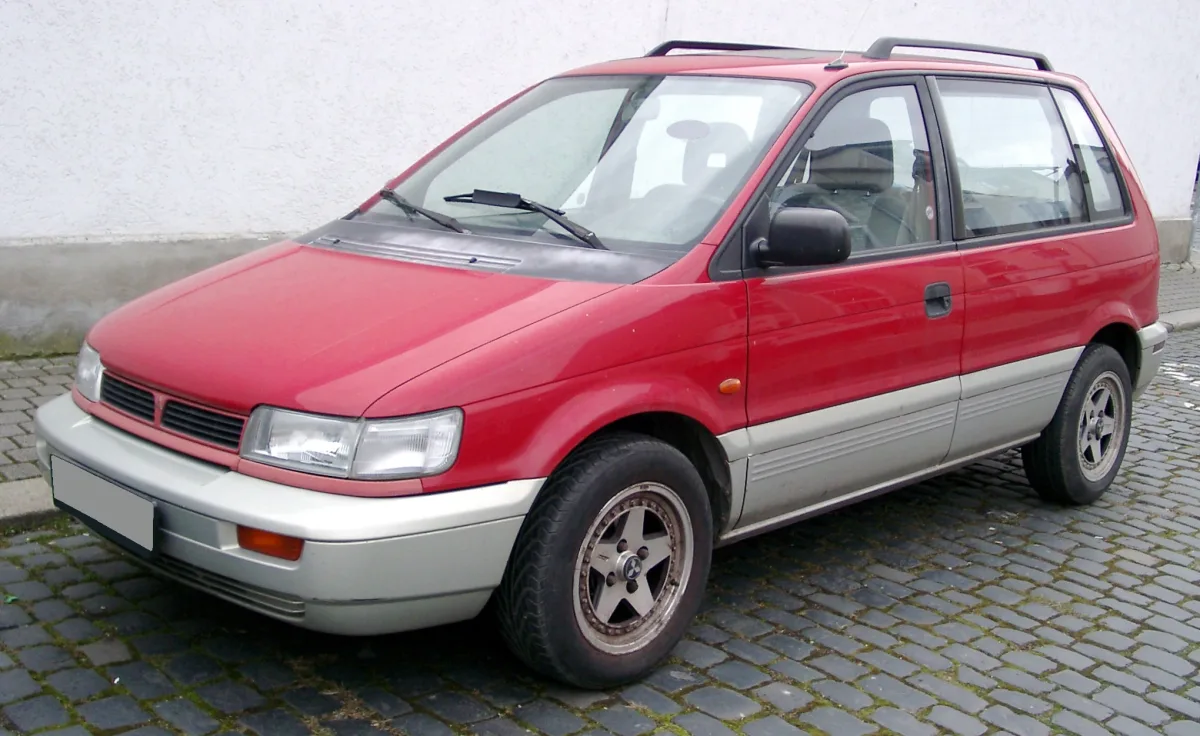
Mitsubishi Space Runner: a compact minivan with sliding doors and what you need to know
Mitsubishi Space Runner — a compact minivan, sold in Europe from 1991 to 2002 (known as the RVR in Japan). We explain the differences between the two generations, the engines available, and what to check if you come across one in the used market.






Space Runner in brief
The first generation (N10/N20) was introduced in February 1991 as a compact minivan, created by shortening the chassis of the second-generation Mitsubishi Chariot (Space Wagon) by 20 cm. The body is tall, with two rows of seats, one sliding door on the passenger side, and one rear hatch.
In Japan, the model was called the RVR (Recreation Vehicle Runner). It was aimed at younger buyers looking for a versatile vehicle for leisure. In Europe, it was sold as the Space Runner.
Generations — what sets them apart
The first generation was produced from 1991 to 1997, and the second (N60/N70) debuted in 1997. In Europe, it was restyled and sold as the Space Runner. The second generation featured a more modern design and direct-injection GDI engines.
As a result, the first generation is more appealing to enthusiasts of simpler technology, while the second is for those seeking a more modern vehicle, albeit with more complex technology.
Engines and transmissions
In the Japanese versions of the second generation, the standard trim came with a 1.8-litre petrol engine, while the sportier versions offered a 2.4-litre GDI or a 2.0-litre turbo. Check the engine specifications and power outputs for European versions according to the specific vehicle's documents.
Transmission — manual or automatic. GDI (direct injection) engines require quality maintenance and the right fuel.
What to check when buying a Space Runner
These cars are old, so check the body for rust in the sills, arches, and boot floor. Test the sliding door: it should open and close smoothly.
Check the engine, gearbox, suspension, and brakes. For GDI engines, ask about fuel system maintenance. Parts, especially specific body parts, are scarce in Lithuania, so check availability before buying.


Trim levels
Trim names and equipment vary by market and year; we don't list European market trims here.
Standartinė versija
1991–2002 model yearsA compact family minivan with a sliding door and petrol engine.
- High roofline and spacious interior
- Often — electrically operated windows
- Equipment varies by market and year
Generation comparison
| I karta (1991–1997) | II karta (1997–2002) | |
|---|---|---|
| Who it's for | For simpler technology | For a more modern car |
| Technology | More basic | GDI direct injection |
| Design | Boxy, older look | More modern |
| Price in the used market (relatively) | € | € |
For most buyers, the better choice is a later model in good condition, as generations differ more in technical complexity than price.
Pros
- Compact yet spacious body
- Smooth doors for easy city driving
- Spacious interior
- Not expensive in the used market
Cons
- Finding parts in Lithuania isn't easy
- Risk of rust due to age
- GDI engines require meticulous maintenance
Frequently asked questions
How does the Space Runner differ from the Space Wagon?
The Space Runner is a shorter compact minivan, created by shortening the Space Wagon's wheelbase by 20 cm.
Is the Space Runner the same as the RVR?
Yes. RVR is the name in Japan, while the Space Runner is sold in Europe.
How many doors does the Space Runner have?
The first generation has one sliding door on the passenger side, front doors, and a rear hatch.
Updated 2026-10-21 · Trim levels and equipment vary by market and model year — check the equipment of the specific car. · Translated automatically


