 English
 Lietuvių
 Latviešu
 Eesti
 Polski
 Русский
 Українська
 Deutsch
 Nederlands
 Čeština
 Slovenčina
 Svenska
 Norsk
 Dansk
 Suomi


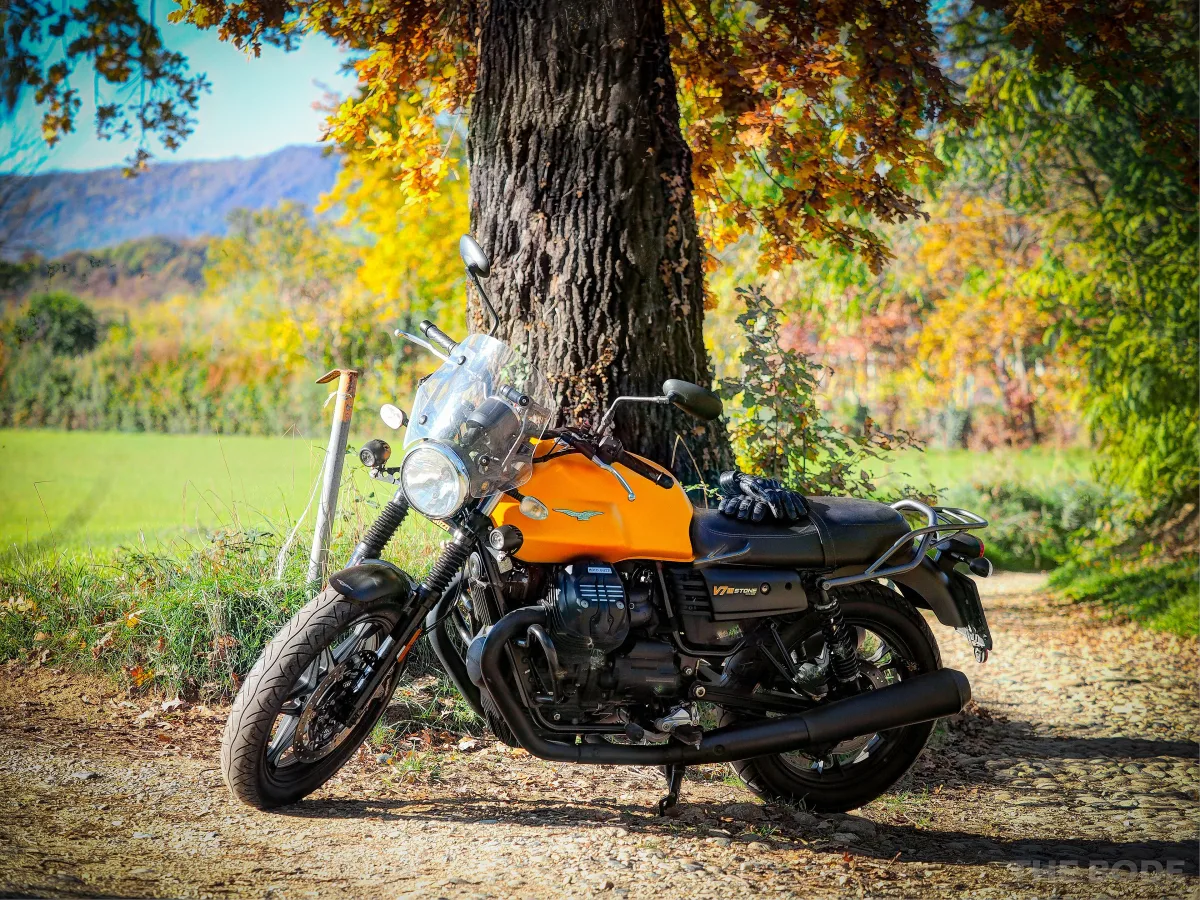
Moto Guzzi V7: generations, engines and what to check when buying used
Moto Guzzi V7 — a classic-style motorcycle whose history began in 1967 and continues to this day. We look at the modern generations, engines and what to check when buying used.






V7 in brief
The V7 is a classic-look motorcycle with an air-cooled transverse V-twin engine and shaft drive. It's particularly popular for its easy handling, retro style and simple construction.
The first V7 appeared in 1967, and the current line began in 2008 with the V7 Classic. It suits both beginners and experienced riders alike.
Generations and versions
The modern V7 line includes the V7 Classic (from 2008), V7 II (2015), V7 III (2017) and V7 IV (2021). Each generation received improvements: the V7 II got ABS and a six-speed gearbox, the V7 III added traction control and a fresher design, and the V7 IV features a larger engine.
Beyond the base model, other versions are offered, such as the Stone, Special and Racer, which differ in appearance and equipment.
Engine and gearbox
Earlier V7 generations have an approximately 744 cm³ air-cooled transverse V-twin engine with around 50 hp. The V7 IV has an approximately 853 cm³ engine and around 65 hp.
The gearbox is manual, with power delivered via shaft. Maintenance is straightforward thanks to the simple design.
What to check when buying a used V7
Check the condition of the shaft drive and final drive oil, and ensure that the engine valve clearances have been adjusted according to the schedule. Listen to the engine when cold and hot.
Check the brakes, tyres, suspension and electrical equipment. Ask for the service history and ensure the documents match the numbers, and the example hasn't been overly modified.


Versions and trims
Names and equipment vary by market and year; here we outline the main versions.
V7 Classic / V7 II
2008–2016Earlier generations with a 744 cm³ engine.
- Around a 744 cm³ engine, around 50 hp
- V7 II — ABS and six-speed gearbox
- Retro styling
V7 III
2017–2020Improved generation with modern handling.
- Around a 744 cm³ engine
- Often — traction control
- Refreshed design
V7 IV
2021–Latest generation with a larger engine.
- Approximately 853 cc engine, around 65 hp
- Often comes with ABS and traction control
- Updated electronics
Stone / Special / Racer
By yearDifferent versions depending on the look.
- Different design
- Different interior
- Check by example
V7 generation comparison
| V7 II | V7 III | V7 IV | |
|---|---|---|---|
| Who it suits | For beginners | For daily use | For daily driving and trips |
| Engine | Approximately 744 cc | Approximately 744 cc | Around 853 cc |
| Power (approx.) | Around 50 hp | Around 50 hp | Around 65 hp |
| Transmission | Rear-wheel drive | Rear-wheel drive | Rear-wheel drive |
| Price in the used market (relatively) | Budget-friendly | Mid-range | Premium |
For most buyers, the best choice is the V7 III if you're after a balanced option. The V7 IV is worth considering if a larger engine and newer tech are important to you.
Pros
- Retro styling and simple construction
- Rear-wheel drive — no chain maintenance
- Suitable for both beginners and experienced drivers
- Distinctive V-shaped engine
Cons
- Power can be modest at times
- Air-cooled engines are less economical
- Less advanced electronics than newer motorcycles
Frequently asked questions
Which V7 generation is the best?
For most buyers, the V7 III or newer V7 IV will be the best bet. Earlier generations are cheaper, but less modern.
Is the V7 suitable for beginners?
Yes, it's easy to handle and not overly powerful. Before buying, check the power output and your licence category.
What are the differences between the V7 Stone, Special, and Racer?
Mostly in styling and finish, with similar tech. Check the specific differences by year.
Updated 2026-10-21 · Trim levels and equipment vary by market and model year — check the equipment of the specific car. · Translated automatically


