 English
 Lietuvių
 Latviešu
 Eesti
 Polski
 Русский
 Українська
 Deutsch
 Nederlands
 Čeština
 Slovenčina
 Svenska
 Norsk
 Dansk
 Suomi


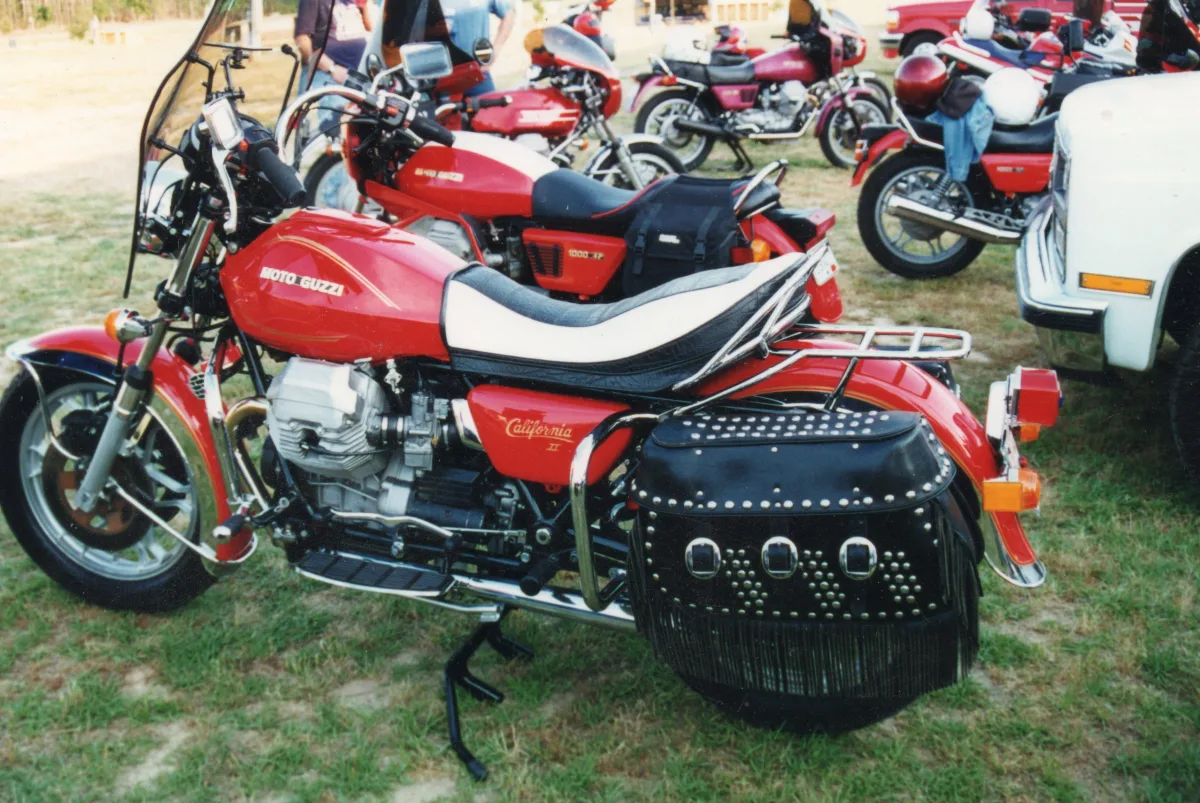
Moto Guzzi California: generations, V2 engines and what to check when buying
Moto Guzzi California (from 1971) — a long-running Moto Guzzi cruiser and touring bike with a longitudinal V-twin engine and shaft drive. We look at the main generations, engines, and what to check when buying used.






California in brief
California is one of Moto Guzzi's longest-running models. It started life as a touring bike for police and long journeys, later becoming a cruiser.
All Californias feature a 90° V-twin engine layout with a longitudinal crankshaft and shaft drive. This gives the bike its distinctive Moto Guzzi character and noticeable lean when accelerating.
Generations — what's the difference
The first generation (from 1971) was the California 850 with a classic look, followed by the California 1000 and California II/III. In the 1990s, the California 1100 arrived with fuel injection and modern features.
From 2006, the California received an update (Stone, Touring, Vintage), and in 2012, the California 1400 launched with a larger, more powerful engine. Newer generations come with more electronics: ABS, traction control, and riding modes.
Engine and drivetrain
Engine capacities range from around 850 cm³ to 1380 cm³ (California 1400). Power varies by model: from a few tens of horsepower to nearly 100 hp in the latest versions. The gearbox is five or six-speed, with the rear wheel driven by shaft.
Motorcycles are quite heavy, but stable. The comfortable riding position, shaft drive, and high torque make them suitable for long distances.
What to check when buying a used California
The most important thing is the service history: engine oil and shaft drive oil changes, valve adjustments. Listen to the engine when it's cold and hot, check if the brakes and gearbox operate smoothly, and look for any oil leaks.
Inspect the chrome details, tank, side cases, and exhaust system (rust, dents). In older motorcycles, check the electrical system, and in newer ones, check the ABS and electronics operation. Pay attention to the shaft drive joints and the final drive spacing.


Trims and versions
The California is produced in numerous versions and generations; we list the main ones.
California 850 / 1000
1971–1990Classic generation motorcycles.
- Approximately 850–1000 cm³ V2 engine
- Shaft drive
- Classic styling
California 1100
1990s–2005Later generation with fuel injection and more modern technology.
- Approximately 1100 cm³ V2 engine
- Fuel injection
- Comfortable seating position
California Stone / Touring / Vintage
2006–2012Refreshed generation with various versions.
- Updated chassis
- Shaft drive
- Often — estate versions
California 1400
2012–2020The latest, most powerful generation.
- Approximately 1380 cm³ V2 engine
- ABS and traction control
- More equipment
Comparing California generations
| Klasikinė (850/1000) | 1100 | 1400 | |
|---|---|---|---|
| Who it suits | For classic enthusiasts | For long drives and cruising | For modern equipment |
| Engine | 850–1000 cm³ | Around 1100 cm³ | Around 1380 cm³ |
| Trim | Base | Mid-range | ABS, traction control |
| Price in the used market (relatively) | Mid-range | Mid-range | High-end |
Classic enthusiasts will appreciate the older California, while those seeking modern features and power should opt for the California 1400. The 1100 is the golden middle for touring.
Pros
- Distinctive Moto Guzzi character
- Shaft drive — less maintenance
- Comfortable seating position for long rides
- A wide range of versions to choose from
Cons
- Heavy-duty motorcycles
- Fewer parts and services for less popular brands
- Older models require a lot of maintenance
Frequently asked questions
Is the California suitable for long journeys?
Yes, especially the Touring and 1400 versions with side cases, shaft drive, and a comfortable riding position.
How does the California 1400 differ from previous versions?
The California 1400 has a larger, approximately 1380 cm³ engine and more electronics (ABS, traction control, riding modes), while earlier versions are more basic.
Does the California have a chain?
No, the rear wheel is driven by a shaft, so there's no need to clean or lubricate a chain, but the driveshaft oil needs to be changed according to the schedule.
Updated 2026-10-21 · Trim levels and equipment vary by market and model year — check the equipment of the specific car. · Translated automatically


