 English
 Lietuvių
 Latviešu
 Eesti
 Polski
 Русский
 Українська
 Deutsch
 Nederlands
 Čeština
 Slovenčina
 Svenska
 Norsk
 Dansk
 Suomi


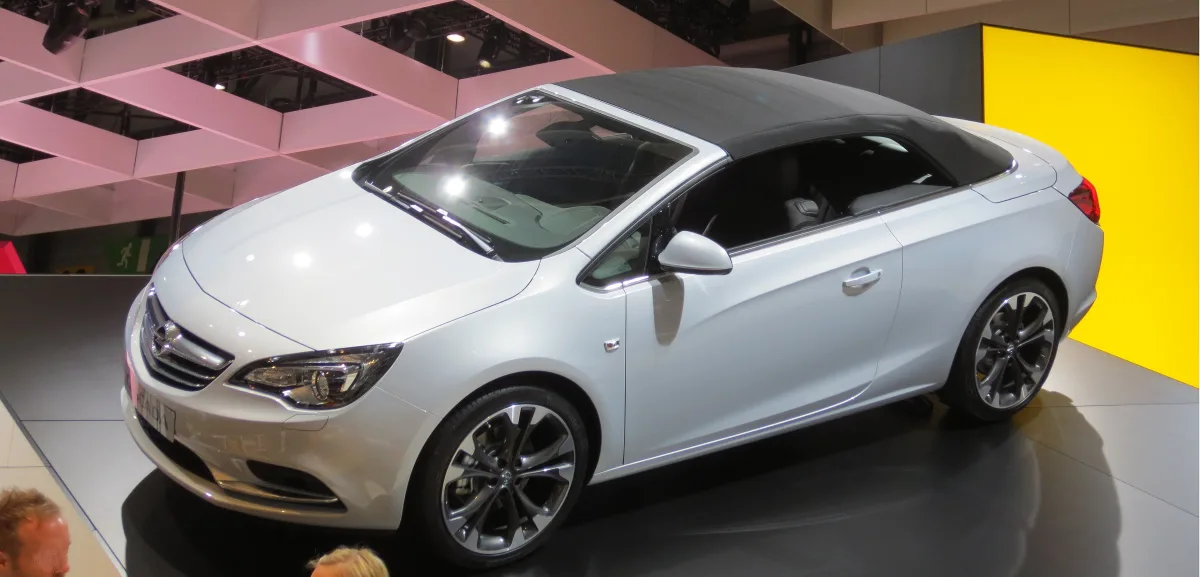
Opel Cascada: convertible with soft top, engines and trims
Opel Cascada — a four-seat convertible with a soft top, produced in Poland from 2013 to 2019 as an open alternative to Astra and Insignia class cars. In this article, we review the engines, trims, and what to check when buying a used Cascada.






Cascada in brief
Cascada — a large, long convertible with four seats and a soft fabric roof that opens electrically. Compared to hard-top convertibles, the soft top is lighter and takes up less space in the boot.
On the used market, the Cascada is appealing as a relatively affordable convertible that can carry passengers in the back. It's more about comfort than sporty driving, making it ideal for relaxed driving and road trips.
Which version to choose
Produced in one generation, but with several engine lines and later updated equipment and multimedia. When choosing, pay attention to the specific car's equipment and service history.
Diesel variants are more economical for long journeys, petrol ones are quieter and better suited for the city. Due to its large mass, the smallest engines can be overloaded, so many buyers opt for more powerful versions.
Engines and gearboxes
Petrol engines — 1.4 turbo (around 120–140 hp) and 1.6 turbo (around 170–200 hp). Diesels — 2.0 CDTI (around 165 hp), 2.0 BiTurbo CDTI (around 195 hp) and later 1.6 CDTI.
Transmissions — 6-speed manual or 6-speed automatic. The automatic is great for relaxed, comfortable driving, but its condition must be checked during a test drive.
What to check when buying a used Cascada
Test the roof mechanism a few times — it should open and close smoothly, without any leaks or error messages. Inspect the roof lining, seals, and roof cover in the boot and cabin for any signs of moisture.
In petrol turbo engines, check the cooling system integrity and oil consumption, and in diesels — the turbo, EGR, and particulate filter. Check the suspension, as the car is heavy, and all comfort features — windows, parking sensors, cameras.


Trim levels
Names and equipment vary by market and year; we list the versions most commonly found in Europe.
Bazinė
All generationsBase trim with standard equipment.
- Often — air conditioning and electric windows
- Often — 17-inch alloy wheels
- Often — basic multimedia
Innovation
All generationsHigher-spec version with additional equipment.
- Often — leather interior
- Often — navigation and rear-view camera
- Often — larger wheels
2.0 BiTurbo CDTI
All generationsThe most powerful diesel option.
- Diesel engine, around 195 hp
- Often — a richly equipped trim
- Strong acceleration
1.6 Turbo (200 AG)
All generationsThe most powerful petrol option.
- 1.6-litre turbo petrol engine
- Often — a richly equipped trim
- Smooth and lively driving
Comparing versions
| Bazinė | Innovation | 2.0 BiTurbo CDTI | 1.6 Turbo 200 AG | |
|---|---|---|---|---|
| Who it's for | For everyday use | For comfort and road trips | For long distances | For spirited driving |
| Alloy wheels (most often) | 17-inch | 18–19 col. | 18–19 col. | 18–19 col. |
| Engine | 1.4 turbo | 1.4–1.6 turbo, 2.0 CDTI | 2.0 BiTurbo CDTI | 1.6 turbo |
| Gearbox | Manual or automatic | Manual or automatic | Often automatic | Manual or automatic |
| Price in the used market (relatively) | €€ | €€ | €€€ | €€€ |
Most buyers will be happy with the Innovation trim with a 1.6 turbo or 2.0 CDTI engine. The 2.0 BiTurbo is for those who prioritise power and long journeys.
Pros
- A spacious four-seater convertible
- Comfortable driving
- A luxurious-looking interior
- Often comes with a rich array of features
Cons
- Bulky with modest power from the smallest engines
- The roof mechanism requires careful inspection
- Insurance and fuel are pricier than for hatchbacks
Frequently asked questions
Is the Cascada suitable for daily use?
Yes, if you’re not fussy about size and fuel consumption. The four-seat cabin and comfortable ride make it practical, but the boot is smaller with the roof down.
Which Cascada engine is the best?
Most will be happy with the 1.6 turbo (170 or 200 hp) or the 2.0 CDTI. Diesel is better for long journeys, petrol for the city.
Is the soft top reliable?
Usually yes, if it’s well-maintained. Before buying, check all functions and seals — repairs can be expensive.
Updated 2026-10-17 · Trim levels and equipment vary by market and model year — check the equipment of the specific car. · Translated automatically


