 English
 Lietuvių
 Latviešu
 Eesti
 Polski
 Русский
 Українська
 Deutsch
 Nederlands
 Čeština
 Slovenčina
 Svenska
 Norsk
 Dansk
 Suomi


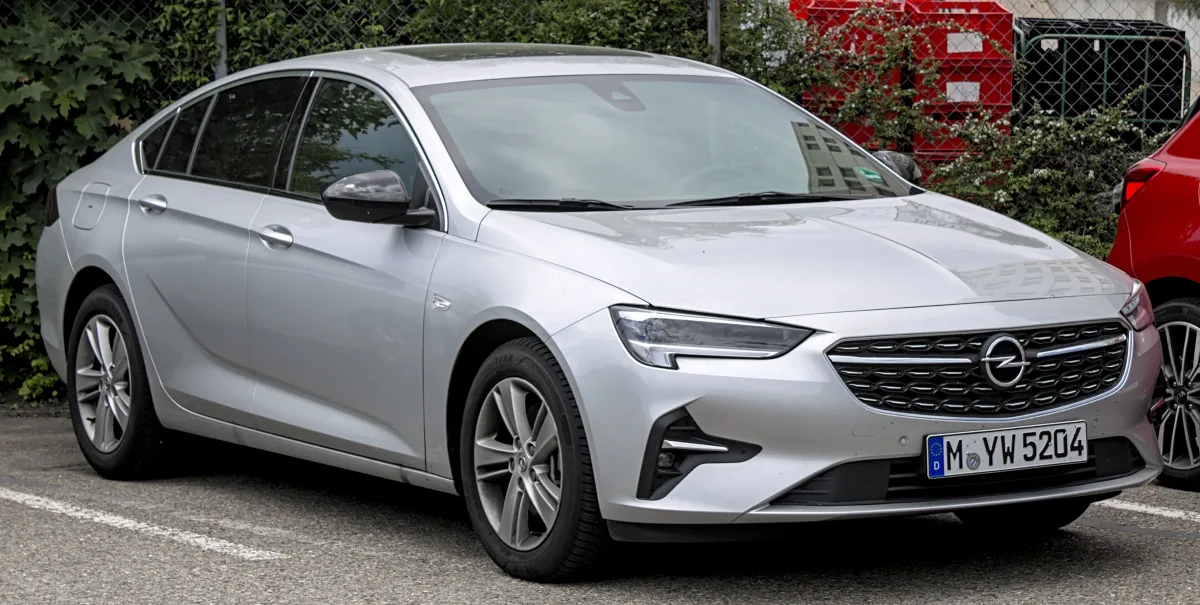
Opel Insignia: A and B generations, engines and trims
The Opel Insignia is a mid-size car popular in Lithuania as a spacious family or workhorse, especially with a diesel engine. We look at both generations — the Insignia A (2008–2017) and Insignia B (2017–2022): how they differ, which engines are most popular, how the trims vary and what to check when buying.






Insignia in brief
The Insignia replaced the Opel Vectra and was named the 2009 European Car of the Year. The A generation offered sedan, liftback and estate (Sports Tourer) body styles, and from 2013, a raised estate Country Tourer version. In the B generation, the liftback is called Grand Sport and the estate is the Sports Tourer.
The Insignia is praised for its spacious interior, stable highway driving and comfortable seats — some versions are certified by AGR (the German back health association). On the used market, the Insignia is usually cheaper than similarly aged rivals from the Volkswagen group.
A and B — how they differ
The Insignia A (2008–2017) is a hefty, solid-looking car. The 2013 facelift brought a new interior layout with fewer buttons and a touch-sensitive centre console, IntelliLink multimedia and more economical engines. It's the most affordable way to get a large family car, but most examples have high mileage.
The Insignia B (2017–2022) was built on a new, lighter platform: the car became lighter, longer, and more spacious at the rear. It offers IntelliLux LED matrix headlights and all-wheel drive with torque distribution to the rear wheels. The 2020 update brought new engines and IntelliLux Pixel headlights.
For a smaller budget, consider the Insignia A post-2013 facelift, while for a more modern, lighter, and economical car, go for the Insignia B.
Engines and transmissions
The Insignia A is most commonly found with 2.0 CDTI diesels (around 110–195 hp, with the most powerful being the BiTurbo with twin turbos), and since 2015, the newer 1.6 CDTI. Petrol options include the 1.4 and 1.6 Turbo, 1.8 and 2.0 Turbo, while the sporty OPC had a 2.8 V6 Turbo engine (325 hp) and all-wheel drive.
The Insignia B comes with 1.5 Turbo (140 and 165 hp), 1.6 Turbo and 2.0 Turbo petrols, 1.6 CDTI, 2.0 CDTI and 2.0 BiTurbo CDTI (210 hp) diesels; post-2020 update, there are 1.5 and 2.0-litre diesels and 1.4 and 2.0 Turbo petrols. The sporty GSi has a 2.0 Turbo (or pre-update, a 2.0 BiTurbo diesel) and always comes with all-wheel drive.
Transmissions are 6-speed manual or automatic: the A has a 6-speed box, while the B has 6, 8, or 9 speeds, depending on the engine and year.
What to check when buying a used Insignia
In 2.0 CDTI diesels, check the twin-mass flywheel, EGR valve, and diesel particulate filter (DPF). If oil levels are rising, it could indicate frequent failed DPF regenerations – a common issue for diesels that do a lot of city driving. In newer diesels, also check the AdBlue system if fitted.
The automatic gearbox should shift smoothly, without judders; ask if the gearbox oil has been changed. In all-wheel-drive versions, test the handling in corners – there shouldn't be any tramlining or understeer.
Check the electronics – IntelliLink infotainment, parking sensors, and lights. Verify the service history for the engine, and inspect the body for repainted parts and uneven gaps.


Trim levels
Opel trim names vary by country and year; we list those commonly found in Europe.
Edition
Insignia A and BThe base, most commonly found trim level.
- Climate control
- Often – light-alloy wheels and cruise control
- Simpler infotainment
Cosmo
Insignia AThe top standard A-series trim level.
- Often – adaptive bi-xenon AFL+ headlights
- Often – leather or part-leather seat upholstery
- Larger wheels
Innovation
Insignia B up to 2020Popular B-series trim packed with tech.
- Often comes with IntelliLux LED matrix headlights
- Navigation and a larger screen
- More driver-assistance features
Elegance
Insignia B from 2020Comfort version for the refreshed B-series.
- Often comes with IntelliLux Pixel headlights
- More comfort features
- Often comes with AGR-certified seats
GS Line
Insignia B from 2020Sporty-looking version without a sporty engine.
- Sporty bumpers and dark accents
- Larger wheels
- Often comes with sport seats
Insignia B trim comparison
| Edition | Innovation / Elegance | GS Line | GSi | |
|---|---|---|---|---|
| Who it's for | For the sensible buyer | Comfort and technology | Sporty styling | Driving pleasure |
| Wheels (most common) | 16–17 inch | 17–18 inch | 18–19 inch | 19–20 inch |
| Headlights | Halogen or LED | Often IntelliLux LED | Often IntelliLux LED | Often IntelliLux LED |
| Engine | Mostly 1.5 Turbo or 1.6 CDTI | Standard petrol and diesel | Standard petrol and diesel | 2.0 Turbo or 2.0 BiTurbo CDTI, 4x4 |
| Price in the used market (relatively) | € | €€ | €€ | €€€ |
For most buyers, the best choice is the Insignia B Innovation or Elegance with a 1.5 Turbo or 2.0 CDTI engine. The GSi is worth considering only if you're after a truly fast and all-wheel-drive car.
Pros
- Spacious interior and large boot, especially the Sports Tourer
- Comfortable seats and stable highway driving
- Relatively affordable in the used market
- In the B series — modern IntelliLux headlights
Cons
- The Insignia A is heavy, and there's less space in the rear than you'd expect for a car of this size
- Many cars with high mileage
- Diesel engines don't like short trips (DPF, EGR)
Frequently asked questions
Which Insignia generation is better to buy used?
The Insignia B is more modern, lighter, roomier in the rear, and more economical, so if your budget allows, it's worth choosing it. The Insignia A is significantly cheaper, but most cars are already old, so the most important thing is the technical condition and service history.
Is it worth buying an Insignia with a 2.0 CDTI engine?
Yes, if you do a lot of out-of-town driving and the car has a service history — this engine is economical and powerful enough. If you mostly drive short distances in the city, it makes more sense to choose a petrol engine.
What's the difference between the Grand Sport and Sports Tourer?
The Grand Sport is a liftback with a large boot that opens with the rear window, while the Sports Tourer is an estate with an even more spacious boot. The technology and equipment are essentially the same.
Updated 2026-10-09 · Trim levels and equipment vary by market and model year — check the equipment of the specific car. · Translated automatically


