 English
 Lietuvių
 Latviešu
 Eesti
 Polski
 Русский
 Українська
 Deutsch
 Nederlands
 Čeština
 Slovenčina
 Svenska
 Norsk
 Dansk
 Suomi


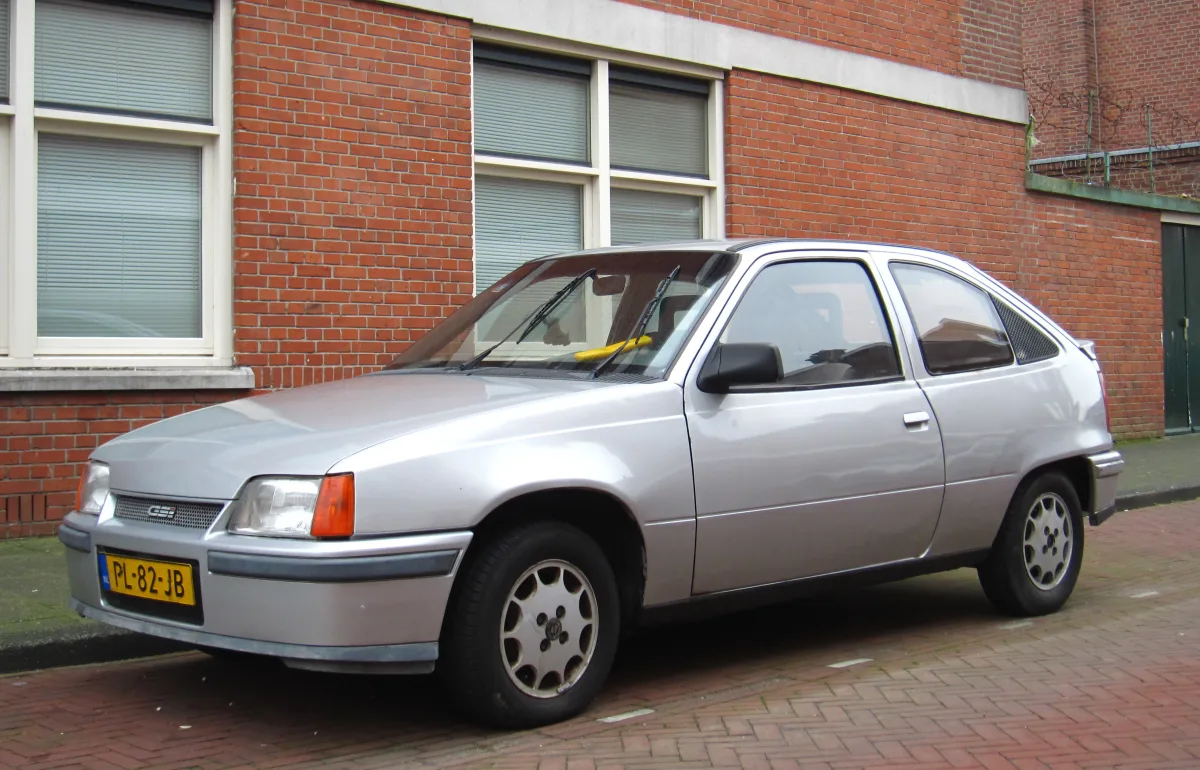
Opel Kadett: C, D and E generations, engines and trims
The Opel Kadett is one of Europe's most popular compact cars, produced post-war from 1962 to 1991, and particularly well-known in Lithuania in its final, E generation form. Today, it's bought either as an affordable runabout or as a classic, so we're looking at the differences between the generations, engines, trims, and what you need to check before buying.






Kadett in brief
The post-war Kadett was produced in five generations — from A (1962) to E (1984–1991). Until the C generation, it was a rear-wheel-drive car, but from the D generation (1979) onwards, it became the front-wheel-drive compact we're familiar with today. In 1991, it was replaced in Europe by the Opel Astra.
The Kadett was available with various body styles: hatchback (3 and 5 doors), saloon, estate Caravan, and in the E generation — even a convertible. The construction is simple, so most work can be done by just about any mechanic. However, the biggest challenge today is the body condition and rust.
D and E generations — what's the difference
The D generation (1979–1984) was the first front-wheel-drive Kadett. It's roomier and more modern than the C generation, but it's rarely seen today, and surviving cars usually appeal to classic car enthusiasts. The sportiest version of the D generation is the GTE.
The first generation (1984–1991) stood out with its boxy body and was named European Car of the Year in 1985. This is the generation most commonly found in Lithuania: hatchbacks, sedans, and Caravan estates are frequently listed. In 1989, the Kadett E was refreshed — the front end was revised, and more fuel-injected engines became available.
For those seeking a daily driver, opt for a later E-series Kadett with fuel injection, while collectors might be interested in sporty GSi models, convertibles, and well-preserved examples from earlier generations.
Engines and transmissions
The E-series most commonly features 1.2, 1.3, 1.4, 1.6, and 1.8-litre petrol engines — early models with carburettors, later ones with fuel injection (denoted by the letter 'i'). The 1.6 D and 1.7 D diesel engines are long-lasting but underpowered — typically around 55 hp.
The sporty Kadett GSi came with a 2.0-litre engine: the 8-valve version produced around 115–130 hp, while the 16-valve version, offered from 1988, delivered around 150 hp. These cars are highly sought after today and often modified, so it's worth checking their originality separately.
Transmissions are usually 4- or 5-speed manuals, with 3-speed automatics being less common. Manual boxes are simple and robust, but after so many years, they often rattle or struggle to engage gears.
What to check when buying a used Kadett
The most important thing is rust. Thoroughly inspect the sills, wheel arches, underbody, spare wheel well, boot lid and door sills. Bodywork repairs often cost more than mechanical work, so it's worth checking the car on a lift.
Carburettor engines are often poorly tuned: check if the engine starts easily when cold, runs smoothly at idle and doesn't misfire when accelerating. Also inspect the cooling system, hoses, electrical installation and brakes — after a few decades, they often show signs of wear.
Cars older than 30 years can be registered as historic vehicles if they meet the criteria, so the value of an original Kadett has not diminished recently. Check if the car hasn't been heavily modified and if original parts are still present.


Trim levels
Trim level names varied by market and year; we list the most commonly found E series trims in Europe.
LS
Kadett EThe base, most basic trim level.
- Steel wheels with hubcaps
- A plain interior with no extra features
- Often 1.2–1.4 l engines
GL
Kadett D, EThe most popular choice — a bit more comfort.
- Better interior trim than LS
- More comfort features
- Often 1.3–1.6 l engines
GLS
Kadett EA higher trim level, focused on comfort.
- More comfortable seats and a more luxurious interior.
- Often — electric windows and central locking.
- Often — more powerful 1.6–1.8 l engines.
Club
Kadett EA later trim level with additional features and a sportier look.
- More features than the base versions.
- Often — sportier styling details.
- Often — turbocharged engines.
GSi
Kadett EThe sporty version, highly sought after by collectors today.
- 2.0 l engine (8 or 16 valves).
- Sporty bumpers and seats.
- Light-alloy wheels, firmer suspension.
Comparison of Kadett E trims.
| LS | GL | GLS | GSi | |
|---|---|---|---|---|
| Who it's for. | Ideal for everyday driving. | For daily driving | For comfort | For collectors and driving pleasure |
| Interior | Basic | Better trim | Luxury trim | Sport seats |
| Engine (most common) | 1.2–1.4 l | 1.3–1.6 l, 1.6–1.7 D | 1.6–1.8 l | 2.0 l, 115–150 hp |
| Price in the used market (relatively) | € | € | €€ | €€€ |
For daily use, opt for a later GL or GLS with an injection engine and a sound body. The GSi is worth buying only as a collector's item, after thoroughly checking its authenticity.
Pros
- A straightforward, easily repairable design
- Cheap and readily available spare parts
- Low weight and uncomplicated engines
- Well-preserved cars hold their value
Cons
- Prone to rust — most cars have already been repaired
- Outdated safety standards
- Carburettor adjustments and age-related issues
Frequently asked questions
Is the Opel Kadett still suitable for daily use?
Yes, if the car has a sound body and well-maintained mechanics — it's simple and cheap to maintain. However, it's important to note that the safety and comfort levels are significantly lower than in modern cars, and it will need repairing more often.
Which Kadett engine is the most reliable?
The simplest and most robust are the 1.3–1.6 l petrol engines, especially the later injection models, which are easier to tune than carburetted ones. Diesels are long-lasting but very underpowered.
What's the difference between the Kadett and Astra?
The Opel Astra from 1991 replaced the Kadett E and is its direct successor. In Great Britain, the Kadett D and E generations were sold under the Vauxhall Astra name, so the technology and parts are essentially the same.
What should you check when buying a Kadett?
The body — for dents, arches, the undercarriage, and the boot compartment. Mechanical faults are usually fixed cheaply, but a seriously rusted body can cost more than the car itself.
Updated 2026-10-09 · Trim levels and equipment vary by market and model year — check the equipment of the specific car. · Translated automatically


