 English
 Lietuvių
 Latviešu
 Eesti
 Polski
 Русский
 Українська
 Deutsch
 Nederlands
 Čeština
 Slovenčina
 Svenska
 Norsk
 Dansk
 Suomi


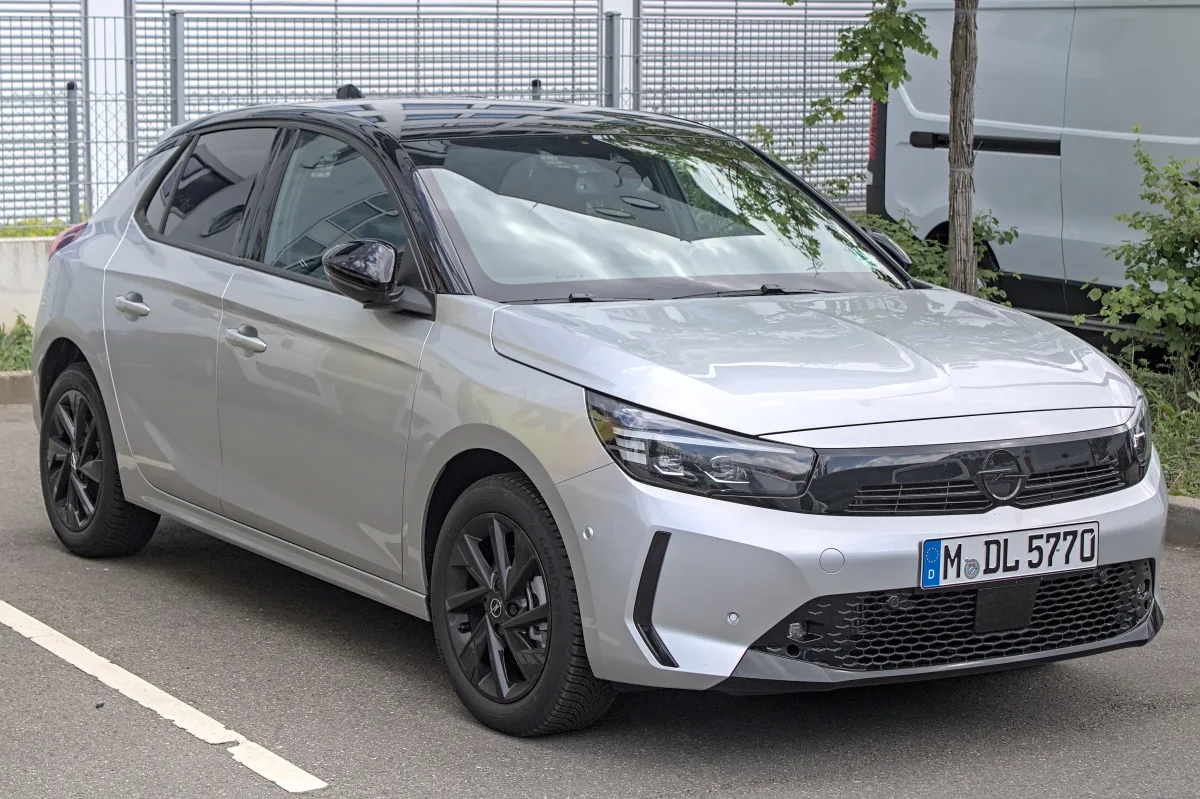
Opel Corsa: generations D, E and F, engines and trims
Opel Corsa is one of Europe's most popular superminis, produced since 1982. We take a look at the D, E and F generations most commonly found on the used market, their engines and trims, and what to check before buying.






Corsa at a glance
The Corsa is a compact city car, mostly built in 3- and 5-door hatchback body styles (the F generation is 5-door only). D (2006–2014), E (2014–2019) and F (from 2019) generation cars are the most commonly found, while the older C generation (2000–2006) is becoming a rarity.
The Corsa is valued for its low running costs, easy city handling, and inexpensive spare parts. It is a frequent first car for young drivers or a second family car, so supply is high, though vehicle conditions vary greatly.
Generations D, E and F — what's the difference?
The Corsa D (2006–2014) was built on the same platform as the Fiat Grande Punto. It is more spacious and safer than its predecessor, and was facelifted in 2010–2011. Today it is the cheapest way to buy a Corsa, though most cars already have high mileage.
The Corsa E (2014–2019) is technically a heavily updated D generation: new interior and exterior, a quieter ride, and more modern engines, such as the three-cylinder 1.0 Turbo. The IntelliLink multimedia system with smartphone integration is frequently found.
The Corsa F (from 2019) is built on the Stellantis (previously PSA) CMP platform, just like the Peugeot 208. The car is more modern, has more driver assistance systems, and an electric Corsa-e version. A 2023 update gave the Corsa a new front end with the Opel Vizor grille, while the electric version was renamed Corsa Electric.
Engines and gearboxes
In the D and E generations, the 1.0, 1.2 and 1.4-litre petrol engines and the 1.3 CDTI diesel are the most common. The E generation also saw the introduction of turbocharged 1.0 Turbo (around 90–115 hp) and 1.4 Turbo engines. Sporty OPC versions featured a 1.6 Turbo engine (around 190–210 hp).
The Corsa F is available with a 1.2-litre three-cylinder petrol engine (75 hp naturally aspirated, plus 100 hp and 130 hp turbocharged variants), a 1.5-litre diesel (roughly 100 hp), and an electric powertrain (around 136 hp, rising to roughly 156 hp post-facelift). Mild-hybrid variants joined the lineup following the 2023 update.
Gearbox options include 5- or 6-speed manuals. Generations D and E feature either the automated Easytronic or a conventional automatic, the F generation uses an 8-speed automatic, while hybrids get a dual-clutch automatic transmission.
What to check when buying a used Corsa
The 1.0-, 1.2-, and 1.4-litre petrol engines in the D generation are notorious for timing chain stretch—a cold engine shouldn't rattle on startup. The automated Easytronic gearbox must shift smoothly; hesitation, jerking, or dropped gears often signal a failing actuator or clutch.
For the Corsa F with the 1.2 Turbo (PureTech) engine, ask about the oil service history and the condition or replacement status of the wet timing belt—a degraded belt can starve the engine of lubrication. On diesel versions, check the AdBlue system and the diesel particulate filter (DPF).
For the electric Corsa-e, request a battery health report and test the charging process. For all models, verify the mileage against MOT and service records, and check the bodywork for resprayed panels, as city cars frequently suffer minor bumps and scrapes.


Trim levels
Names and equipment levels vary by market and model year; the trims listed below are the most common in Europe.
Enjoy
Corsa D and EThe most popular mid-spec trim for generations D and E.
- Typically features air conditioning and electric windows.
- Often includes alloy wheels.
- Simple, hard-wearing interior trim.
Cosmo
Corsa D and ETop-tier standard spec with added comfort features.
- Alloy wheels
- Frequently features automatic climate control.
- Frequently features heated seats.
OPC
Corsa D and EA sporty version powered by a punchy 1.6 Turbo engine.
- Around 190–210 hp
- Sport suspension and brakes
- Recaro sports seats
Edition
Corsa FBase F-generation spec with essential equipment.
- Often — steel wheels
- Often — air conditioning and cruise control
- Often — infotainment with smartphone integration
Elegance
Corsa FA more comfortable, better-equipped F-generation version.
- Alloy wheels
- Often — LED headlights
- Often — larger infotainment screen and automatic climate control
GS Line / GS
Corsa FSporty-looking trim; known as GS following the 2023 facelift.
- Sporty bumpers and interior trim
- Often — black roof
- Often — 17-inch wheels
F-generation trim comparison
| Edition | Elegance | GS Line | Corsa-e | |
|---|---|---|---|---|
| Who it's for | For budget daily driving | For city and open-road comfort | For a sporty look | For city driving and home charging |
| Wheels (typically) | 16-inch, often steel | 16–17-inch | 17-inch | 16–17-inch |
| Headlights | Mostly halogen (up to 2023) | Mostly LED | Mostly LED | Mostly LED |
| Engine | 1.2 (75–100 hp), 1.5 diesel | 1.2 Turbo, 1.5 diesel | 1.2 Turbo (100–130 hp) | Electric, around 136–156 hp |
| Used market price (relative) | € | €€ | €€ | €€ |
For most buyers, the sweet spot is the Elegance with the 1.2 Turbo. The Corsa-e makes sense if you can charge at home and mostly drive in town.
Pros
- Low running costs
- Easy to drive and park in town
- Strong availability and affordable parts
- The F-generation also features an electric version
Cons
- D-generation timing chain and Easytronic gearbox issues
- The 1.2 Turbo (PureTech) engine is sensitive to oil maintenance.
- Tight boot space and a cramped rear seat.
Frequently asked questions
Which Corsa generation makes the best used buy?
If your budget is tight, a well-kept E generation (2014–2019) with a full service history is a smart choice. If you want something more modern and safer, go for the F generation — ideally with a documented maintenance record.
Is it worth buying a Corsa with the 1.2 Turbo engine?
Yes, provided the car has been well maintained: timely oil changes with the correct spec, and the timing belt inspected or replaced. Ask for service records and check whether any manufacturer-recommended work has been carried out.
What's the difference between the Corsa-e and Corsa Electric?
It’s essentially the same F-generation electric Corsa — following the 2023 facelift, it was renamed Corsa Electric. Newer versions often feature a slightly punchier motor and a marginally larger battery.
Is the Corsa a good family car?
In town, yes — especially the 5-door version. However, if you regularly travel with children and luggage, a larger car like the Opel Astra estate will be far more practical.
Updated 2026-10-09 · Trim levels and equipment vary by market and model year — check the equipment of the specific car. · Translated automatically


