 English
 Lietuvių
 Latviešu
 Eesti
 Polski
 Русский
 Українська
 Deutsch
 Nederlands
 Čeština
 Slovenčina
 Svenska
 Norsk
 Dansk
 Suomi


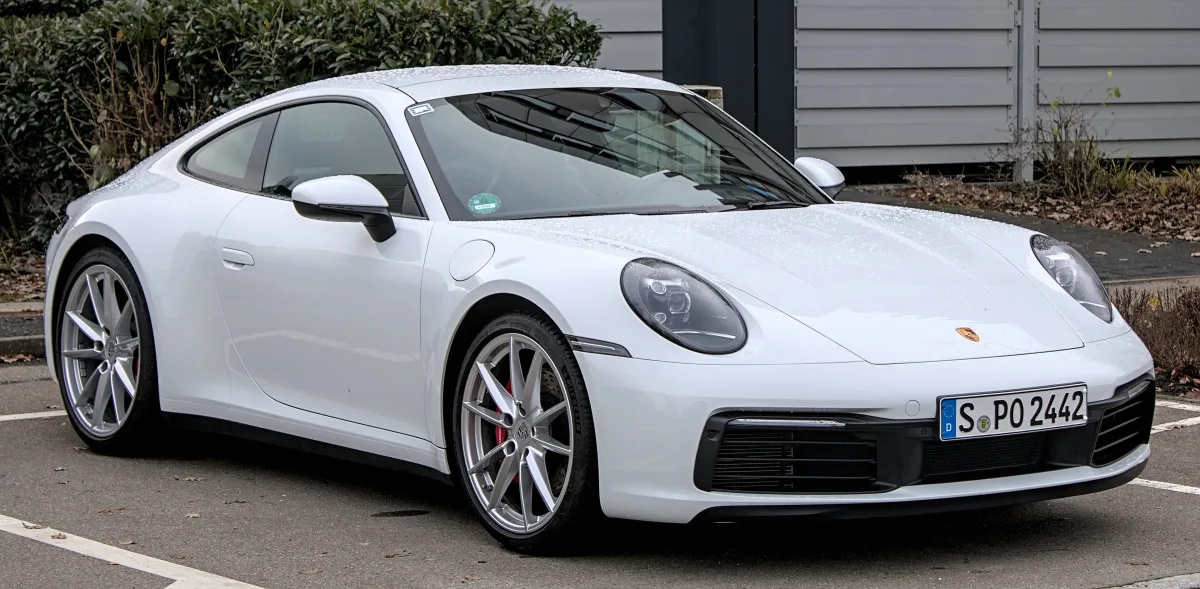
Porsche 911: 991 and 992 generations, engines and trims
The Porsche 911 is a rear-engine sports car with a six-cylinder flat engine, produced since 1964 and has become the benchmark for sports cars. We look at what sets apart the most commonly found 991 and 912 generations in the used market, the engines and versions available, and what to check before buying.






911 in brief
The 911 has always stuck to the same formula: engine behind the rear axle, two front seats and two small rear seats, and a recognisable silhouette. The model comes in coupé, cabriolet (Cabriolet) and Targa body styles, with a wide range of versions from the Carrera to the Turbo S and track-focused GT3.
Since the 996 generation (1997), the 911 has had water-cooled engines. The car is valued for its driving feel, quality and the fact that it can be driven daily. Plus, the 911 usually holds its value well in the used market, especially the rarer and more performance-focused versions.
991 and 992 — what's the difference
The 991 generation (2011–2019) was larger and more modern than the 997: a longer wheelbase, electric power steering and a new interior with a high central console. Early 991s (up to 2015) have naturally aspirated 3.4 and 3.8-litre engines, while the refreshed 991.2 (from late 2015) has 3.0-litre engines with twin turbos, making them more powerful and efficient.
The 992 generation (from 2019) across all versions features a wider body, larger rear wheels, a digital instrument cluster with a classic tachometer in the centre, and more advanced driver-assistance systems. The 2024 refreshed 992.2 version gets a revised interior, and the GTS variant introduces a hybrid powertrain.
For buyers seeking a modern 911 at a lower price, the 991.2 is often the most sensible choice. Older 996 and 997 models are cheaper, but their technical condition and history are even more crucial, while the 992 is ideal for those who prioritise the latest gadgets and technology.
Engines and transmissions
In the 991.1 generation, the Carrera had a 3.4 l (around 350 hp) engine, while the Carrera S featured a 3.8 l (around 400 hp) naturally aspirated unit. In the 991.2 generation, all Carrera variants received 3.0 l turbocharged engines: Carrera around 370 hp, Carrera S around 420 hp, GTS around 450 hp. In the 992 generation, the Carrera produces around 385 hp, the Carrera S around 450 hp, and the GTS around 480 hp.
The Turbo and Turbo S use larger turbocharged engines and all-wheel drive; the 992 Turbo S delivers around 650 hp. The GT3 and GT3 RS feature a high-revving naturally aspirated 4.0 l engine (around 500 hp and more in the 991.2 and 992 generations).
Most used cars come with a dual-clutch PDK transmission — 7-speed in the 991 generation and 8-speed in the 992. A 7-speed manual is offered in some Carrera variants but is less commonly found. Versions with a '4' in the name (Carrera 4, 4S) come with all-wheel drive, and the Targa 991 and 992 are only available with it.
What to check when buying a used 911
Most importantly, check the service history and have a Porsche specialist inspect the car before buying. Some 996 and early 997 engines are known for issues with the intermediate shaft bearing (IMS) and cylinder wall scoring, so a thorough check is crucial for older models. Diagnostics can also reveal if the engine has been revved too high, which often indicates aggressive shifting with a manual gearbox.
Check if the car has been used on the track: brake disc and tyre wear, the underside of the body, and the front bumper can tell a lot. Ceramic PCCB brakes are very durable, but replacing them is extremely expensive. The front radiators love to collect leaves and mud, which can cause rust — it's worth taking a look through the front grilles.
The PDK gearbox should shift quickly and smoothly, while the manual gearbox should have no play in the shifter. The convertible roof should open and close smoothly, without any error messages. Also, check if painted parts and gaps between them show signs of a previous accident.


Versions
The Porsche 911 doesn't have typical trim levels — versions vary, and the equipment heavily depends on additional packages ordered. We list the most commonly encountered versions.
Carrera
991, 992The base 911 version with rear-wheel drive — quick enough and comfortable for daily use.
- The least powerful engine in the lineup
- Often comes with a sport exhaust and Sport Chrono package
- Coupe, convertible, and the lighter Carrera T version
Carrera S
991, 992The most popular choice in the used market — more power and better brakes.
- More powerful engine and larger brakes
- Larger wheels
- Often — PASM adaptive suspension
Carrera 4 / 4S
991, 992All-wheel-drive versions are more stable in poor weather.
- All-wheel drive
- The 991 is wider at the rear
- Also available with a Targa body style
GTS
991, 992The mid-range model between the Carrera S and Turbo, aimed at driving enthusiasts.
- The most powerful Carrera engine
- Standard — Sport Chrono and sports exhaust
- Dark trim details, often Alcantara interior
Turbo / Turbo S
991, 992The fastest everyday 911s with all-wheel drive and a wealth of equipment.
- Powerful turbocharged engine and all-wheel drive
- Wider body and active aerodynamics
- The Turbo S often comes with ceramic PCCB brakes
GT3
991, 992A track-prepped version with a naturally aspirated engine and a larger rear wing.
- A 4.0-litre high-revving naturally aspirated engine
- A stiffer suspension and a large rear wing
- PDK or manual gearbox (depending on the generation)
Comparing 992-generation models
| Carrera | Carrera S | GTS | Turbo S | |
|---|---|---|---|---|
| Who it's for | For daily driving | The most versatile choice | For driving pleasure | For maximum speed |
| Alloy wheels (most often) | 19–20 inch | 20–21 inch | 20–21 inch | 20–21 inch |
| Engine | 3.0-litre, around 385 hp | 3.0 l, around 450 HP | 3.0 l, around 480 HP | 3.7 l, around 650 HP |
| Transmission | Rear or all-wheel drive | Rear or all-wheel drive | Rear or all-wheel drive | All-wheel drive |
| Price in the used market (relatively) | Budget-friendly | Mid-range | Mid-range | Premium |
For most buyers, the best choice is the Carrera S: it's fast, well-equipped, and holds its value on the resale market. The Carrera is great for daily driving, while the Turbo S is worth considering only if top speed is your priority.
Pros
- Distinctive driving feel and handling
- Suitable for everyday driving
- Holds its value well
- Wide range of versions and body styles
Cons
- Expensive maintenance and spare parts
- Rear seats are only suitable for children or short trips
- Older generation engines require meticulous inspection
Frequently asked questions
Which Porsche 911 generation is best to buy used?
For many buyers, the best balance of price and modernity is the 991.2 generation (2016–2019): it has newer turbo engines and is significantly cheaper than the 992. If the latest tech and more power are important, go for the 992.
Is the Porsche 911 suitable for daily driving?
Yes. The 911 is one of the most practical sports cars for everyday use: there's a boot up front, the rear seats are fine for kids or cargo, and the adaptive suspension is quite comfortable. Winter tyres are recommended for the cold months, and all-wheel drive provides extra confidence.
What's the difference between the Carrera and Carrera 4?
The Carrera has rear-wheel drive, while the Carrera 4 has all-wheel drive. The Carrera 4 is more stable in the wet and on slippery surfaces, while the rear-wheel-drive car is a bit lighter and more agile to drive.
What should you check before buying a 911?
Get a check-up from a Porsche specialist: diagnostics will show if the engine has been revved too high and any errors, while an inspection will reveal signs of accidents and track use. Also, ask for the full service history.
Updated 2026-10-09 · Trim levels and equipment vary by market and model year — check the equipment of the specific car. · Translated automatically


