 English
 Lietuvių
 Latviešu
 Eesti
 Polski
 Русский
 Українська
 Deutsch
 Nederlands
 Čeština
 Slovenčina
 Svenska
 Norsk
 Dansk
 Suomi


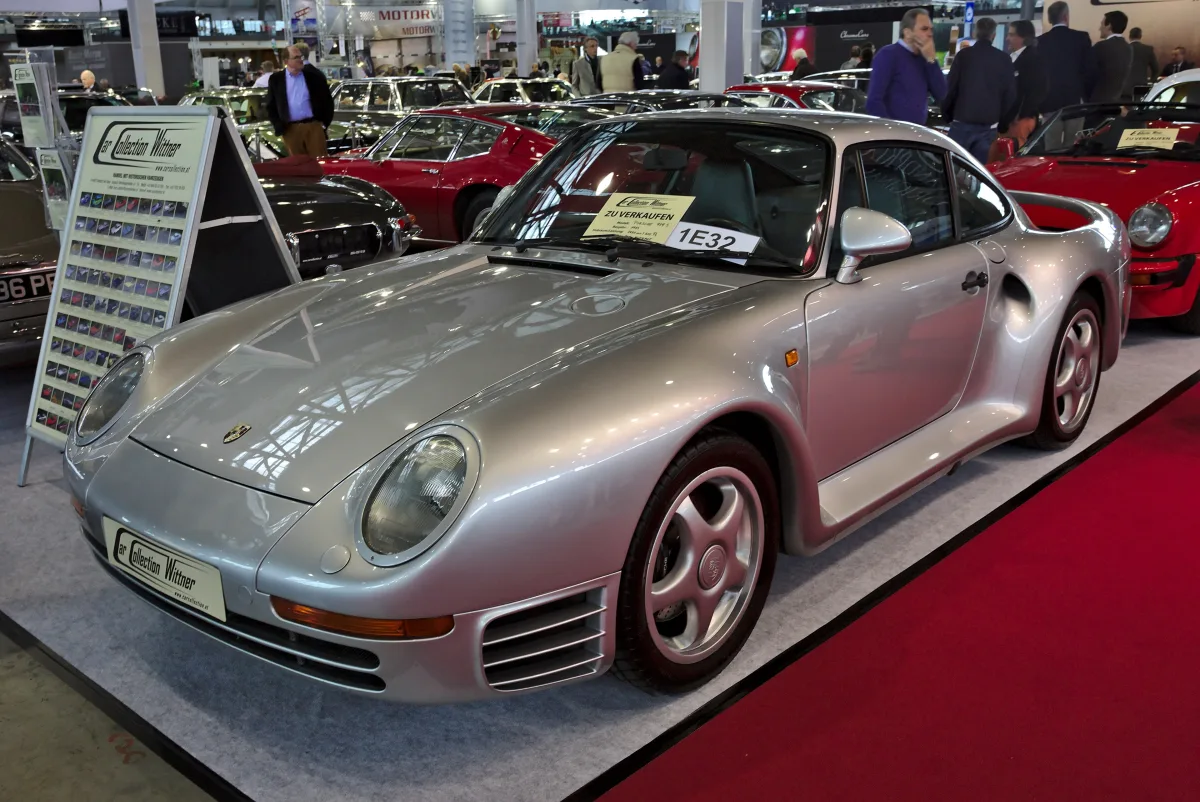
Porsche 959: a tech showcase from the 1980s
The Porsche 959 is a supersports car produced from 1986 to 1993 with a turbo engine and all-wheel drive, considered one of the most technologically advanced road cars of its time. We look at its engine, versions, and what you need to know if you're thinking of buying one.






The 959 in brief
The Porsche 959 was created as a technology demonstration and a response to the Group B rally. It features a computer-controlled all-wheel drive, adjustable suspension, and a lightweight, aerodynamic body using lightweight materials.
Produced in a run of around 337 units, making it a particularly rare, collectible car today. Most are in the hands of collectors and rarely appear on the market.
Which version to choose
The factory offered two main versions: Komfort and Sport. Komfort comes with more creature comforts—air conditioning, electrically adjustable seats, and a more refined interior, while Sport is lighter and geared towards spirited driving.
There was also a limited run of more powerful 959 S versions. When choosing, the key factors are the specific car's history, originality, and proper maintenance.
Engine and transmission
The 959 has a 2.85-litre flat-six engine with two sequentially operating turbochargers. Its power output is around 450 hp, with the more powerful S version producing even more.
The transmission is a 6-speed manual, with all-wheel drive featuring variable torque distribution. This was one of the first such systems in road cars.
What to check when buying a used 959
Insist on a full vehicle history and professional appraisal. Due to the very limited production run and high value, there's a real risk of encountering cloned or non-original parts.
Check the engine, turbocharger, all-wheel drive, and suspension system. Some systems are highly complex, making repairs expensive and requiring Porsche specialists.
Before buying, ensure the car has proper documentation and a clear history. Purchases often happen through specialist dealers or auctions.


Trim levels
Names and equipment vary by market and year; we list the most common trims found in Europe.
Komfort
1987–1988The most common version with more comfort features.
- Often includes air conditioning
- Often includes electrically adjustable seats
- Adaptive suspension
Sport
1987–1988Lighter version for spirited driving.
- Lower weight
- Simpler interior
- Less comfort equipment
S
1992A more powerful limited-series version.
- An even more powerful engine
- Improved technology
- Very rare
Comparing versions
| Komfort | Sport | S | |
|---|---|---|---|
| Who it's for | For collectors seeking comfort | For active driving | For enthusiasts of particularly rare versions |
| Interior | More comprehensive comfort features | More basic | Depends on the specific car |
| Engine | Around 450 hp | Around 450 hp | More powerful than standard |
| Price in the used market (relatively) | €€€ | €€€ | €€€ |
959 — a collector's car, bought not for practicality but for its uniqueness. Before purchasing, it's essential to consult an independent Porsche specialist.
Pros
- A very rare collector's item
- Cutting-edge technology for its time
- Powerful turbo engine and all-wheel drive
- Iconic design
Cons
- Very high price
- Complex and expensive maintenance
- Very limited parts availability
Frequently asked questions
How many 959s were produced?
Approximately 337 units were made, making it an exceptionally rare model.
What makes the 959 special?
It was created as a showcase of technology: with a turbo engine, advanced all-wheel drive, and adjustable suspension, all of which were innovations in road cars at the time.
Is the 959 suitable for daily use?
No. This is an extremely valuable collector's car, which is typically used sparingly — for shows and events.
Updated 2026-10-19 · Trim levels and equipment vary by market and model year — check the equipment of the specific car. · Translated automatically


