 English
 Lietuvių
 Latviešu
 Eesti
 Polski
 Русский
 Українська
 Deutsch
 Nederlands
 Čeština
 Slovenčina
 Svenska
 Norsk
 Dansk
 Suomi


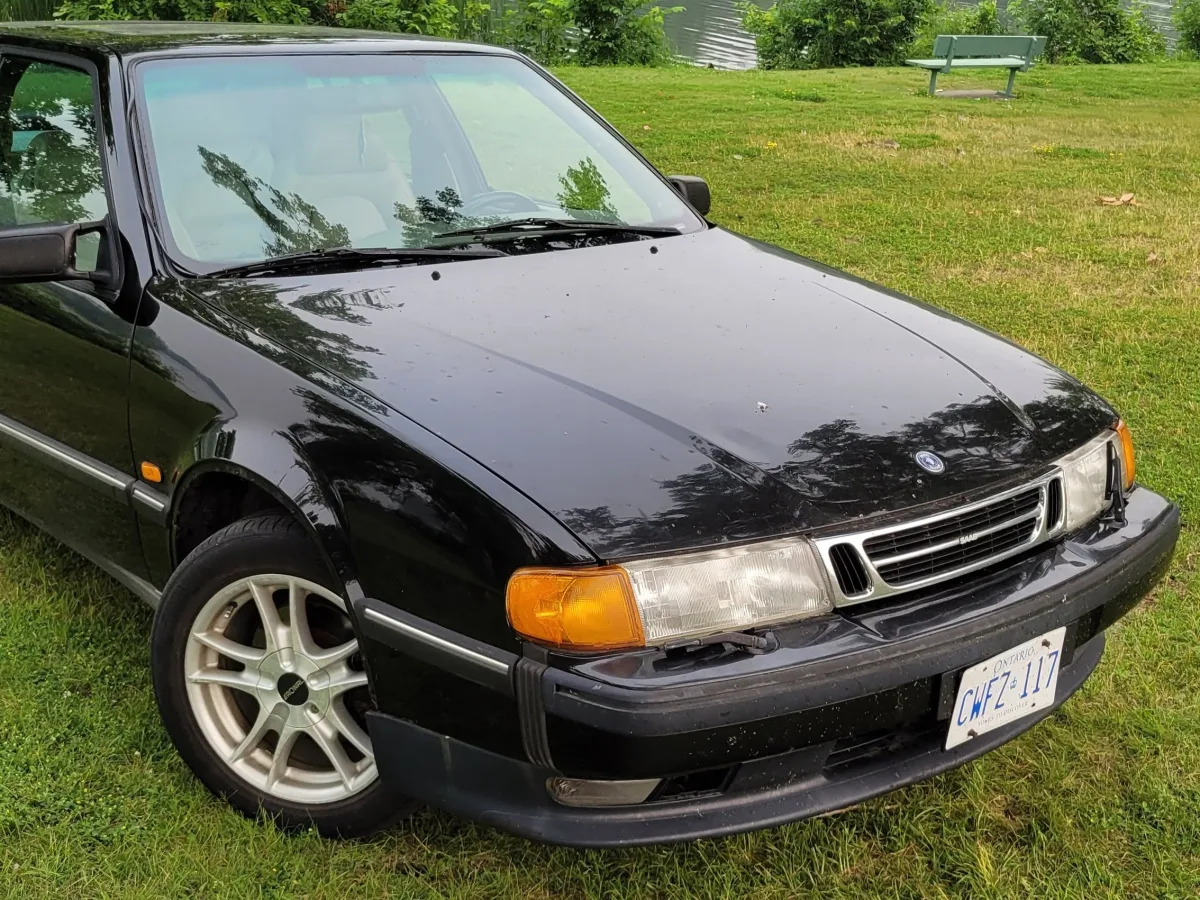
Saab 9000: bodies, engines and what to know before buying
Saab 9000 — a mid-to-high range car created in Sweden and produced from 1984–1998. In this article, we review the body styles, engines, trim levels and what to check when buying such an old-timer in Lithuania.






Saab 9000 in brief
The 9000 was Saab's flagship model, created in conjunction with the Fiat group on a shared platform with the Lancia Thema, Fiat Croma and Alfa Romeo 164. However, the body, engine and interior were designed by the Swedes themselves, so the car remained very 'Saab-like'.
This model was known for its spacious interior, large boot, safety and unique approach to turbo engines. Today, it's a collector's and enthusiast's car, not your average daily driver.
Which version to choose
The first 9000s came with a 5-door 'CC' body. Later, a 4-door saloon 'CD' was introduced, and in 1991–1992 the model was significantly updated — the 5-door 'CS' appeared with a new body shape and elongated rear.
If you're after a used 9000, most enthusiasts favour the later versions: they're more modern and come with more kit. The very latest, including the final 'Griffin', are considered among the best, but there are fewer of them around.
Engines and gearboxes
The most commonly found engines are the 2.0 and 2.3-litre four-cylinder petrol units, both naturally aspirated and turbocharged. The most powerful classic version is the 9000 Aero with a turbo engine, around 225hp. In later years, a V6 engine was also offered.
Gearbox — 5-speed manual or automatic. Turbo cars often had a long service history, so it's crucial to check the engine maintenance and the condition of the turbocharger.
What to check when buying a used Saab 9000
Inspect the body: older cars might have rust around the wheel arches, sills, and the boot floor. Check if the turbocharger operates smoothly, if there are no oil leaks, and if the engine doesn't smoke.
For these vintage cars, overall maintenance is key: rubber parts, seals, suspension components, electrical connections, and interior trim can wear out. Parts availability is limited, so it's worth choosing specialists who know Saab.


Trim levels
Names correspond to body styles and equipment versions that were known in Europe; years are approximate.
CC
Early version5-door hatchback — the first 9000 body style.
- Often — a more boxy body shape
- Often — simpler interior trim
- Plenty of space inside
CD
All generations4-door saloon with a separate boot.
- Classic saloon silhouette
- Often — a comfortable rear bench
- Ideal for those who aren't keen on hatchbacks
CS
Later version5-door facelift, the most popular in the used market.
- Extended rear, larger boot
- Often comes with leather and electric seats
- Often comes with a turbo engine
Aero
Later versionThe sportiest 9000 version with a powerful turbo engine.
- Most powerful turbo engine
- Sportier drive and looks
- Often comes with leather and larger alloy wheels
Griffin
Later yearsThe final 9000 version – with distinctive badges and more kit.
- Often comes with leather and lightweight alloy wheels
- Often comes with a generous standard spec
- Rarer, more collectible
Comparing versions
| CD | CS | Aero | |
|---|---|---|---|
| Who it's for | For sedan lovers | For daily driving and road trips | For enthusiasts who love power |
| Body style | 4-door sedan | 5-door hatchback | 5-door hatchback |
| Engine | Mostly 2.0–2.3-litre | 2.0–2.3-litre, turbo or naturally aspirated | 2.3 turbo, around 225hp |
| Price in the used market (relatively) | € | €€ | €€€ |
Many buyers will find the CS with the 2.3-litre engine a good balance of practicality and condition. The Aero is worth considering only if it's well-maintained and not tampered with.
Pros
- Very spacious interior and boot
- A safe and sturdy car for its time
- Comfortable seats, suitable for long journeys
- Turbo versions for enthusiasts
Cons
- Limited parts availability, specialists required
- Old age means potential rust and worn-out parts
- Maintaining turbo engines can get expensive
Frequently asked questions
Is the Saab 9000 suitable for daily use?
It can be, if the example is well-maintained and you have a reliable mechanic. Due to its age, it requires constant upkeep, so it's worth getting it checked over at a specialist service before buying.
Which Saab 9000 version is the best?
Most enthusiasts rate the later versions — CS and Aero. They are more modern and come with more equipment, but the most important thing is the specific car's condition.
Does the Saab 9000 share parts with Fiat?
The platform is shared with the Lancia Thema, Fiat Croma and Alfa Romeo 164, but the engine, interior and many details are specific to Saab, so finding parts requires experience.
Updated 2026-10-19 · Trim levels and equipment vary by market and model year — check the equipment of the specific car. · Translated automatically


