 English
 Lietuvių
 Latviešu
 Eesti
 Polski
 Русский
 Українська
 Deutsch
 Nederlands
 Čeština
 Slovenčina
 Svenska
 Norsk
 Dansk
 Suomi


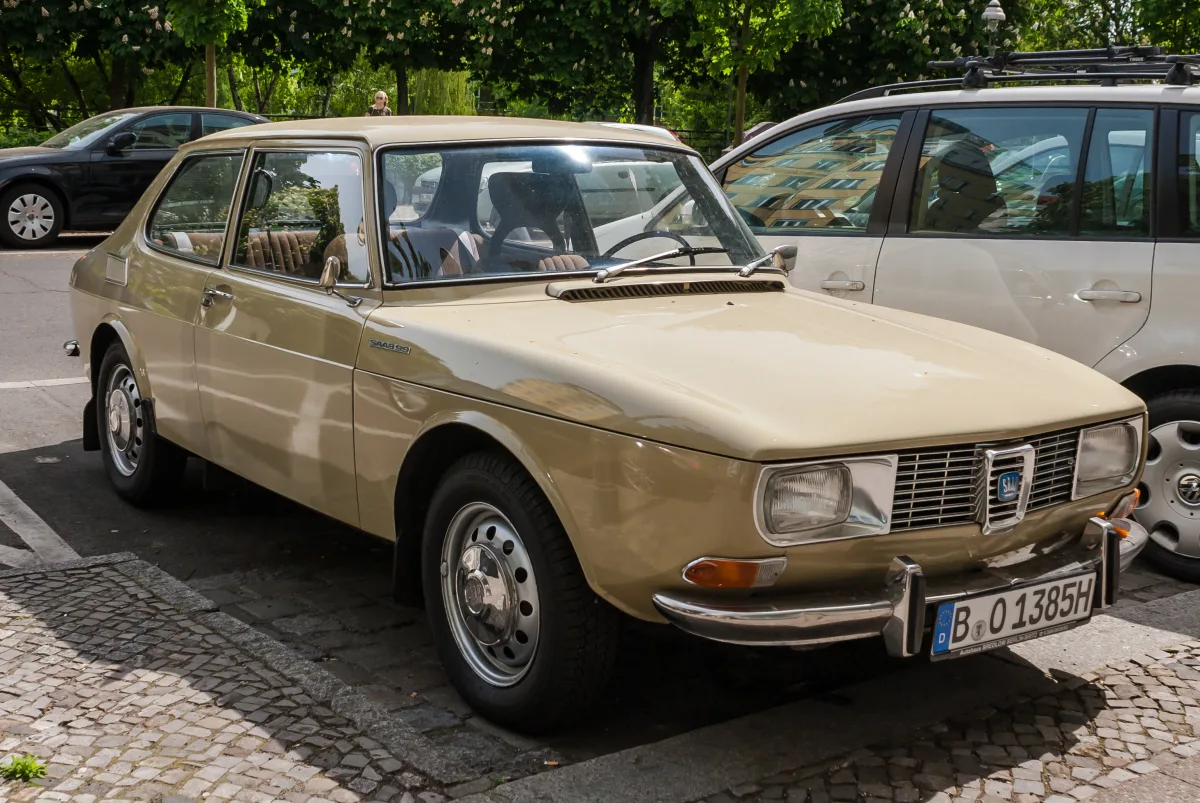
Saab 99: the first turbocharged Saab, engines and what to know when buying used
Saab 99 — a front-wheel-drive mid-size car produced from 1968 to 1984. It gained popularity as the model where Saab introduced the turbocharger. We review the body styles, engines, and what to check if you're after one of these collectible cars.






Saab 99 in brief
The 99 was Saab's response to increasing demands for safety and comfort, moving on from the smaller Saab 96. The car stood out with its unique design, sturdy body, and a strong focus on safety, with an unusually shaped front end.
Today, the 99 is a rarity in Lithuania. It attracts collectors and enthusiasts due to its historical significance: it was one of the first mass-produced cars with a turbocharger.
Which version to choose
The Saab 99 was produced once, but there were several body styles: two- and four-door sedans, and later the hatchback-style Combi Coupé. The trim levels, engine choices, and equipment also changed over time.
Collectors are often most interested in the early models and the Turbo version. When choosing, look for a well-maintained, unmodified, and unrepainted car with original parts still in place.
Engines and gearboxes
The 99 featured four-cylinder petrol engines with a displacement of around 1.7–2.0 litres. Later, fuel-injected variants appeared, and by the end of production, the Turbo version with a turbocharger.
Transmissions come in manual or automatic. The engine and gearbox are laid out unusually, so repairs often require a specialist familiar with classic Saabs.
What to check when buying a used Saab 99
First up — corrosion: check the sills, floors, wheel arches, and body seams. Specific body parts can be hard to find, and restoration can be pricey.
Check the engine for oil leaks, cold starting issues, and (in Turbo versions) the condition of the turbocharger. Test the clutch, gearbox, brakes, and suspension, and ensure all vehicle documents and history are in order.


Trim levels
Names and equipment vary by market and year; we list the versions most commonly found in Europe.
L
The 1970sThe base version with basic equipment.
- Often comes with steel wheels
- Basic interior trim
- Manual gearbox
GL
The 1970sBetter-equipped version with more comfort features.
- Often features a higher-quality interior
- Often includes additional exterior trim
- Manual or automatic gearbox
EMS
The 1970sVersion with fuel-injected engine.
- More powerful fuel-injected engine
- Often — sportier interior
- Manual gearbox
Turbo
post-1978Most famous version with turbocharger.
- Engine with turbocharger
- Often — lightweight alloy wheels
- Sportier looks and equipment
Saab 99 version comparison
| L | GL | EMS | Turbo | |
|---|---|---|---|---|
| Who it's for | For the average collector car | For comfort | For livelier dynamics | For collectors and enthusiasts |
| Wheels (most often) | Generations | Generations | First generation or light alloy | Light alloy |
| Engine | Standard petrol | Standard petrol | Fuel-injected | Turbocharged |
| Price in the used market (relatively) | Mid-range | Mid-range | Mid-range | High-end |
For most buyers, the key is a tidy condition and originality. The turbo is the most valuable and sought-after version, but also the most expensive.
Pros
- Original design and historical significance
- Robust, safe body
- Turbo version — a model eagerly awaited by collectors
- Practical, spacious interior
Cons
- Rust and hard-to-find body parts
- Maintenance requires a specialist familiar with classic Saabs
- It's tricky to find a well-maintained example
Frequently asked questions
What makes the Saab 99 Turbo special?
The 99 Turbo was one of the first mass-produced cars with a turbocharger, making it highly sought after by collectors today.
Is the Saab 99 suitable for daily driving?
Due to its age and hard-to-find parts, it's better suited as a collector's item or weekend car rather than for daily use.
What to look out for when buying?
The most important things are body rust, engine condition, and paperwork. Also, ensure you can source necessary parts and find a specialist who can maintain it.
Updated 2026-10-19 · Trim levels and equipment vary by market and model year — check the equipment of the specific car. · Translated automatically


