 English
 Lietuvių
 Latviešu
 Eesti
 Polski
 Русский
 Українська
 Deutsch
 Nederlands
 Čeština
 Slovenčina
 Svenska
 Norsk
 Dansk
 Suomi


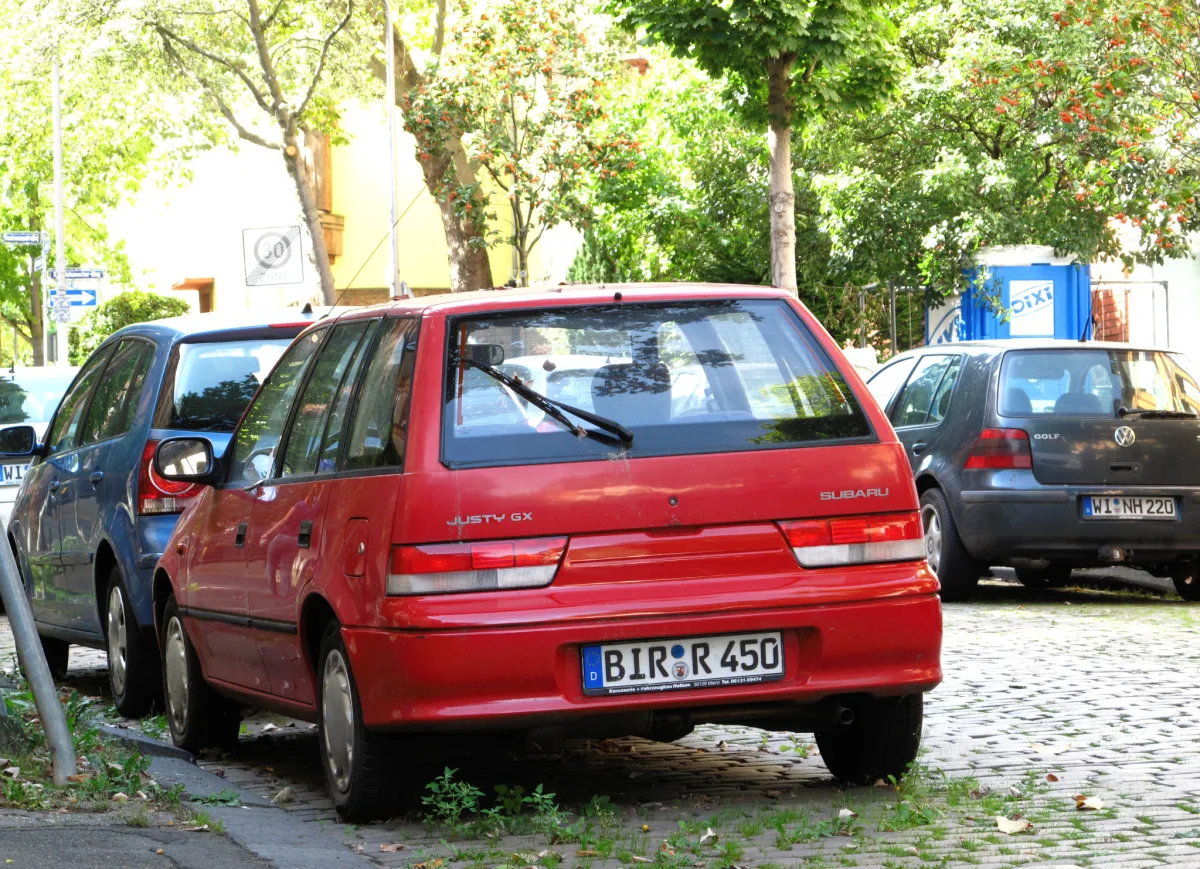
Subaru Justy: generations, engines, and what to know before buying
The Subaru Justy is a compact city car produced from 1984 to 2011 and known for its potential to have all-wheel drive. We look at the generations, engines, and what to check when buying a used Justy in Lithuania.






Justy in brief
The Justy is Subaru's smallest model. From the start, it stood out because a small hatchback could have all-wheel drive—a rarity for cars of this size.
In the used market, the Justy appeals to those looking for an affordable, compact, and reliable city car for winter. Due to its age, the condition of a specific example is crucial.
Which generation to choose
Over nearly three decades, the Justy changed several times. The first generation (1984–1994) was simple, with a small engine capacity. The second (around 1995–2003) was more modern, with a 1.3-litre engine.
Later generations of the Justy were produced in collaboration with other manufacturers, so the technology and appearance vary. Buyers often prioritise whether the car has all-wheel drive and its condition.
Engines and gearboxes
First-generation Justys had small three-cylinder engines, while later generations more commonly featured a 1.3-litre petrol engine. Power is modest, but the car is light.
The gearbox can be manual or automatic. All-wheel drive is not available on all models, so it's worth checking the specific example's trim.
What to check when buying a used Justy
Inspect the body thoroughly: look for dents, arches, and the underside for rust, which is common for cars of this age. Check the engine maintenance and the history of the transmission changes.
Test the gearbox, clutch, and, if present, the four-wheel drive. Parts availability for this model is limited, so check in advance about their accessibility.


Trim levels
The Justy underwent several changes, so we list them instead of individual trim names.
Pirmoji karta
1984–1994A simple city car with a small engine.
- Often — a small-displacement three-cylinder engine
- Often — a 3 or 5-door body
- Basic technology
Antroji karta
Around 1995–2003A more modern hatchback with a 1.3-litre engine.
- Often — a 1.3-litre engine
- Often — four-wheel drive
- More comfort than the first generation
Vėlesnė karta
After 2003Built alongside rivals — more modern tech.
- More modern interior
- Often — a 1.3-litre engine
- Often — four-wheel drive
Generation comparison
| Pirmoji | Antroji | Vėlesnė | |
|---|---|---|---|
| Who it suits | For everyday city driving | For winter conditions with AWD | For more comfortable city use |
| Engine | Small capacity, 3 cylinders | 1.3-litre | Often 1.3-litre |
| Transmission | Front-wheel drive or all-wheel drive | Front-wheel drive or all-wheel drive | Front-wheel drive or all-wheel drive |
| Price in the used market (relatively) | € | € | € |
Most buyers will be best suited to a second or later generation. The first is for those who prioritise simple and affordable technology.
Pros
- Small and light
- Available with four-wheel drive
- Basic technology
- Affordable to buy
Cons
- Limited boot space and rear legroom
- Limited parts availability
- Older cars may have rust
Frequently asked questions
Do all Justys come with four-wheel drive?
No, it was only offered on some versions, so it's essential to check before buying.
Is the Justy suitable for winter?
With four-wheel drive, yes, it handles well on slippery roads. However, the drivetrain needs to be in good condition.
Is the Justy economical?
Thanks to its low weight and engine fuel consumption is usually low, but the exact figure depends on the engine and condition.
Updated 2026-10-19 · Trim levels and equipment vary by market and model year — check the equipment of the specific car. · Translated automatically


