 English
 Lietuvių
 Latviešu
 Eesti
 Polski
 Русский
 Українська
 Deutsch
 Nederlands
 Čeština
 Slovenčina
 Svenska
 Norsk
 Dansk
 Suomi


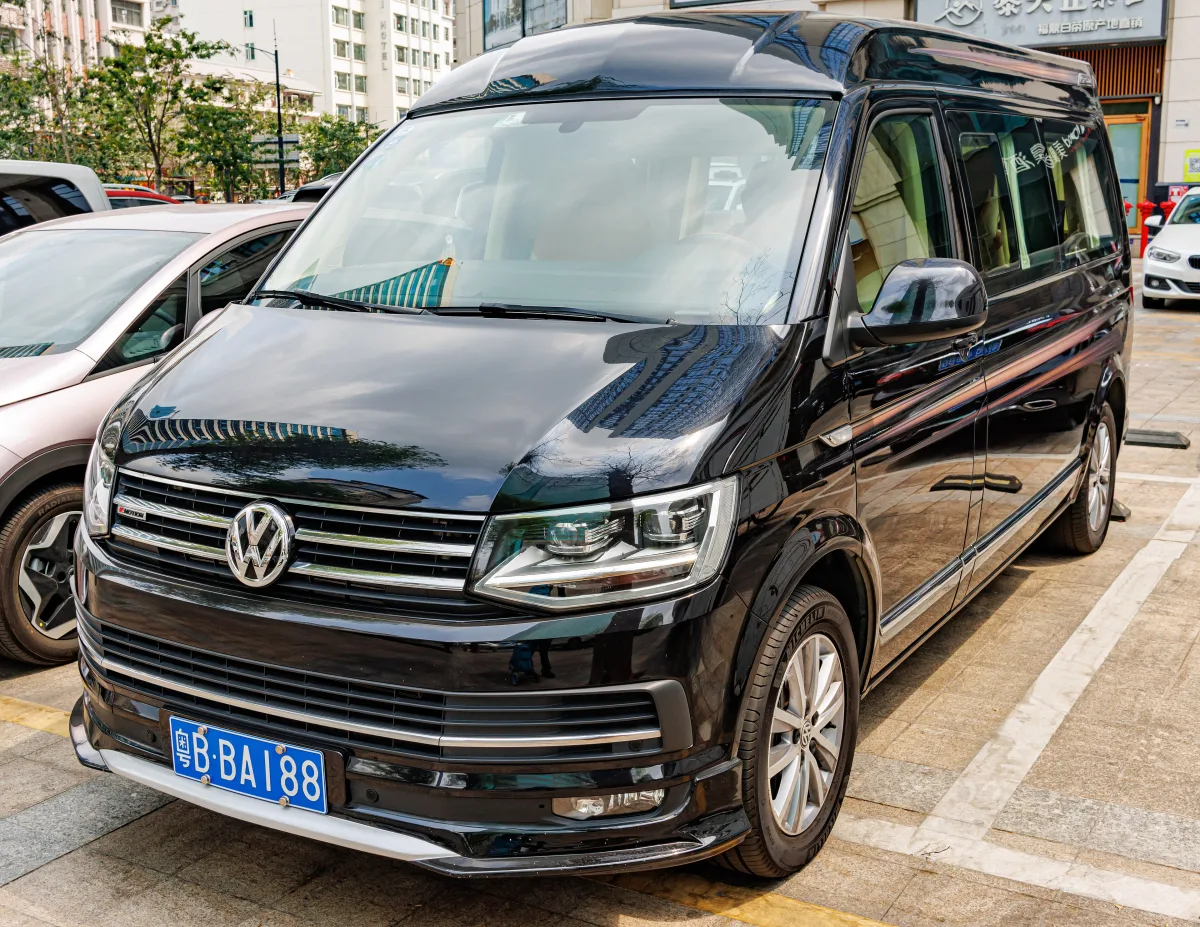
Volkswagen Caravelle: T4, T5 and T6 generations, engines and trims
The Volkswagen Caravelle is the passenger version of the 'Transporter' family, designed for families, road trips, and transporting passengers. We'll look at the T4, T5, and T6 generations, the most popular engines, length and seating configurations, and what's crucial to check when buying a used Caravelle.






Caravelle in brief
The Caravelle differs from the 'Transporter' van by having a passenger cabin with windows, rows of seats, and a higher level of trim. It's usually an 8-seater (9 with the driver), though configurations can vary, and many cars allow seats to be removed or rearranged.
This is the car for those who need space for people and luggage but don't need a full-sized bus. Used Caravelles often turn up as former hotel, taxi, or company transport vehicles, so mileage can be high, and service history is particularly important.
Which one to choose
The T4 generation (1990–2003) is the cheapest entry point into the Caravelle world, with an engine up front. Today, it's an older car: body corrosion, suspension condition, and engine maintenance are key, not the spec.
The T5 generation (2003–2015) is the most popular in the used market. A wide range of choices, plenty of variants, short and long wheelbases, and a 2009–2010 facelift brought newer diesel engines. Before buying, it's worth noting that these cars often have high mileage.
The T6 (2015–2019) and T6.1 (from 2019) offer a more modern interior, more driver-assistance systems, and cleaner engines. It's the priciest option, but later T6.1 models often have a lower mileage and better equipment.
Engines and transmissions
The T4 featured diesel (e.g. 1.9 TD, 2.4 D, 2.5 TDI) and petrol engines, while the T5 had 1.9 TDI, 2.5 TDI, and later 2.0 TDI diesels of varying power, plus a 3.2 V6 petrol with all-wheel drive. Diesels dominate in Lithuania.
The T6 commonly features 2.0 TDI diesels (ranging from around 100 to over 200 HP) and 2.0 TSI petrol engine variants. Some cars come with 4Motion all-wheel drive.
Transmissions are manual or automatic (the T5 often had DSG, the T6 has a 7-speed DSG). Check the DSG for wet clutches due to oil change history.
What to check when buying a used Caravelle
First, inspect the body. Look at the underside of the sliding doors, wheel arches, sills, and rear doors, especially on older models. Painted parts and uneven gaps can indicate previous damage.
For diesel engines, check the condition of the DPF filter, EGR valve, and injectors, as well as wear on the dual-mass flywheel and clutch. The engine should start without long cranking, not smoke, and have no oil leaks.
Inside, check the seat mounts (they can wear out from frequent use), the mechanism of the sliding doors, air conditioning, and heating. Always check the mileage against service records and MOT history.


Trim levels and versions
Names and equipment vary by market and year; below are the versions most commonly found in Europe.
Trendline
T5, T6 generationsBase trim — mostly practicality over luxury.
- Often steel or simple alloy wheels
- Simpler interior trim
- Often — manual or basic air conditioning
Comfortline
T5, T6 generationsMost popular choice — more comfort and equipment.
- Alloy wheels
- Often — automatic climate control and parking sensors
- More comfortable seats and better trim
Highline
T5, T6 generationsTop standard trim with greater comfort.
- Larger wheels
- Often — additional lights, leather or part-leather interior
- More interior equipment
Trumpa bazė
T5, T6 generationsEasier to manoeuvre in the city and park, smaller boot.
- More compact dimensions
- Less space behind the last row of seats
- Often cheaper in the used market
Ilga bazė
T5, T6 generationsMore space than the third row and for luggage.
- Longer wheelbase option
- Larger boot
- Less manoeuvrability in tight spaces
Comparison of Caravelle versions
| Trendline | Comfortline | Highline | |
|---|---|---|---|
| Who it suits | For daily work and hauling | For families and road trips | For comfort and making an impression |
| Tyre sizes (most often) | 16–17 in. | 16–17 in. | 17–18 col. |
| Interior | Base trim | More comfortable seats | Premium interior |
| Engine | Often a diesel | Often a diesel | Often a more powerful diesel |
| Price in the used market (relatively) | € | €€ | €€€ |
For most buyers, the Comfortline offers the best balance of price and features. The Highline is worth considering if comfort and style are key, while the Trendline is the budget-friendly choice.
Pros
- Plenty of space for passengers and luggage
- A practical people carrier with a versatile interior
- Many spare parts and mechanics familiar with the model
- Holds its value well among minivans
Cons
- Often pricier than competitors in the used market
- Many vehicles have high mileage and were used for commercial purposes
- Earlier generations — rust and diesel engine maintenance costs
Frequently asked questions
Which Caravelle generation is best to buy used?
For many buyers, the T5 (post-2009) or T6 are the way to go — they have more modern engines and more features. The T4 is worth considering only if you find a well-maintained example.
Is the Caravelle suitable for a family?
Yes. Often with seating for 8, a spacious interior and plenty of cargo space, it can serve as a large family car. Before buying, check the actual number of seats and seat belt mounts.
How does the Caravelle differ from the Multivan?
The Multivan is more focused on comfort and family use, while the Caravelle is geared towards passenger transport and a wider range of applications. The mechanics are usually the same, but the interior, seat configurations and trim levels differ.
Updated 2026-10-21 · Trim levels and equipment vary by market and model year — check the equipment of the specific car. · Translated automatically


