 English
 Lietuvių
 Latviešu
 Eesti
 Polski
 Русский
 Українська
 Deutsch
 Nederlands
 Čeština
 Slovenčina
 Svenska
 Norsk
 Dansk
 Suomi


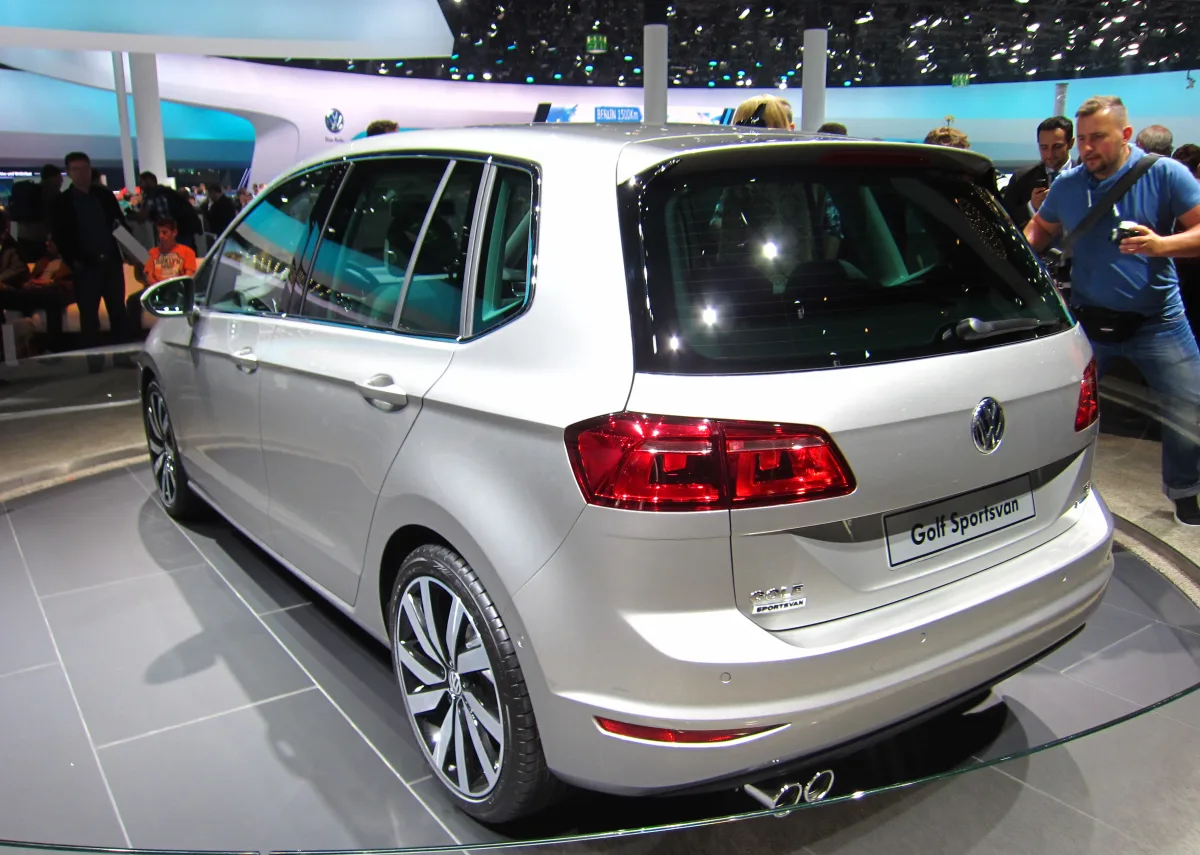
Volkswagen Golf Sportsvan: engines, trims and what to know before buying
The Volkswagen Golf Sportsvan is a taller, roomier Golf, produced from 2014 to 2020 as the successor to the Golf Plus. We look at how it differs from the standard Golf, which engines are most popular, how the trims vary and what to check before buying a used Sportsvan.






Golf Sportsvan in brief
The Sportsvan is a compact MPV based on the Golf VII, which replaced the Golf Plus. It's taller and slightly longer than the hatchback, so it offers more space in the rear seats and a larger boot.
The seating position is higher, making it easier to get in, and the rear seat slides forward and back, allowing you to adjust the space for passengers and luggage. As a result, the car is often chosen by families and older drivers.
Versions — what's the difference
The Sportsvan was made in one generation, but it was refreshed in 2017: it got revised bumpers, headlights, updated infotainment and a few new engines.
Compared to the Golf, the Sportsvan lost some of the sportier versions (there was no GTI or R), but it gained practicality. In terms of platform and technology, it's very close to the seventh-generation Golf.
Engines and gearboxes
Petrol engines range from 1.2 TSI to 1.4 TSI, and after the refresh — 1.0 and 1.5 TSI. Diesels are 1.6 and 2.0 TDI. Power ranges from around 85 to 150 hp.
Gearboxes are manual or DSG. Smaller engines are usually paired with a 7-speed dry-clutch DSG, while more powerful ones get a wet-clutch DSG.
What to check when buying a used Sportsvan
The DSG gearbox should shift smoothly: juddering when moving off or harsh shifts often indicate a need for clutch or mechatronic repair. Ask if the oil has been changed.
Early 1.2 and 1.4 TSI engines were notorious for timing chain tensioners – a cold engine shouldn't rattle after starting. For diesel cars that have done a lot of city driving, check the diesel particulate filter (DPF) and EGR valve.
Check the mechanism of the rear seats when folded down, ensure there's no moisture in the boot, and compare the readings with service and MOT records.


Trim levels
Names and equipment vary by market and year; we list the most common trims found in Europe.
Trendline
2014–2020The base trim is the most basic and affordable.
- Often comes with steel wheels
- Basic air conditioning
- Simpler infotainment system
Comfortline
2014–2020The most popular choice – a good balance of price and convenience.
- Light-alloy wheels
- Often includes automatic climate control and parking sensors
- More comfortable seats
Highline
2014–2020The top standard trim.
- Often — larger alloy wheels
- Often — LED or xenon headlights
- Sportier seats
R-Line
2014–2020Sporty-looking version without a sporty engine.
- Sporty bumpers and alloy wheels
- Sport seats and steering wheel
- Often — modern interior trim
Trim comparison
| Trendline | Comfortline | Highline | R-Line | |
|---|---|---|---|---|
| Who it suits | Ideal for everyday driving | Suitable for most buyers | For comfort | For a sporty look |
| Alloy wheels (often) | 15–16 inch | 16th generation | 17th generation | 17th–18th generation |
| Engine | 1.2–1.4 TSI, 1.6 TDI | 1.2–1.5 TSI, 1.6–2.0 TDI | 1.4–1.5 TSI, 2.0 TDI | 1.4–1.5 TSI, 2.0 TDI |
| Price in the used market (relatively) | € | €€ | €€ | €€ |
Most buyers will find the Comfortline with a 1.4/1.5 TSI or 1.6/2.0 TDI engine to their liking. The R-Line is worth considering for its styling.
Pros
- Spacious interior and roomy boot
- High driving position
- Rear seats fold flat
- The Golf's tried-and-tested technology
Cons
- Less sporty than the Golf
- Dry clutches in the DSG can be expensive to replace
- Prices in the used market are often higher than similar-aged competitors
Frequently asked questions
How does the Golf Sportsvan differ from the Golf?
The Sportsvan is taller and longer, offers more space in the rear seats and a larger boot, and prioritises comfort over sportiness.
Is the Sportsvan suitable for a family?
Yes, thanks to its spacious interior and sliding rear seats, it's perfect for families.
Which engine is the best?
Most will be happy with the 1.4 or 1.5 TSI or the 1.6 TDI. Before buying, check the specific car's service history.
Updated 2026-10-17 · Trim levels and equipment vary by market and model year — check the equipment of the specific car. · Translated automatically


