 English
 Lietuvių
 Latviešu
 Eesti
 Polski
 Русский
 Українська
 Deutsch
 Nederlands
 Čeština
 Slovenčina
 Svenska
 Norsk
 Dansk
 Suomi


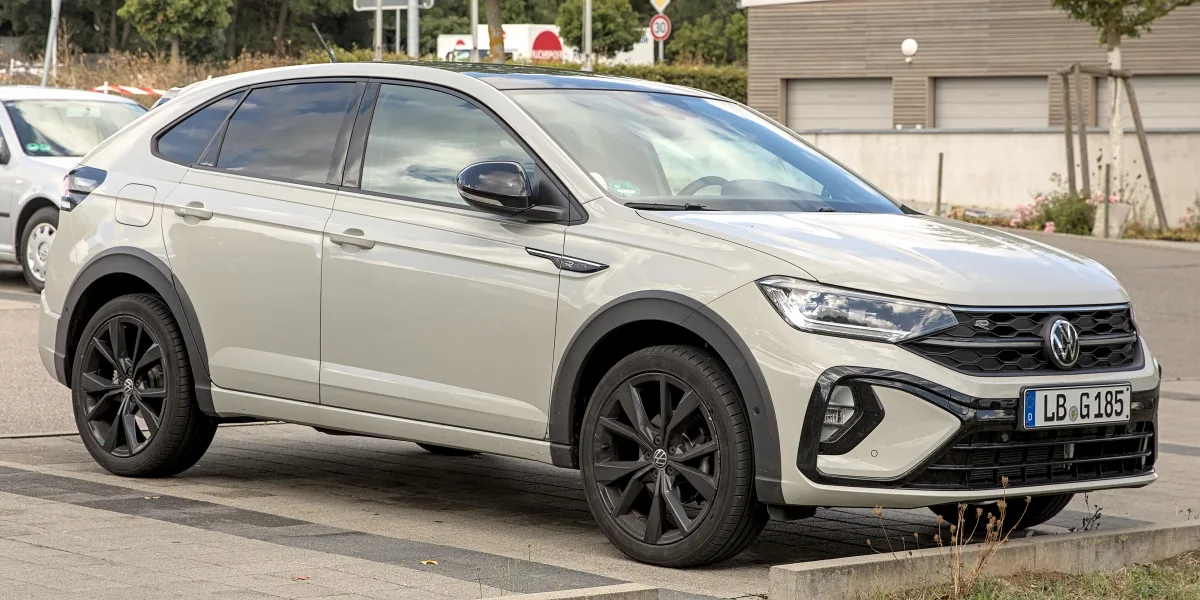
Volkswagen Taigo: generations, engines and trims
The Volkswagen Taigo is a compact coupe-style crossover that has been on sale in Europe since 2021. We look at how it differs from the T-Cross, which engines and trims are most common, and what to check when buying used.






The Taigo in brief
The Taigo is the European version of the VW Nivus, created in Brazil. It's built on the same MQB A0 platform as the Polo and T-Cross but stands out with a lower, rear-sloping roofline. Cars destined for Europe are manufactured in Spain.
Despite its coupe shape, the boot offers around 440 litres — more than the T-Cross when its rear seat is pushed back. The trade-off is a lower roofline at the rear and reduced rear visibility. The Taigo doesn't offer four-wheel drive or diesel engines.
Which generation to choose
The Taigo has only had one generation so far, so the used market is largely determined by the year, mileage and trim. Even the earliest models are well-equipped: LED headlights and a digital instrument cluster were often standard, while higher trims offered matrix IQ.LIGHT headlights.
Around 2024-2025, the model will be refreshed — with a facelift and some new features. If budget is a concern, a well-maintained earlier Taigo is a perfectly good choice, as the underlying technology remains largely the same.
The Style and R-Line versions are most commonly bought — this model is chosen primarily for its looks, so base trims are less common in the used market.
Engines and gearboxes
The Taigo is offered only with petrol engines: the three-cylinder 1.0 TSI (around 95 or 110–116 hp) and the 1.5 TSI (150 hp).
The less powerful 1.0 TSI is paired with a 5-speed manual gearbox, while the more powerful version comes with a 6-speed manual or a 7-speed dry-clutch DSG. The 1.5 TSI is usually found with DSG.
The most sensible choice is the around 110–116 hp 1.0 TSI: it's enough for both city and suburban driving. The 1.5 TSI is worth considering if you often drive with a full car or if performance is crucial.
What to check when buying a used Taigo
The DSG gearbox should shift smoothly, especially when pulling away and driving slowly in traffic — juddering or jolts often indicate a need for clutch or mechatronics repair. Check the clutch in a manual car.
Due to poor rear visibility, it's especially important that parking sensors and a rear-view camera work if fitted. Inspect the rear bumper and corners for any minor dents and signs of repainting.
R-Line versions often have larger wheels that are flush with the arches. Check the service history for regular maintenance, and for the small turbo engine, ensure the oil has been changed on time.


Trim levels
Names and equipment vary by market and year; we list the most common trims found in Europe.
Taigo
From 2021 onwardsThe base trim is basic and the most affordable.
- LED headlights
- Usually steel wheels
- A more basic infotainment system
Life
From 2021 onwardsGood balance of price and equipment.
- Light alloy wheels
- Often — parking sensors
- Often — adaptive cruise control
Style
From 2021 onwardsA more elegant version for comfort lovers.
- Larger wheels and more chrome details
- Often — matrix IQ.LIGHT headlights
- Often — ambient interior lighting
R-Line
From 2021 onwardsSporty-looking version without a sporty engine.
- Sporty bumpers and wheels
- Sport seats
- Often — contrasting black roof
Comparison of Taigo trims
| Life | Style | R-Line | |
|---|---|---|---|
| Who it's for | For daily driving | For comfort and style | Sporty styling |
| Wheels (usually) | 16–17 inch | 17 inch | 17–18 inch |
| Front headlights | LED | LED, often matrix | LED, often matrix |
| Engine | 1.0 TSI | 1.0–1.5 TSI | 1.0–1.5 TSI |
| Price in the used market (relatively) | € | €€ | €€ |
Most buyers will be best served by the Style with around 110–116 hp 1.0 TSI engine. The R-Line is worth considering for its looks, while the Life is the pick if budget is the priority.
Pros
- Distinctive coupé styling
- Spacious boot for its size
- Economical petrol engines
- Generous standard equipment
Cons
- Less headroom in the rear than the T-Cross
- Poor rear visibility
- No four-wheel drive or diesel engines
Frequently asked questions
How does the Taigo differ from the T-Cross?
The Taigo shares the same technology and engines as the T-Cross, but is lower with a sloping roof and a sportier look. The T-Cross has a rear seat that folds flat and more headroom, while the Taigo's boot is larger than the T-Cross with the rear seat folded.
Is the Taigo's rear practical for adults?
There's enough legroom, but due to the sloping roof, taller passengers might find it a bit tight for headroom. If you often carry adults in the rear, it's worth comparing with the T-Cross.
Which Taigo engine should you choose?
For most buyers, the 1.0 TSI with around 110–116 hp is the best bet. The 95 hp version is best suited to city driving, while the 1.5 TSI is for those who prioritise performance.
Updated 2026-10-10 · Trim levels and equipment vary by market and model year — check the equipment of the specific car. · Translated automatically


