 English
 Lietuvių
 Latviešu
 Eesti
 Polski
 Русский
 Українська
 Deutsch
 Nederlands
 Čeština
 Slovenčina
 Svenska
 Norsk
 Dansk
 Suomi


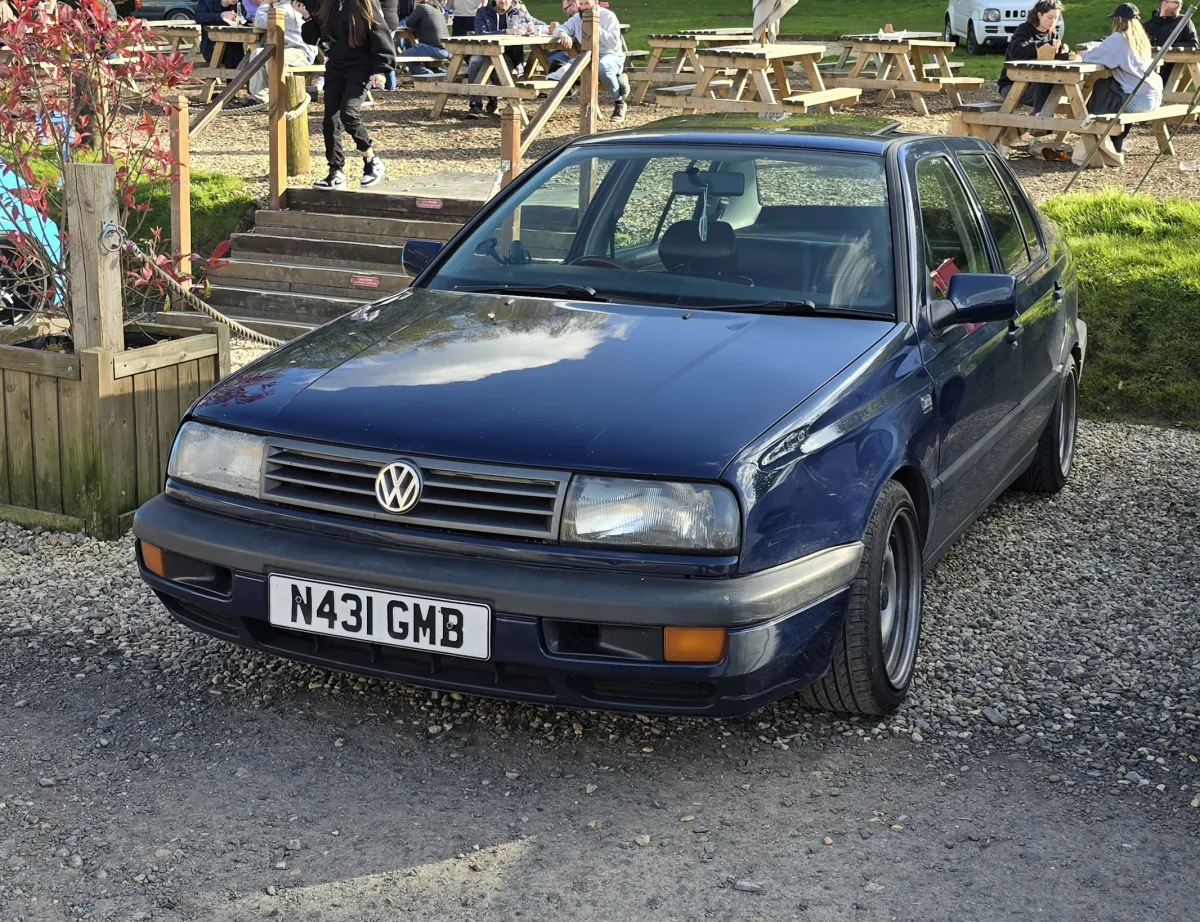
Volkswagen Vento: Golf III saloon, engines and trims
The Volkswagen Vento is a Golf III-based saloon produced from 1992 to 1998. In this article, we look at what sets it apart from the Golf, the engines and trims you'll find, and what to check before buying an old-timer like this.






Vento in brief
The Vento is essentially a Golf III with a separate boot: same tech and interior, just a saloon body. In some markets, this car is known as the Jetta, while the Vento name was used in Europe.
It's a straightforward, sturdy, and relatively easy-to-fix car. Today, it mainly appeals to those looking for an affordable but well-built saloon, or enthusiasts.
Which version to choose
The Vento didn't change much during its production run, so the year is less important than the condition, service history, and trim level. Later models usually come with more safety features, including airbags and ABS.
If you're after a sportier option, consider the VR6 version, but it's pricier and more demanding to maintain. For daily driving, a simpler petrol or diesel engine is often more sensible.
Engines and gearboxes
Petrol engines range from 1.4 to 2.0 litres, plus the 2.8 VR6 (around 174 hp). Diesels include the 1.9 D, 1.9 TD, and 1.9 TDI (roughly 68–110 hp, depending on the version).
Gearboxes are either a 5-speed manual or a 4-speed automatic. The manual is generally considered more reliable and straightforward.
What to check when buying a used Vento
The key thing is corrosion: check the sills, wheel arches, boot lid, and underbody. An old body, even if it looks good, might be rusty underneath.
Check the service history, timing belt replacement, suspension, brakes, and electrical equipment (window lifts, central locking). Listen to the diesel engine for unusual noises.


Trim levels
Names and equipment vary by market and year; we list the most common trims found in Europe.
CL
1992–1998Base trim with basic equipment.
- Often comes with simple hubcaps
- Standard safety equipment
- Basic sound system
GL
1992–1998Mid-range trim with more comfort features.
- Often includes electric windows
- Often includes central locking
- More comfortable interior trim
GT
1992–1998Sportier, better-equipped version.
- Often includes sportier seats
- Often — light alloy wheels
- Often — more powerful engine
GLX
1992–1998Top trim with the most equipment.
- Often — air conditioning
- Often — more comfort features
- Often — light alloy wheels
Trim comparison
| CL | GL | GT | GLX | |
|---|---|---|---|---|
| Who it's for | A basic, budget-friendly car | For everyday use | For sportier driving | For comfort |
| Interior | Basic | More comfortable | Sportier | Luxury |
| Engine | Often smaller | Various | Often more powerful | Various |
| Price in the used market (relatively) | Budget-friendly | Budget-friendly | Mid-range | Mid-range |
The deciding factor for most buyers is the condition of the body and engine, not the trim level. If you can choose, look for a well-equipped and non-rusty version.
Pros
- Robust, simple body
- Spacious boot
- Simple technology and easy maintenance
- Wide range of engine choices
Cons
- Cars are very old, may be rusty
- Limited safety features in earlier versions
- Outdated electrics
Frequently asked questions
How do the Vento and Golf III differ?
The tech and interior are almost identical, but the Vento has a saloon body with a separate boot, while the Golf III is a hatchback.
Are the Vento and Jetta III the same car?
Yes, they're the same model, just marketed differently in various regions. The Vento name was used in Europe.
Which engine should you choose?
For most, a straightforward 1.6 or 1.8 petrol or a 1.9 TDI if it has a service history will do the trick. The VR6 is for enthusiasts.
Updated 2026-10-17 · Trim levels and equipment vary by market and model year — check the equipment of the specific car. · Translated automatically


