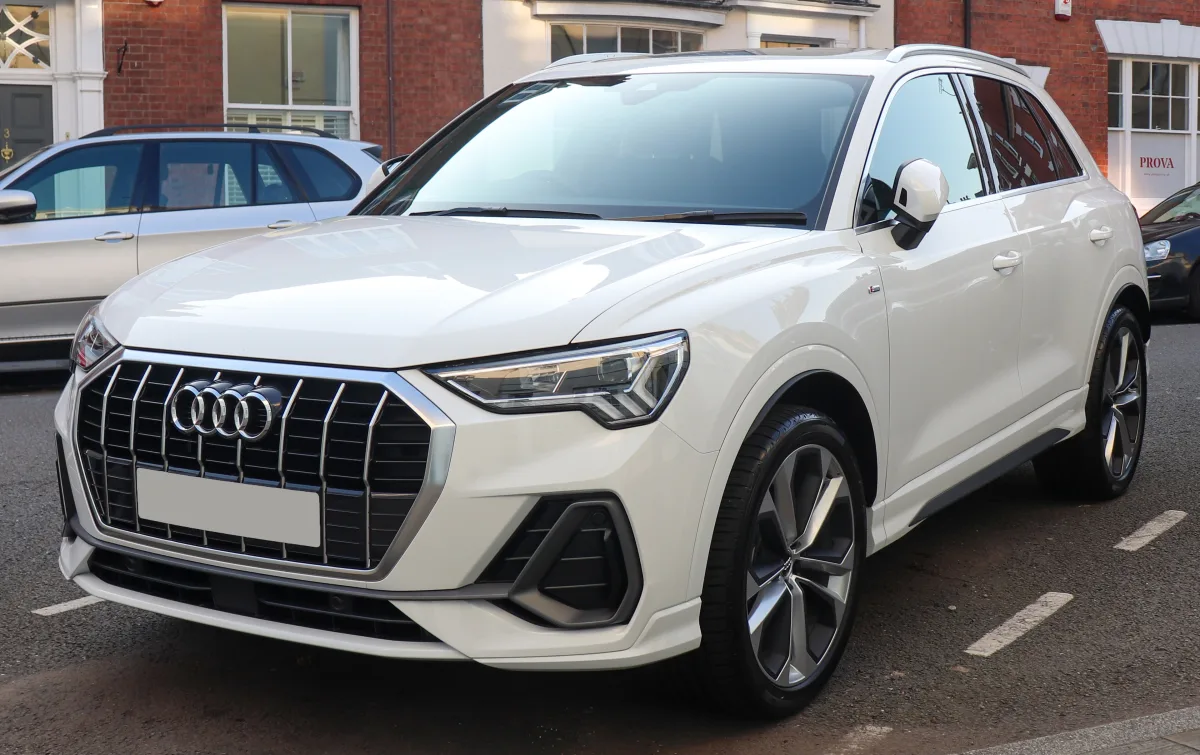
Audi Q3 — a compact luxury SUV, prized in Lithuania for its practical size, high-quality interior and quattro all-wheel drive. We look at the 8U and F3 generations, the most popular engines, trims and what to check when buying a used Q3.
ADVERTISEMENT
Q3 in brief
Q3 — a close cousin of the Volkswagen Tiguan, Audi's SUV range slots it between the smaller Q2 and larger Q5. The first generation (8U) was produced from 2011 to 2018, the second (F3) from 2018, and in 2019 the coupe-like Q3 Sportback joined the line-up. The third generation was unveiled in 2025.
Q3 appeals to those who want a higher driving position and Audi quality, but don't need the size of a Q5. Most cars are front-wheel drive, but more powerful engines often come with quattro all-wheel drive. The sportiest version is the RS Q3 with a 2.5-litre five-cylinder engine.
How 8U and F3 differ
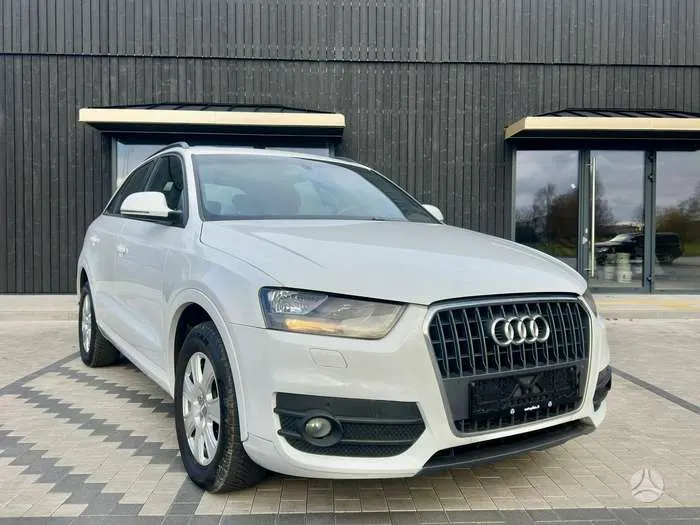
The 8U generation (2011–2018) was built on the same platform as the original Tiguan. It's the cheapest way to get a Q3, but the interior and infotainment feel dated, and many have high mileage. Towards the end of production, the model was refreshed — with new headlights, bumpers and engines.
The F3 generation (from 2018) is built on the MQB platform: it's larger and more spacious, has a longitudinally sliding rear seat and a much more modern interior with a digital instrument cluster and central infotainment screen. It's the most popular Q3 generation in the used market.
The Q3 Sportback's tech specs don't differ from the standard Q3, but due to its sloping roofline, there's slightly less headroom and a smaller boot. Choosing between them comes down to looks and practicality.
Engines and transmissions
In the 8U generation, you'll most commonly find the 1.4 TFSI (around 150 hp) and 2.0 TFSI petrol engines, as well as the 2.0 TDI diesel (around 140–184 hp). In Lithuania, you'll mostly encounter the 2.0 TDI, often with quattro transmission.
In the F3 generation, Audi switched to new naming conventions: 35 TFSI is a 1.5-litre petrol (150 hp), 40 and 45 TFSI are 2.0-litre petrols, 35 TDI and 40 TDI are 2.0-litre diesels (around 150 and 190–200 hp). Later, the plug-in hybrid 45 TFSI e was introduced, and the RS Q3 packs around 400 hp.
Transmissions come as a 6-speed manual or a 7-speed S tronic (dual-clutch automatic). Most used Q3s, especially those with quattro transmission, come with the S tronic box; some 35 TFSI automatics with S tronic also feature a mild-hybrid system.
What to check when buying a used Q3
The S tronic box should shift smoothly: juddering on take-off, clunks when shifting, or vibration often indicate a need for clutch or mechatronics repair. Ask if the box's oil has been changed according to the manufacturer's schedule.
For diesel cars, check the diesel particulate filter (DPF) and EGR valve, and for newer F3 diesels, ensure the AdBlue system isn't showing any faults. Some owners of early 2.0 TFSI engines report increased oil consumption.
In quattro models, check if the rear axle differential (Haldex) fluid has been changed. Inspect the underbody according to service records, and the body for painted parts and uneven gaps.
ADVERTISEMENT
Trim levels
Names and equipment vary by market and year; we list the most common trims found in Europe. 8U generation names differed more than F3.
Bazinė
F3
Base version without a separate equipment line.
Light-alloy wheels
Digital instrument cluster
Often — parking sensors and automatic climate control
advanced
F3
More elegant line with distinctive exterior styling.
Distinctive bumpers and side skirts
Often — 18-inch wheels
Often — LED headlights and ambient interior lighting
S line
8U, F3
Most popular line — sporty appearance.
S line bumpers, grilles, and badges
Often — sporty seats and black roof lining
Often — sporty suspension and 19–20-inch wheels
Audi RS Q3
8U, F3
The sportiest Q3 version with a five-cylinder engine.
The 2.5 TFSI engine, in the F3 guise — around 400 hp
quattro drive and S tronic gearbox
RS bumpers, brakes, and sporty seats
Comparison of F3 generation trims
Bazinė
advanced
S line
RS Q3
Who it suits
For the rational buyer
For elegance and comfort
For a sporty look
For power enthusiasts
Wheels (most often)
17-inch
18-inch
18–20 model year
20–21 model year
Styling
Standard
Premium interior
S line bumpers
RS bumpers and grilles
Engine
35 TFSI, 35 TDI
35–40 TFSI, 35–40 TDI
35–45 TFSI, 35–40 TDI
2.5 TFSI, around 400 hp
Relative price in the used market
€
€€
€€
€€€
The best choice for many buyers is the F3-generation Q3 with a 35 TFSI or 35–40 TDI engine and advanced or S line trim. The RS Q3 is worth considering only if you're after a truly sporty car.
Pros
Comfortable size in the city and on the road
High-quality, well-built interior
Plenty of quattro options
The F3-generation offers a modern and spacious interior
Cons
More expensive than a similarly aged Volkswagen Tiguan on the used market
Repairs to the S tronic gearbox can be costly
The 8U-generation interior and infotainment are starting to show their age
Frequently asked questions
Which Q3 generation is best to buy used?
For many buyers, the F3 generation (from 2018) is the way to go: it's roomier, more modern, and comes with more driver-assistance systems. The 8U is worth considering if your budget is tight, but then the technical condition and service history are crucial.
Is the Q3 worth buying with quattro?
Yes, if you often drive in winter, on rough roads, or tow a trailer. In the city and suburbs, front-wheel drive is usually sufficient, and such a car typically consumes less fuel and is cheaper to maintain.
What's the difference between the Q3 and Q3 Sportback?
The mechanics and engines are the same; the difference lies in the body: the Sportback has a sloping roof, so it looks sportier, but there's less headroom in the back and a smaller boot.
Which Q3 engine is the most economical?
The most economical are the 2.0 TDI diesels. If you mostly drive in the city, it's often more sensible to opt for the 1.4 or 1.5 TFSI petrol engine, as the diesel particulate filter requires longer journeys.
Updated 2026-10-09 · Trim levels and equipment vary by market and model year — check the equipment of the specific car. · Translated automatically
Comments
No comments about the Audi Q3 yet. Share your experience.
We use necessary cookies to run the website. With your consent, we will also use analytics and advertising measurement cookies — to understand how the website is used and to measure our advertising results. Learn more
 English
 Lietuvių
 Latviešu
 Eesti
 Polski
 Русский
 Українська
 Deutsch
 Nederlands
 Čeština
 Slovenčina
 Svenska
 Norsk
 Dansk
 Suomi


 4