 English
 Lietuvių
 Latviešu
 Eesti
 Polski
 Русский
 Українська
 Deutsch
 Nederlands
 Čeština
 Slovenčina
 Svenska
 Norsk
 Dansk
 Suomi


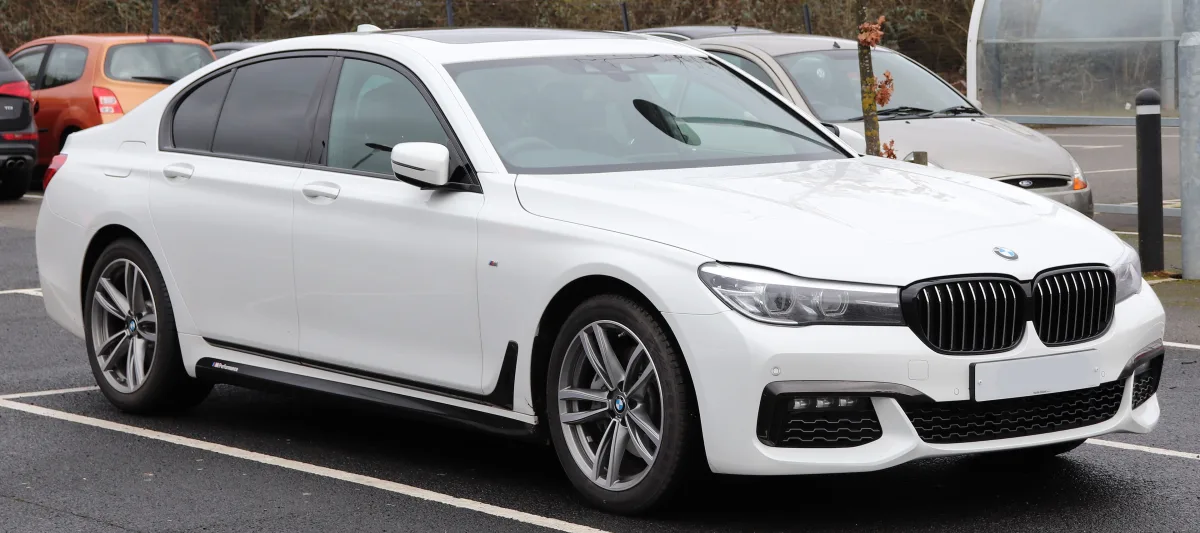
BMW 7 Series: F01, G11, and G70 generations, engines, and trims
BMW 7 Series: BMW's flagship sedan, combining luxury with driving pleasure. We review the most common F01 and G11 generations on the used market, the latest G70, popular engines, trims, and what you need to check before buying.






The 7 Series in brief
The 7 Series has been in production since 1977. All generations are sedans available with either a standard or long wheelbase: long-wheelbase versions are designated by the letter L (e.g., 740Li), with chassis codes like F02 or G12. From the F01 generation onward, the xDrive all-wheel-drive system is a frequent sight.
On the used market, the 7 Series is praised for its powerful engines, quiet cabin, and the fact that such a large car drives much more easily than it looks. Like other luxury sedans, its value depreciates rapidly, meaning a used model costs considerably less than a new one, though running costs remain high.
F01, G11, and G70: what are the differences?
F01 generation (2008–2015): today, this is the cheapest route into a modern 7 Series. Cars facelifted in 2012 received an 8-speed automatic transmission, more efficient engines, and an upgraded iDrive system, making these the ones to go for.
G11 generation (2015–2022): the most popular choice on the used market. The chassis features carbon-fiber construction (Carbon Core), making the car lighter, while the cabin gained gesture control and a larger display. The 2019 facelift stands out with significantly larger kidney grilles and newer engines.
G70 generation (from 2022): a completely new design featuring split headlights, a curved display, and the all-electric i7. It is still rare on the used market, and its price is substantially higher than the G11.
Engines and transmissions
In the F01 generation, the most common diesels are the 730d (approx. 245–258 hp) and 740d (approx. 306–313 hp), alongside the post-facelift tri-turbo 750d (approx. 381 hp). Petrol options include the 740i (3.0 R6) and 750i (4.4 twin-turbo V8), with the rarer V12-powered 760i and ActiveHybrid 7 rounding out the range.
The G11 lineup centers around the 730d (approx. 265–286 hp), 740d (approx. 320–340 hp), and the quad-turbo 750d (approx. 400 hp). Petrol choices comprise the 740i (3.0 R6), 750i (4.4 V8), and the V12-powered M760Li (approx. 609 hp), plus the 740e plug-in hybrid, replaced by the 745e after the facelift. The G70 offers mild-hybrid 740d and 740i variants, plug-in hybrids, and the all-electric i7.
All versions across these generations feature an automatic transmission: pre-2012 F01s use a 6-speed, while later F01s and the G11 rely on the 8-speed ZF. It is considered reliable, though regular fluid changes are recommended.
What to check when buying a used 7 Series
The 750i with the 4.4 V8 engine is the riskiest choice: early models in particular are notorious for heavy oil consumption, turbocharger failure, and timing chain issues. If you are looking at one of these, demand a comprehensive service history.
On diesel 730d and 740d models, check the diesel particulate filter (DPF) and EGR system, and the AdBlue setup on newer ones. Air suspension (F01 — rear only, G11 — typically on both axles) tends to leak with age, so check whether the car sags overnight.
Check all electronics—iDrive, cameras, soft-close doors, massage functions—and cross-reference the mileage with service records. A thorough pre-purchase diagnostic inspection is essential for high-mileage cars.


Trims and packages
Names and equipment vary by market and model year; we outline the most common European versions and packages.
Standartinė
F01, G11Base trim, which already includes a wealth of luxury features.
- Leather interior, navigation, automatic climate control
- Frequently equipped with power-adjustable comfort seats
- Frequently equipped with a head-up display
M Sport
F01, G11, G70The most popular package — brings a sporty look and a sports steering wheel.
- M Sport bumpers and larger alloy wheels
- Sport seats and M steering wheel
- Often features an anthracite headliner
Design Pure Excellence
G11A version with a classic, elegant style.
- More exterior chrome detailing
- Often features upgraded leather and wood trim
- A focus on comfort rather than a sporty character
Ilgoji bazė (Li)
F02, G12Roughly 14 cm longer, offering maximum rear-seat legroom.
- Abundant rear legroom
- Frequently equipped with power-adjustable rear seats
- Frequently equipped with rear-seat entertainment screens
M760Li xDrive
G12The most powerful G11/G12 variant, powered by a V12 engine.
- 6.6 V12 engine, approx. 609 hp
- xDrive all-wheel drive
- Rare on the used market and expensive to maintain
Comparison of G11 generation variants
| Standartinė | M Sport | Design Pure Excellence | Ilgoji bazė (Li) | |
|---|---|---|---|---|
| Best suited for | Comfort | Sporty styling | Classic elegance | Rear-seat passengers |
| Wheels (typically) | 18-inch | 19–20 inch | 19-inch | 18–20 inch |
| Interior | Leather, comfort-oriented | Sports seats, M steering wheel | More upscale trim | More rear legroom |
| Used market price (relative) | € | €€ | €€ | €€€ |
For most buyers, the sweet spot is a 2019–2022 730d or 740d xDrive with the M Sport package: economical, punchy, and readily available on the used market. The long-wheelbase version is worth considering if you frequently carry passengers in the back.
Pros
- Punchy and economical diesel engines
- Great balance of ride comfort and handling
- Plenty of modern kit included as standard
- Widespread availability with xDrive all-wheel drive
Cons
- Risky 4.4 V8 (750i) engine
- Expensive air suspension and electrical repairs
- Rapid depreciation
Frequently asked questions
Which 7 Series generation is the best used buy?
Best value-for-money and tech balance goes to the G11 generation, especially the 2019–2022 facelifted cars. If your budget is tighter, look for a facelifted 2012–2015 F01 with the 8-speed automatic and a diesel engine.
Is a 750i worth buying?
Only with a clear and comprehensive service history. The 4.4 V8 is immensely powerful, but prone to high oil consumption and costly bills, making the 740d or 740i a much more sensible choice for most buyers.
What's the difference between the 740d and 740Li?
The letter L stands for long wheelbase: the car is roughly 14 cm longer, with all the extra inches going into rear legroom. Long-wheelbase models are more likely to feature rear-cabin comfort goodies, yet they drive virtually the same.
Updated 2026-10-09 · Trim levels and equipment vary by market and model year — check the equipment of the specific car. · Translated automatically


