 English
 Lietuvių
 Latviešu
 Eesti
 Polski
 Русский
 Українська
 Deutsch
 Nederlands
 Čeština
 Slovenčina
 Svenska
 Norsk
 Dansk
 Suomi


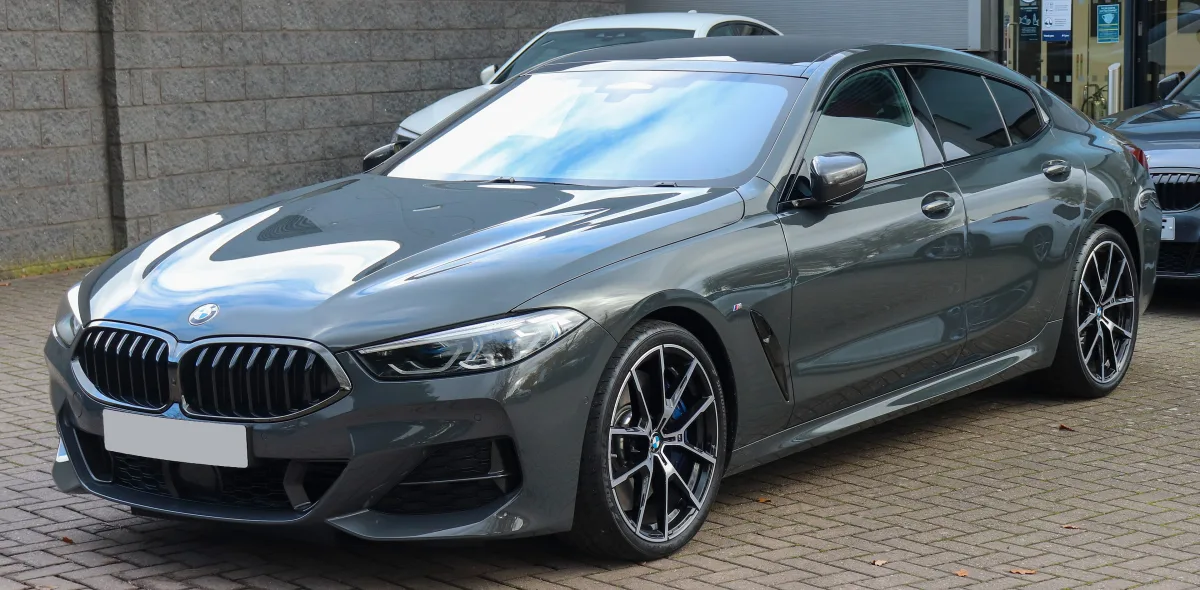
BMW 8 Series: E31 and G14/G15/G16 generations, engines and trims
BMW 8 Series — a large, luxurious BMW coupe, with the first generation (E31) produced from 1989 to 1999, and the second introduced in 2018 as a coupe, convertible, and four-door Gran Coupe. We look at how the generations and bodies differ, which engines are most popular, and what to check when buying a used car.






8 Series in brief
The first 8 Series (E31) was the most luxurious BMW coupe of its time, featuring V8 and V12 engines, and is now becoming a collector's item. The second generation was launched in 2018 as a coupe (G15), with a convertible (G14) and four-door Gran Coupe (G16) following in 2019. The technology is similar to BMW's 5 and 7 Series models.
The 8 Series is primarily designed for fast and comfortable journeys: the interior is luxurious, the equipment is extensive, and many cars sold in Europe come with all-wheel drive xDrive. The Gran Coupe is the most practical version, featuring four doors and a more spacious rear seat.
E31 and the second generation — what's the difference
E31 (1989–1999) — a classic coupe with pop-up headlights and no central B-pillar. It came with the 850i/850Ci (5.0, later 5.4 l V12), 840Ci (4.0, later 4.4 l V8), and the rare 850CSi (5.6 l V12, around 380 hp). Today, such a car is worth buying only as a collector's item, having first assessed potential restoration costs.
Second generation (from 2018) — a modern large car with LED or laser headlights, a digital instrument cluster, and plenty of driver-assistance systems. 2022 model year cars received a larger multimedia screen and minor styling tweaks.
The coupé and convertible have a 2+2 layout — the rear seats are best for short trips. The Gran Coupé is longer, making it more suitable as a daily driver for four people.
Engines and transmissions
The second generation's most popular three engines: 840i (3.0-litre inline-six petrol, around 333–340 hp), 840d xDrive (3.0-litre inline-six diesel, around 320–340 hp) and M850i xDrive (4.4-litre V8, around 523–530 hp).
The fastest are the M8 and M8 Competition with 4.4-litre V8 (around 600–625 hp) and M xDrive transmission. All second-generation engines are paired with an 8-speed automatic transmission.
The diesel 840d is the most economical for long journeys, while the 840i is simpler and often more suitable for those who drive mostly in the city and short distances.
What to check when buying a used 8 Series
Some 8 Series cars were imported from the USA — check the history via the VIN to ensure the car wasn't damaged, and measure the paint thickness on all body parts. Service history is crucial, as maintaining such a car is expensive.
The M850i and M8 V8 engines can consume more oil, so ask how often it needs to be topped up and check for leaks. In 840d cars, check the particulate filter and AdBlue system.
Check the tyres and brakes — they're expensive to replace on large wheels and a powerful car.


Versions
The BMW 8 Series spec depends on the engine and optional packs (e.g., M Sport), so cars with the same name can vary significantly. We list the most commonly found versions.
840i
G14/G15/G16Petrol version with a six-cylinder engine.
- 3.0-litre engine, around 333–340 hp
- Rear-wheel drive or all-wheel drive (xDrive)
- Often comes with the M Sport pack
840d xDrive
G14/G15/G16Diesel version for long journeys.
- 3.0-litre diesel, around 320–340 hp
- All-wheel drive xDrive
- Lowest fuel consumption in the 8 Series range
M850i xDrive
G14/G15/G16Most powerful non-M version with a V8 engine.
- 4.4-litre V8, around 523–530 hp
- Sporty suspension and larger brakes
- Often — rear-wheel drive (Integral Active Steering)
M8 / M8 Competition
G14/G15/G16The sportiest 8 Series with M technology.
- 4.4-litre V8, around 600–625 hp
- M xDrive transmission with the option to drive rear wheels only
- Often — carbon fibre roof and ceramic brakes
850i / 850Ci
E31The classic first-generation version with a V12.
- 5.0–5.4-litre V12 engine
- Pop-up headlights and a coupé without a central pillar
- Often — automatic transmission
Comparing second-generation versions
| 840i | 840d xDrive | M850i xDrive | M8 Competition | |
|---|---|---|---|---|
| Who it's for | For daily driving | For long journeys | For fast driving | Sporty and track-focused |
| Wheels (most often) | 19–20 inch | 19–20 inch | 20 inch | 20 inch |
| Gearbox | Rear-wheel or all-wheel drive | All-wheel drive | All-wheel drive | All-wheel drive (M xDrive) |
| Engine | 3.0-litre straight-six, around 340 hp | 3.0-litre straight-six diesel, around 320–340 hp | 4.4-litre V8, around 530 hp | 4.4-litre V8, around 625 hp |
| Price in the used market (relatively) | Mid-range | Mid-range | €€€ | €€€ |
Most buyers' best bet is the 840d xDrive or 840i, especially in Gran Coupé body style. The M850i and M8 are only worth considering if power is your top priority, and you're prepared for higher maintenance costs.
Pros
- Luxurious interior and generous equipment
- Powerful and smooth-running engines
- Comfortable for long journeys
- The Gran Coupé is a practical four-door version
Cons
- Expensive maintenance and parts
- The coupé and convertible's rear seats are cramped
- Often loses value quickly
Frequently asked questions
Which 8 Series version is best for daily use?
Most often, the 840d xDrive Gran Coupé: it's economical, has all-wheel drive, four doors, and a more spacious rear seat. If you mostly drive in the city, consider the 840i.
Is it worth buying a first-gen E31?
Only as a collector's car. The V12 engine and era-specific electronics are complex and expensive to repair, so a specialist service check and documented maintenance history are essential before buying.
What's the difference between the M850i and M8?
The M850i is a very fast but more comfortable large tourer. The M8 has a more powerful M engine, a stiffer suspension, and sportier settings, making it sharper but also more expensive to maintain.
Updated 2026-10-09 · Trim levels and equipment vary by market and model year — check the equipment of the specific car. · Translated automatically


