 English
 Lietuvių
 Latviešu
 Eesti
 Polski
 Русский
 Українська
 Deutsch
 Nederlands
 Čeština
 Slovenčina
 Svenska
 Norsk
 Dansk
 Suomi


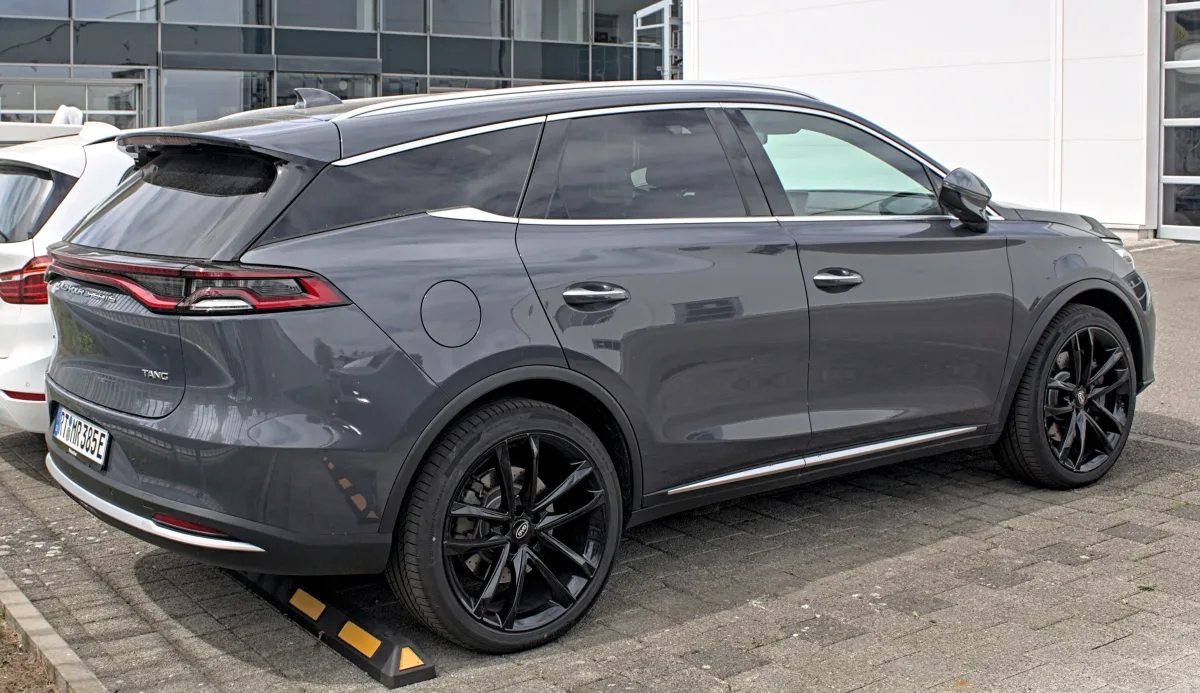
BYD Tang: electric and hybrid SUV, generations and what to know
The BYD Tang has been a large seven-seater SUV since 2015, offered as a plug-in hybrid (DM) and electric vehicle (EV). We look at the generations, trims, batteries, charging, and what to check when buying a used or imported Tang.






Tang at a glance
The BYD Tang is a large SUV with three rows of seats and a length of around 4.9 meters. It's designed for families needing plenty of space, and the brand stands out with its 'Blade' LFP batteries and extensive standard equipment.
In Lithuania, the Tang is rare, and there aren't many used options. Some cars are imported from European countries, while others come from different markets, so their equipment and documents may vary.
Which generation to choose
The first generation (2015–2021) was the plug-in hybrid Tang DM with a powerful 2.0-litre turbo engine and electric motors. The second generation (from 2021) refreshed the design and offered both hybrid and electric versions.
The latest model, the Tang L, is set to arrive around 2025. If you're after the newest, safest, and most efficient, go for the second or newer generation.
Engines and transmissions
The Tang EV has two electric motors, all-wheel drive, and an 86 kWh battery. Hybrid versions combine a petrol engine with electric motors: the DM-p has a more powerful 2.0-litre turbo engine, while the DM-i has a more economical 1.5-litre.
The transmission is a single-speed (EV) or a special hybrid setup. Check the exact power and battery capacity in the specific car's documents.
What to check when buying a used Tang
Request a battery health report and ensure the car has a CCS2 charging port — some models from other markets have different ones. Test the charging and hybrid system operation.
For an imported car, check the documents, compliance certificate, and whether the system language is suitable for Europe. Test the screen, cameras, and driver-assistance systems.
Due to limited parts and service availability in Lithuania, find out in advance where you will service the car.


Trim levels
Names and equipment vary by market and year; we list the most common trims found in Europe.
Tang EV
From 2018Purely electric version.
- Often — dual motor all-wheel drive
- Seven seats
- Approximately 86 kWh battery
Tang DM-p
First–second generationPowerful plug-in hybrid.
- 2.0-litre turbo and electric motors
- All-wheel drive
- Electric driving for short distances
Tang DM-i
Second generationMore economical plug-in hybrid.
- 1.5-litre petrol engine
- Lower running costs than diesel
- Often — front-wheel drive
Tang L
from 2025The latest updated version.
- New design
- Updated tech
- Often — enhanced equipment
Comparing versions
| Tang EV | Tang DM-p | Tang DM-i | |
|---|---|---|---|
| Who it suits | For electric car drivers | Ideal for long distances | For the more economical hybrid |
| Wheels (usually) | 19–20 inch | 19 inch | 19 inch |
| Engine | Electric | 2.0 turbo + electric | 1.5 + electric |
| Transmission | All-wheel drive | All-wheel drive | Front-wheel or all-wheel drive |
| Price in the used market (relatively) | €€€ | €€ | €€ |
If you have somewhere to charge, the Tang EV is appealing for its spacious interior and power. Hybrids suit those who often drive long distances.
Pros
- Spacious seven-seater interior
- Quick acceleration
- Safe LFP 'Blade' battery
- Lots of standard equipment
Cons
- Rare model with a limited service network
- Large dimensions make it tricky for city use
- Imported car documents and equipment may vary
Frequently asked questions
Does the Tang have seven seats?
Yes, most Tang versions have a three-row interior with seven seats. Check the specific car's trim.
How does the Tang EV differ from the Tang DM?
The Tang EV is fully electric, while the DM is a plug-in hybrid with a petrol engine. The DM has a longer total range.
Does the Tang have a CCS2 connector?
European-market versions have CCS2, but cars imported from other markets might have a different one. This needs to be checked.
Updated 2026-10-17 · Trim levels and equipment vary by market and model year — check the equipment of the specific car. · Translated automatically


