 English
 Lietuvių
 Latviešu
 Eesti
 Polski
 Русский
 Українська
 Deutsch
 Nederlands
 Čeština
 Slovenčina
 Svenska
 Norsk
 Dansk
 Suomi


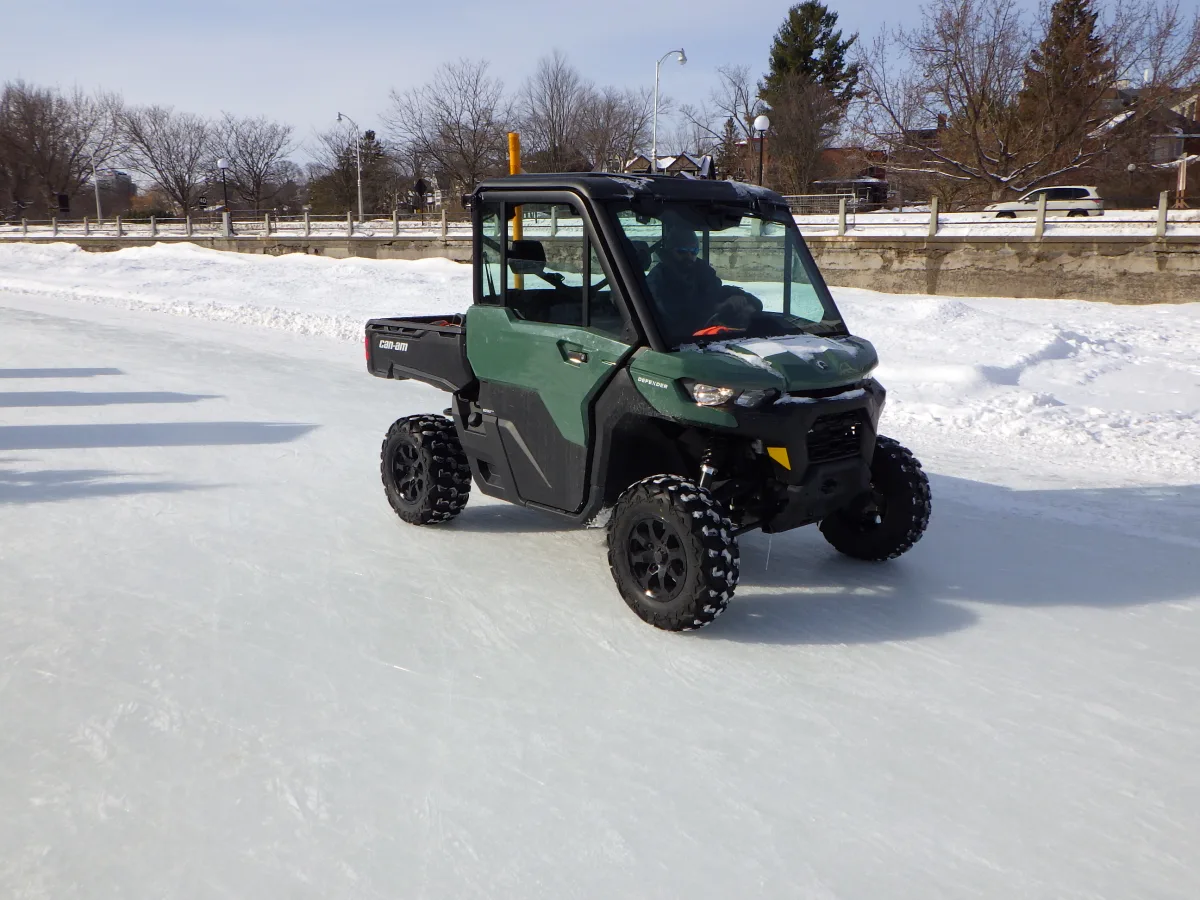
Can-Am Defender: utility SSV, versions and what to know when buying used
Can-Am Defender — utility side-by-side (SSV) vehicle, produced since 2016. We look at HD versions, engines, and what to check when buying used.






Defender in brief
Defender built for work: on the farm, in the woods, on construction sites, or in municipal services. It features a reinforced frame, large cargo bed with tailgate function, towing equipment, and protective roll cage or cab.
Unlike the sporty Maverick, here the focus is not on speed, but on reliability and practicality.
Versions
Defender comes in several versions: standard (with three-seater bench), Pro (with larger cargo bed), and longer six-seater (MAX). There are also special versions with roof, doors, or other equipment.
The HD letters with a number (HD5, HD7, HD8, HD9, HD10) in the names indicate the engine and power; generally, the higher the number, the more powerful the engine.
Engine and transmission
The most powerful variants (e.g., HD10) have around 1000 cm³ two-cylinder Rotax engines, while HD8 and lower have smaller displacement and power. Exact power figures vary by version and year.
The transmission is an automatic CVT, with selectable two- or four-wheel drive and differential lock. Higher-end versions come with electric power steering.
What to check when buying a used Defender
Utility vehicles often have many hours on the clock. Ask for service history, check the odometer, and compare with the overall condition of the vehicle — seats, pedals, cargo bed.
Check the suspension, wheel bearings, steering rack, wheel arches, and the transmission mount. Inspect the handbrake mechanism, handbrake cable, and clips if present.
Pay attention to any damage to the frame, rust, and potential repairs after accidents or heavy cargo transport.


Versions and trims
Names and equipment vary by market and year; here we describe the main versions.
Defender
From 2016Standard workhorse version with a three-seat bench.
- Load bed with tailgate
- Often — electric power steering
- Often — robust frame and tow hook
Defender DPS / XT / Limited
All generationsHigher trims with comfort and safety features.
- Often — handbrake and improved safety
- Often — alloy wheels and better interior trim
- More comfort for long-term use
Defender Pro
Later yearsVersion with a larger cargo area for work.
- Larger cargo area
- Suitable for heavy-duty work
- Often — additional work equipment
Defender MAX
All generationsSix-seater version with a longer wheelbase.
- Six seats
- Longer frame and base
- Smaller cargo area
Comparison of Defender versions
| Defender | XT / Limited | Pro | MAX | |
|---|---|---|---|---|
| Who it's for | For everyday work | For heavier and longer work | For heavy-duty work | Passenger vehicle |
| Number of seats | 3 | 3 | 3 | 6 |
| Cargo area | Base | Base | Larger | Smaller |
| Price in the used market (relatively) | €€ | €€€ | €€€ | €€€ |
If you're hauling more cargo, opt for the Base or Pro; if you need to carry people, the MAX is the better choice.
Pros
- Built for heavy-duty work
- Large cargo area with a tailgate
- Practical and reliable
- Many versions and engine options
Cons
- Plenty of used cars with high mileage
- Maintenance costs may be high
- Less suited to sporty driving
Frequently asked questions
What does the HD designation mean?
HD (heavy duty) denotes a workhorse version with a number — this is the engine's power class. The higher the number, the more powerful the engine.
Can a Defender tow a trailer?
Yes, the Defender comes with towing equipment and is designed to tow loads, but the permissible weight depends on the version and local regulations.
Can it be driven on public roads?
This depends on the specific vehicle's registration, category, and local regulations. Before buying, check if it's registered to drive on public roads.
Updated 2026-10-21 · Trim levels and equipment vary by market and model year — check the equipment of the specific car. · Translated automatically


