 English
 Lietuvių
 Latviešu
 Eesti
 Polski
 Русский
 Українська
 Deutsch
 Nederlands
 Čeština
 Slovenčina
 Svenska
 Norsk
 Dansk
 Suomi


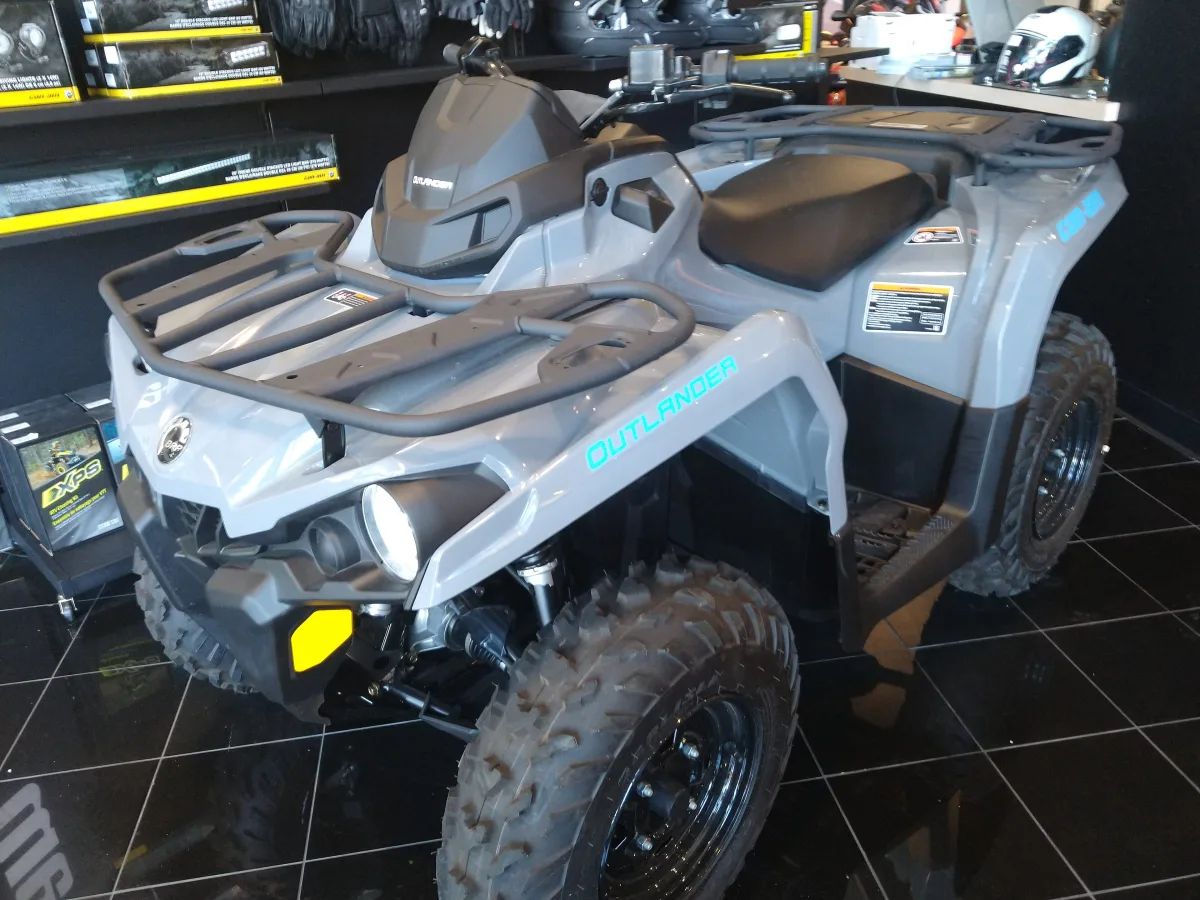
Can-Am Outlander: the four-wheeler family, engines and what to check when buying used
Can-Am Outlander — the four-wheeler (ATV) made by Canadian BRP, introduced in 2003. We look at how the versions differ, which engines are used and what to check when buying used.






Outlander in brief
Outlander — a versatile four-wheeler used for both work (on the farm, in the woods) and leisure. It's designed for off-roading, so it has full four-wheel drive, wide tyres and long-travel suspension.
The model range is broad — there are single and two-seater (MAX) versions, as well as six-wheel (6x6) variants. Some versions come with power steering (EPS) and better protection.
Versions — how they differ
The main lines are standard, XT, DPS, XT-P and MAX. MAX versions have two seats, XT has more work-oriented equipment, XT-P is tailored for tougher off-roading.
Given the family's variety, before buying, check the specific modification, capacity and equipment against the documents.
Engine and drivetrain
Rotax V-twin engines are used, capacities ranging from around 400 to 1000 cm³. Larger capacities are for more powerful driving and towing, smaller ones for better economy.
Power is transmitted via a CVT transmission, with two or four-wheel drive, and differential lock in many versions.
What to check when buying a used Outlander
Check the CVT belt and transmission, which can wear out from intensive use or after driving through water. Ask when the belt and engine and gearbox oil were last changed.
Check the CV joint boots, wheel arches, steering rack, suspension, brakes and tow bar (if present). Ensure there are no signs of water or moisture in the engine oil.


Trims
Trims vary by market and year; we provide general descriptions of the variants.
Outlander (standartinis)
from 2003Base model.
- Full-time four-wheel drive
- Often — 2WD/4WD
- Wide range of engine options
Outlander XT / DPS
Several model yearsWith additional equipment.
- Often — power steering
- Often — tow bar or additional protection
- More comfortable handling
Outlander MAX
Several model yearsTwo-seater version.
- Two seats
- Longer wheelbase
- Often — with more kit
Compare variants
| Standartinis | XT / DPS | MAX | |
|---|---|---|---|
| Who it suits | Work and play | For tougher terrain | Two-up riding |
| Engine | Around 400–1000 cc | Around 400–1000 cc | Around 400–1000 cc |
| Seats | 1 | 1 | 2 |
| Price in the used market (relatively) | €€ | €€€ | €€€ |
Most buyers will be happy with the XT or DPS version with power steering. For two-seaters, go for the MAX; just make sure the service history is clear.
Pros
- Powerful Rotax engines
- A wide range of versions and capacities
- Good off-road capability
- Lots of accessories
Cons
- Expensive on the used market
- Automatic and CVT transmissions require maintenance
- Registration requirements vary by version
Frequently asked questions
How does the Outlander differ from the Renegade?
The Outlander is more versatile and better suited to work and play, while the Renegade is sportier. The technical concept is similar.
Can the Outlander be registered for multiple people?
That depends on the version and country regulations. Before buying, check the documents and ensure the motorcycle has the appropriate registration.
Is the Outlander suitable for work?
Yes — many versions come with a tow hook, towing cable, and stable gearing, making it ideal for both farm and forest.
Updated 2026-10-21 · Trim levels and equipment vary by market and model year — check the equipment of the specific car. · Translated automatically


