 English
 Lietuvių
 Latviešu
 Eesti
 Polski
 Русский
 Українська
 Deutsch
 Nederlands
 Čeština
 Slovenčina
 Svenska
 Norsk
 Dansk
 Suomi


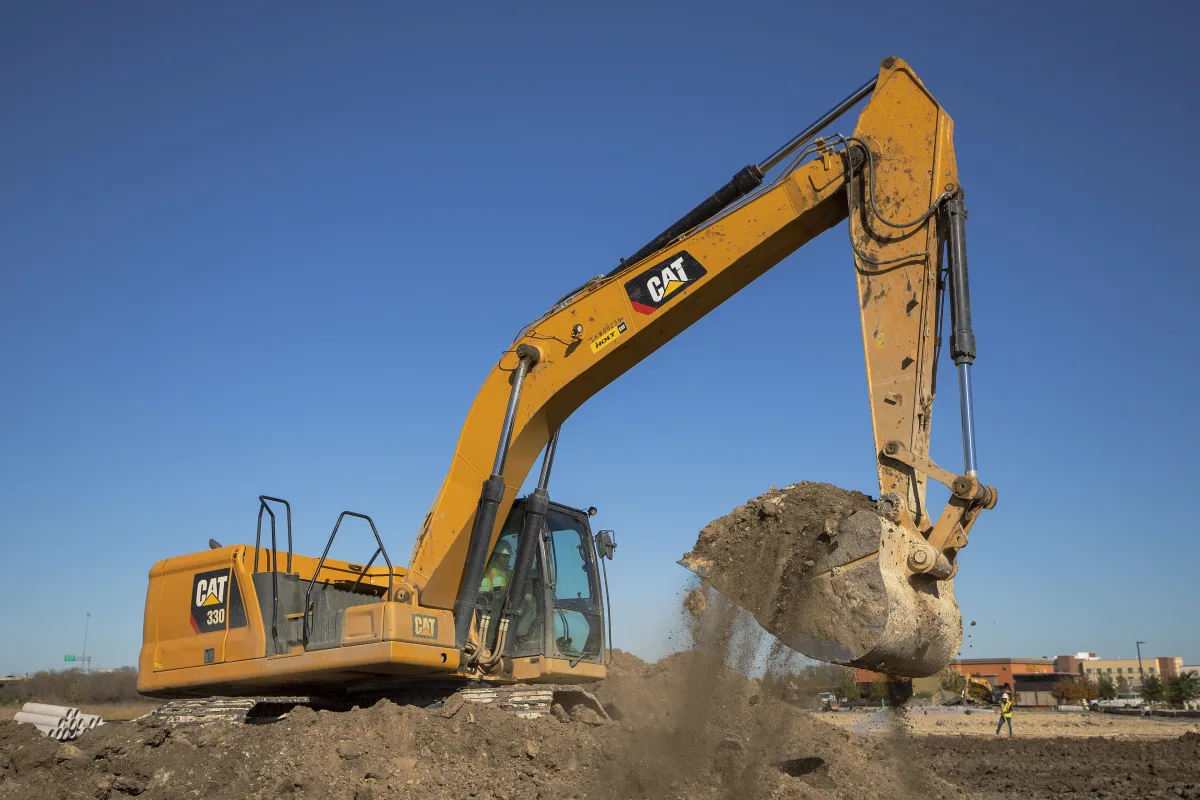
Caterpillar 330: heavy-duty excavator, series and inspection
Caterpillar 330 — a heavyweight tracked hydraulic excavator with an operating weight of roughly 30–36 t. We look at the B, C, D, F series and the 'Next Gen' version, key features and what to check when buying a used 330.






330 in brief
The Cat 330 is designed for heavy earthmoving, quarries, large construction sites and infrastructure projects. Thanks to its substantial weight and powerful hydraulics, it's suited to both digging and loading or trenching.
This is one of the most popular heavyweight machines, so there's a wide choice in the used market — from older, but still working examples to newer versions with modern electronics.
Series — what's the difference
The older 330 B and C versions are simpler, with less electronics, but many machines have already clocked up a lot of hours. The D series improved comfort, while the F series boosted fuel efficiency and electronics.
The latest 'Next Gen' 330 features a modern cab, advanced hydraulics and optional slope stability and weighing systems. There's also a more basic 330 GC version, available at a lower price point and with fewer features.
Engines and key components
Most of these machines come with a six-cylinder Cat diesel engine, with outputs of around 250 hp and above. Newer versions comply with stricter Stage emissions standards, so they come with SCR (AdBlue) and a particulate filter.
Key areas to check: main pumps and valve block, differential and driveshaft, suspension springs, bushes, steering rack and pinion with tie rods and ball joints. Due to its weight, suspension wear can be particularly expensive.
What to check when buying a used 330
First, check the engine hours and service history. Ask if the engine runs smoothly, if there's no smoke, and if the hydraulic pressure remains stable under load. Inspect the cylinders and pistons for leaks.
Thoroughly assess the suspension — leaf springs, bushes, and control arms. Check for play in the tie rods and driveshaft, steering rack wear and tear points, and ensure the car wasn't used with a plough or other heavy attachments.


Versions and trims
Names and equipment vary by market and production year; we list the versions most commonly found in Europe.
330 B / C
older seriesSimpler technology, often higher mileage.
- Often — simpler electronics
- Cheapest in the used market
- A thorough suspension check is essential
330 D
D seriesA reliable mid-life generation.
- More comfortable cabin
- Often — additional hydraulics
- More modern engine
330 F
F seriesNewer generation with more efficient technology.
- Often — SCR and particle filter
- More advanced electronics
- More economical engine
330 Next Gen
from 2017Latest generation with cutting-edge systems.
- New cabin and display
- Often — hill descent control
- Often — weight distribution system
330 versions compared
| 330 D | 330 F | 330 Next Gen | |
|---|---|---|---|
| Who it suits | For budget-heavy duty work | For daily intensive use | For precise and efficient work |
| Engine technology | Older | Modern, with SCR | The latest |
| Control and electronics | More basic | More advanced | The latest |
| Price in the used market (relatively) | €€ | €€€ | €€€€ |
For budget-heavy work, a well-maintained D series 330 often fits the bill. If fuel economy and the latest systems are important, opt for the F or Next Gen.
Pros
- Plenty of power and a deep tow rating
- Robust construction for heavy-duty work
- A wide range of parts and services available
- Holds its value well
Cons
- Expensive maintenance
- Repairs for newer SCR and particulate filter components can be costly
- Due to its size, transportation requires special equipment
Frequently asked questions
How much does a Cat 330 weigh?
Operating weight typically ranges from about 30–36 tonnes, depending on the series and machine. The exact weight is specified in the vehicle's documentation.
What's the difference between the 330 and 336?
The 336 is larger and more powerful than the 330, designed for heavier tasks. The 330 is often chosen for its versatility and lower operating costs.
Is it worth buying a 330 with high mileage?
Yes, if there's a service history and the machine and hydraulics have been checked. High mileage without a history is a risk, as the most expensive components are the pumps and drivetrain.
Updated 2026-10-21 · Trim levels and equipment vary by market and model year — check the equipment of the specific car. · Translated automatically


