 English
 Lietuvių
 Latviešu
 Eesti
 Polski
 Русский
 Українська
 Deutsch
 Nederlands
 Čeština
 Slovenčina
 Svenska
 Norsk
 Dansk
 Suomi


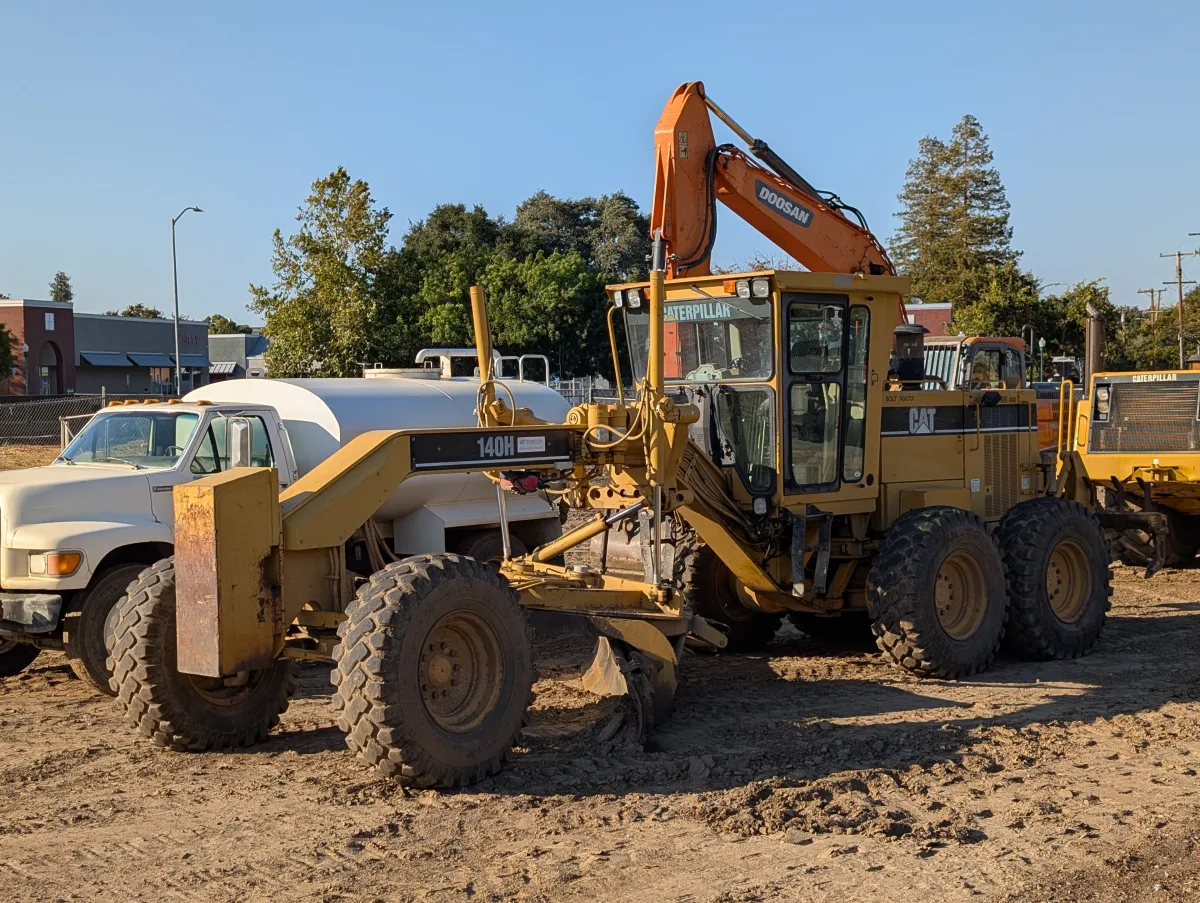
Caterpillar 140: motor grader, series and inspection
Caterpillar 140 — motor grader, used for road grading, levelling, profiling and snow clearing. We look at the 140G, H, K and M series, key components and what to check when buying a used 140.






140 in brief
Cat 140 — a mid-sized motor grader with an operating weight of around 15–17 tonnes. Its primary working tool is a long mouldboard, hydraulically controlled, used to level ground or gravel surfaces.
Used for road grading and maintenance, site preparation, mining and municipal services, as well as snow clearing in winter.
Series — what's the difference
Older G and H series are simpler and more mechanical. K and M series improved comfort, hydraulics and electronics; some M models feature all-wheel drive (AWD) and advanced mouldboard control systems.
Newer machines often come with GPS and 3D mouldboard control systems, which help work more precisely. Before purchasing, it's essential to determine the exact series and year of manufacture.
Engine and key components
Cat 140 is powered by a six-cylinder Cat diesel engine. Newer versions feature systems that meet stricter Stage emissions standards, the condition of which is important to the buyer.
Key components: mouldboard and circle with gearbox, articulated frame, tandem rear axle with gear cases, front axle, hydraulic pump, ripper (scarifier) and tyres.
What to check when buying a used 140
Check the engine hours, service history, smoke, starting, and oil leaks. Test the gearbox, steering, and brakes — movements should be smooth, without juddering or strange noises.
Pay particular attention to the steering rack and its play (slop), the ball joint connections, the differential gear housing (oil leaks) and the condition of the tyres. Check the cylinder condition and the operation of the steering system.


Versions and trims
Names and equipment vary by market and year of production; we list the versions most commonly found in Europe.
140G
older seriesSimple mechanical tech.
- Often — a more basic cabin
- Lower price in the used market
- Essential to get it checked
140H
mid-ageA widely popular generation.
- More comfortable cabin
- Often — additional hydraulics
- Reliable tech
140K
newer seriesModern tech with cutting-edge electronics.
- Often — SCR and particle filter
- Cutting-edge electronics
- Comfortable cabin
140M
latest seriesLatest generation with advanced systems.
- Often — AWD
- Often — GPS and 3D control
- Advanced electronics
Comparison of 140 series
| 140G | 140H | 140M | |
|---|---|---|---|
| Who it's for | For budget work | For daily use | For intensive and precise work |
| Technology | Manual | Mid-range | Modern |
| Electronics | Basic | Mid-range | Advanced |
| Price in the used market (relatively) | Budget-friendly | Mid-range | High-end |
For budget-conscious work, the 140G or H with a good history often fits the bill. If you're working intensively and precision is key, it's worth seeking out the K or M version.
Pros
- Precise surface comparison
- Robust construction
- Good supply of Cat parts and services
- Holds its value well
Cons
- Expensive tyre and gear maintenance
- The electronics in newer versions are more complex
- Transport requires special transportation
Frequently asked questions
What is the weight of the Cat 140?
Operating weight is roughly 15–17 t, depending on the series and trim. Check the exact weight in the documents.
What is a motor grader for?
It levels and profiles roads and surfaces, clears snow, and prepares the base for paving. The primary tool is a hydraulically controlled blade.
Is it worth buying a 140 with high mileage?
Yes, if there is a service history and the clutch, gearbox casings, and articulated frame have been checked. Without a history, high mileage is a risk.
Updated 2026-10-21 · Trim levels and equipment vary by market and model year — check the equipment of the specific car. · Translated automatically


