 English
 Lietuvių
 Latviešu
 Eesti
 Polski
 Русский
 Українська
 Deutsch
 Nederlands
 Čeština
 Slovenčina
 Svenska
 Norsk
 Dansk
 Suomi


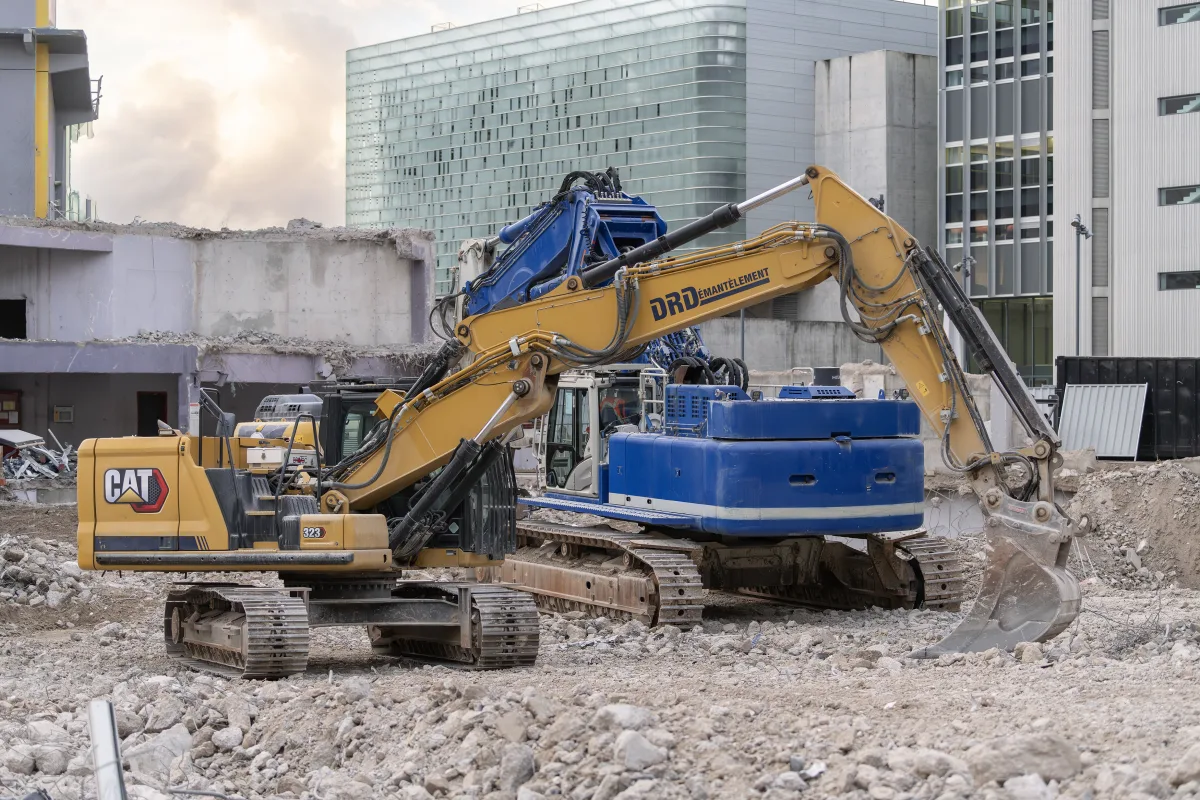
Caterpillar 323: tracked excavator, series and inspection
Caterpillar 323 — a mid-size tracked hydraulic excavator with an operating weight of around 23–25 t. We review the D, E, and F series as well as the new-generation “Next Gen” version, hydraulic and undercarriage features, and what to check when buying a used machine.






323 in brief
The Cat 323 belongs to the 20–25 t excavator class: it's a versatile machine for digging, trenches, foundations, roads, and earthworks. It often works with a hydraulic hammer, quick coupler, or quick hitch, so it's worth finding out what additional hydraulics are fitted before buying.
In Lithuania, the range of used 323 models is quite broad, and the network of spare parts and services is one of the best among excavators. This is one of the reasons why these excavators retain their value well.
Series — what's the difference
The D, E, and F series differ mainly in engine technology and cabin comfort: newer versions feature engines that meet stricter emission standards, improved hydraulics, and lower fuel consumption. Often, the versions L (longer undercarriage) or LN (narrower undercarriage) are specified.
The “Next Gen” generation (from 2017) received a new cabin, larger screen, more efficient hydraulics, and optional slope assist and weighing systems. Additionally, there's a simplified version, the 323 GC, designed for lighter work.
Engines and main components
Most 323s come with a six-cylinder or four-cylinder Cat diesel engine producing over 150 hp. Newer models use SCR (AdBlue) and a particulate filter, so their condition is crucial.
Key components: hydraulic system with main pumps and valve block, steering reducer with worm gear, beam axle (axles, supports, spider gears, beams) and steering wheel with ball joints and tie rods. Hydraulics are usually also for the hammer, so additional lines may be present.
What to check when buying a used 323
Firstly, check the engine hours on the instrument panel and service history. Ensure there's no oil leakage around the cylinders, pipes, and pumps, and that the engine starts easily, doesn't stall, and runs smoothly.
On the axle, assess the wear of the beams, axles, and spider gears—replacing them is expensive. Check the play in the steering wheel's ball joints and the steering worm gear, the quick coupler condition, and whether the machine hasn't been heavily used with the hammer (hydraulics and cylinders often wear out).


Versions and trims
Names and equipment vary by market and production year; we list the versions most commonly found in Europe.
323D L
D seriesAn older but still popular mid-size model.
- Often features more mechanical components and simpler electronics
- Six-cylinder Cat diesel engine
- Generally cheaper in the used market
323E L
E seriesAn improved version of the D series.
- Often comes with a more comfortable cabin
- More economical engine
- Often comes with additional hydraulic hammer
323F L
F SeriesNewer generation with more modern electronics.
- Often comes with SCR and particulate filter
- Larger screen and selectable assistants
- More efficient hydraulics
323 Next Gen
from 2017Next-generation model with the latest technologies.
- New cabin and screen design
- Often comes with slope control (Cat Grade) system
- Often comes with weighing (Cat Payload) system
Comparison of 323 versions
| 323D L | 323F L | 323 Next Gen | |
|---|---|---|---|
| Who it's for | For budget jobs | For everyday construction work | For intensive and precise work |
| Engine technology | Older, simpler | Modern, with SCR | Modern, economical |
| Control and electronics | Simpler | More advanced | Latest, with driver assists |
| Price in the used market (relatively) | € | €€ | €€€ |
If your budget is tight, look for a well-maintained 323D or E with a clear history. For new projects and intensive work, the F or Next Gen version is a better choice.
Pros
- A spacious, versatile towing class
- Good Cat service network and parts availability
- Holds its value well in the used market
- Plenty of versions and optional extras to choose from
Cons
- Used prices are higher than competitors
- Newer versions require AdBlue and particulate filter maintenance
- Differentials and drivetrain replacements are expensive
Frequently asked questions
How much does a Cat 323 weigh?
Operating weight typically ranges around 23–25 t, depending on the series and chassis (L or LN). Check the exact weight in the specific vehicle's documents.
Is it worth buying a 323 with a blade?
Yes, if the hydraulics were well-maintained and you have a service history. Working with a blade wears out cylinders and hoses faster, so check their condition.
What's the difference between the 323 and 320?
The 320 is a slightly lighter class, the 323 is a bit heavier and more powerful. Specific differences depend on the generation, so compare the technical specs of both models.
Updated 2026-10-21 · Trim levels and equipment vary by market and model year — check the equipment of the specific car. · Translated automatically


