 English
 Lietuvių
 Latviešu
 Eesti
 Polski
 Русский
 Українська
 Deutsch
 Nederlands
 Čeština
 Slovenčina
 Svenska
 Norsk
 Dansk
 Suomi


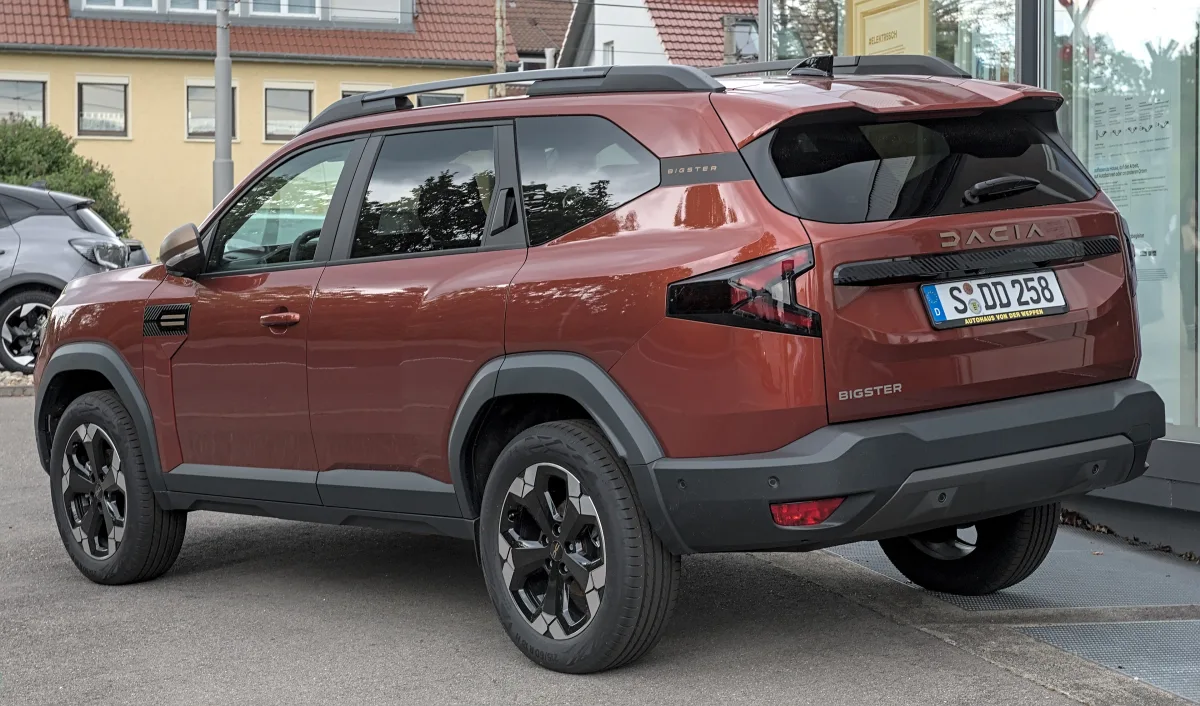
Dacia Bigster: engines, hybrids and trims
The Dacia Bigster is a larger compact SUV than the Duster, set to debut in 2025 and aimed at families and long-distance drivers. We look at the engines, trims, and what to consider when buying a Bigster that's just a few months or years old.






Bigster in brief
The Bigster is the largest SUV currently offered by Dacia: it's longer than the Duster and offers a more spacious interior and larger boot. The design is similar to the Duster, but the car is built for families needing more space.
The model is very new, so there are few used options available for now. Its main advantages are its competitive pricing compared to other SUVs in its class and its practicality.
Which version to choose
The Bigster is available with petrol, LPG, and hybrid engines. The hybrid version is the most economical in the city, while the LPG variant can be appealing to frequent drivers.
Some versions come with all-wheel drive, which is suitable for snowy conditions and poor roads. When choosing, pay attention to the type of transmission and equipment.
Engines and gearboxes
In Europe, the Bigster is offered with 1.2-litre turbo petrol engines with a mild hybrid (around 140 hp), a 1.8-litre full hybrid (around 155 hp), and a petrol and LPG variant (around 120 hp). Check the exact power in the vehicle's documents.
The gearboxes are manual or automatic, and the hybrid has a special multi-mode gearbox. All-wheel drive is available in select versions.
What to check when buying a used Bigster
Check the software and ensure all manufacturer updates have been applied. Test the multimedia, cameras, and assist systems.
In the hybrid version, listen for how the engine engages, and in the LPG version, check the gas system documents. Inspect the body and interior trim, as some plastics are basic.
For a new model, it's crucial to check if the warranty is still valid and if it can be transferred to a new owner.


Trim levels
Names and equipment vary by market and year; we list the most common trims found in Europe.
Essential
2025 onwardsBase trim.
- Often — steel wheels
- Basic multimedia
- Standard safety equipment
Expression
2025 onwardsThe most popular choice with added comfort.
- Often — lightweight alloy wheels
- Often — air conditioning and multimedia
- Often — rear-view camera
Extreme
2025 onwardsA more robust-looking exterior version.
- Often — 18-inch alloy wheels
- Often — special trim details
- Often — more driver assistance systems
Journey
2025 onwardsTop-spec model.
- Often — the most equipment
- Often — more luxurious trim
- Often — enhanced driver assistance
Trim comparison
| Essential | Expression | Extreme | Journey | |
|---|---|---|---|---|
| Who it's for | For the tightest budgets | For daily drivers | For those wanting a solid look | For maximum equipment |
| Alloy wheels (most often) | 16–17-inch | 17-inch | 18-inch | 18-inch |
| Interior | Base | More Comfort | Signature Touches | Fully Loaded |
| Assist Systems | Core | More | Extended | Widest |
| Price in the used market (relatively) | € | €€ | €€ | €€€ |
Most buyers opt for the Expression or Extreme. The Journey is worth considering only if you need maximum equipment.
Pros
- Spacious interior and large boot
- Competitive pricing compared to rivals
- Practical, straightforward design
- Wide range of engine choices
Cons
- New model, few used options available
- Simpler interior materials
- Lower residual value than prestige competitors
Frequently asked questions
Does the Bigster have a hybrid engine?
Yes, it offers a full hybrid and a mild hybrid. There are also petrol and LPG versions.
How does the Bigster differ from the Duster?
The Bigster is larger, more spacious, and family-oriented. The Duster is smaller and more affordable.
Does the Bigster have four-wheel drive?
Yes, some versions come with four-wheel drive. Check the specific car's documents.
Updated 2026-10-17 · Trim levels and equipment vary by market and model year — check the equipment of the specific car. · Translated automatically


