 English
 Lietuvių
 Latviešu
 Eesti
 Polski
 Русский
 Українська
 Deutsch
 Nederlands
 Čeština
 Slovenčina
 Svenska
 Norsk
 Dansk
 Suomi


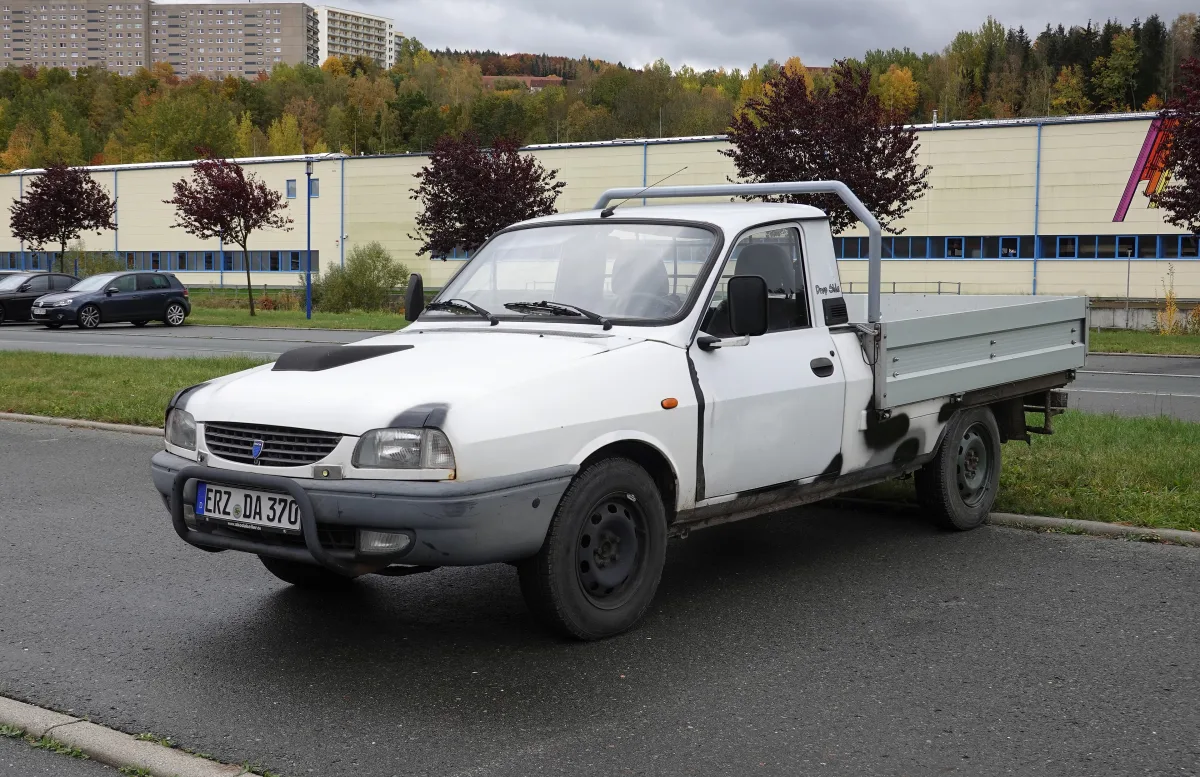
Dacia Pick-Up: generations, engines, and what to check when buying
The Dacia Pick-Up is a straightforward Romanian pickup truck that was produced for nearly thirty years (1975–2006), with its technology stemming from the Dacia 1300 family. It's an affordable, mechanically simple workhorse. We'll look at the generations, engines, and what's important to check when buying such an old vehicle.






Pick-Up in brief
The Dacia Pick-Up was a workhorse pickup based on the mechanics of the Dacia 1300 (which was derived from the Renault 12). With only minor changes, it was produced for many years and became one of the most popular workhorses in Eastern Europe.
This vehicle is designed for utility, not comfort, accommodating a few people and cargo. The interior has minimal features, and the driving experience is reminiscent of old commercial vehicles. Its simple design makes it easy to repair.
Which version to choose
The Pick-Up was produced in several body styles: single cab (1304), with drop sides (1305), and double cab (1307). Your choice depends on whether cargo space or passenger seats are more important.
Newer models (late 1990s–2006) usually have slightly better equipment, but the core construction remains the same. Opt for examples that have been least affected by rust.
Engines and gearboxes
The Pick-Up was offered with a 1.4-litre petrol engine and a 1.9-litre diesel (around 60–65 hp). The diesel is more economical and often used for hauling loads, but it's noisier.
Gearbox — manual. Engine power is modest, so it drives slowly with a full load. It's a simple but reliable workhorse.
What to check when buying a used Pick-Up
First off — the body and mounting points of the suspension. Look for rust in the seams, floors, cabin corners, and the bed of the truck. Thin metal rusts quickly, and repairs can cost more than the truck itself.
Check the engine condition: smoke, oil leaks, unusual noises. Make sure the brakes and clutch work, as they wear out over time.
Check the documents carefully: verify the VIN, technical inspection, and whether the pickup is legally registered in Lithuania.


Trim levels
This pickup didn't have classic trim levels — it varied by body style (cabin and bed).
1304 (viena kabina)
1975–2006The most common version — a two-seater cabin and a large bed.
- Two seats in the cabin
- Basic, minimal equipment
- Open bed
1305 (borto kėbulas)
Over various yearsVersion with drop-down sides.
- Platform with sides
- Designed for loads
- Single cab
1307 (dviguba kabina)
Over various yearsVersion with extra passenger space
- Additional seating
- Often — a smaller load bed
- Basic trim
Pick-up comparison
| 1304 | 1305 | 1307 | |
|---|---|---|---|
| Who it's for | For hauling loads | For heavy loads | For people and cargo |
| Wheel sizes (most common) | 13–14 inch | 13–14 inch | 13–14 inch |
| Interior | Basic, two-seater | Basic, two-seater | With extra seating |
| Engine | 1.4 petrol or 1.9 diesel | 1.4 petrol or 1.9 diesel | 1.4 petrol or 1.9 diesel |
| Price in the used market (relatively) | € | € | € |
Choose the version based on your work, not the trim: single or double cab. The most important thing is that the body and chassis are in good condition.
Pros
- Very simple and cheap to maintain
- Uncomplicated technology, easy to repair
- Reliable workhorse
- Not expensive to buy
Cons
- Limited comfort and outdated safety features
- Weak engines
- Common rust due to age
Frequently asked questions
What payload can the Dacia Pick-Up carry?
The payload capacity depends on the version and typically reaches several hundred kilograms. You'll find the exact value in the registration documents and should not exceed it.
Is the Dacia Pick-Up suitable for everyday use?
Usually not — it's a workhorse with little in the way of comfort and safety kit. It's best suited to farm work and the occasional load.
Are parts still available?
The parts selection is usually good, as the Dacia 1300 family of vehicles was very common. Some body parts might need to be sourced second-hand or custom-made.
Updated 2026-10-14 · Trim levels and equipment vary by market and model year — check the equipment of the specific car. · Translated automatically


