 English
 Lietuvių
 Latviešu
 Eesti
 Polski
 Русский
 Українська
 Deutsch
 Nederlands
 Čeština
 Slovenčina
 Svenska
 Norsk
 Dansk
 Suomi


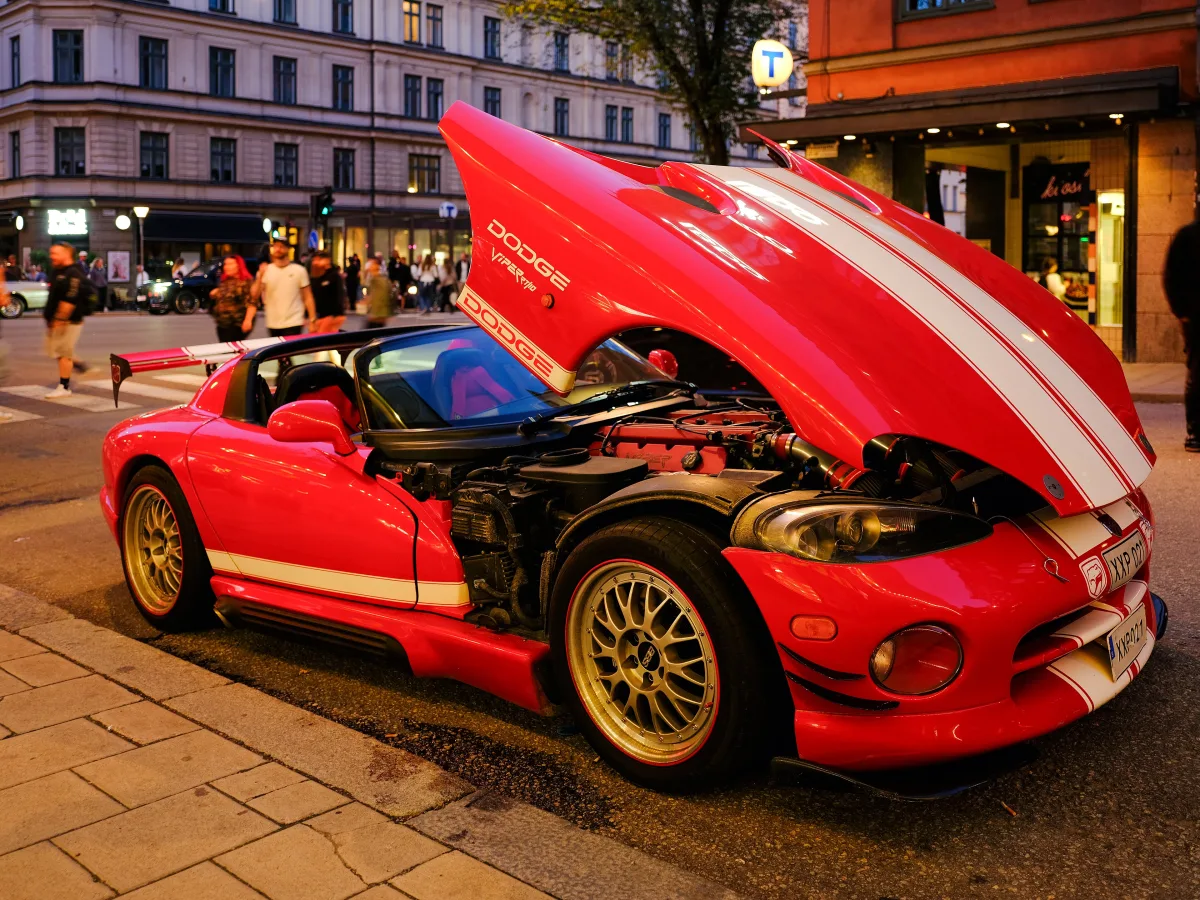
Dodge Viper: V10 sports car, generations and versions
Dodge Viper — the American sports car with a V10 engine, produced from 1991 to 2017. We look at five generations, how the RT/10, GTS, SRT-10, and ACR versions differ, and what you need to know before buying such a rare car.






Viper in brief
The Viper is a two-door sports car known for its long bonnet and large engine. The backbone of all generations is a high-displacement V10 engine, a manual gearbox, and rear-wheel drive.
In Europe, the Viper was sold very sparingly (in the early generations — with the Chrysler badge), so examples found in Lithuania are often imported from the USA. It's a rare and unique car, bought more for passion than for daily use.
Generations — how they differ
The first generation (1992–1995) — a pure roadster with an 8.0-litre V10 (around 400 hp), without modern electronic aids. The second generation (1996–2002) added the GTS coupé version and a more powerful engine (around 450 hp).
The third generation (2003–2006) — the SRT-10 with an 8.3-litre engine (around 500 hp) and a new body shape. The fourth generation (2008–2010) — an 8.4-litre engine with around 600 hp, and the fifth generation (2013–2017) — up to roughly 640 hp and far more electronic driver assistance systems.
Later generations offer more comfort and safety features, while earlier examples remain purer but demand more from the driver.
Engine and gearbox
The engine for all generations is a naturally aspirated V10, with displacement growing over time from 8.0 to 8.4 litres. Power ranges from around 400 to over 600 hp.
Gearbox — 6-speed manual in all generations. Automatic versions were not offered, so this is definitely a driver's car.
What to check when buying a used Viper
First off — the car's history: accidents, repair documents, actual mileage, and import documents. Due to the low number of units, each example has its own story, so a specialist check is recommended.
Check the brakes, suspension, gearbox, and engine condition. In older generations, side exhaust pipes get very hot, and wide tyres are expensive.
Pay attention to the interior condition, roof integrity, and body parts: some are specific and hard to find. Clarify insurance and registration conditions before buying.


Trim levels
Names and equipment vary by market and year; we list the most commonly found trim levels in Europe.
RT/10
First and second generationsOpen roadster with a V10 engine.
- Often — minimal equipment and a simple soft top
- 6-speed manual gearbox
- Rear-wheel drive
GTS
II kartaCoupe version with a fixed roof.
- Often — dual white stripes and sporty wheels
- More powerful engine than the RT/10
- Coupe body style
SRT-10
III kartaTransitional model with 8.3-litre engine
- Approximately 500hp engine
- Roadster and coupe
- Newly styled body
ACR
Second, fourth and fifth generationsLighter track-focused version
- Aerodynamic package
- Firmer suspension
- Often — less comfort equipment
SRT Viper / Viper
Fifth generationLatest versions with maximum power
- 8.4-litre engine
- Electronic driver aids
- More luxurious interior
Comparing generations
| I karta | II karta | III karta | IV–V karta | |
|---|---|---|---|---|
| Who it's for | Pure old-school feel | For classic car enthusiasts | For those seeking a more powerful car | Maximum power and safety |
| Engine | 8.0 V10 | 8.0 V10 | 8.3 V10 | 8.4 V10 |
| Power | Around 400 HP | Around 450 HP | Around 500 HP | Around 600–640 HP |
| Electronic assistance | Very limited | Limited | More | Wide |
| Price in the used market (relatively) | €€€ | €€€ | €€€ | €€€ |
If you want a pure driving experience, go for the first or second generation. If power and safety are more important, opt for the fourth or fifth generation. Before buying, make sure to have the car checked by a specialist.
Pros
- A large atmospheric V10 engine and distinctive sound
- Very distinctive, instantly recognisable appearance
- A rare car with collectible value
- A true manual transmission driver's car
Cons
- Very high insurance, fuel, and maintenance costs
- Wide, expensive tyres and specific parts
- Early generations have almost no electronic aids, and the car requires experience
Frequently asked questions
Which Viper generation is best?
It depends on your goal. The I and II generations offer a purer driving experience, while the III–V generations provide more power and electronic aids. Most modern buyers will prefer the IV or V generation.
Is the Viper suitable for daily driving?
Rarely. It's wide, the cabin is uncomfortable, and fuel consumption and maintenance are high. It's usually bought as a hobby car.
Does the Viper have an automatic transmission?
No. All generations come with a 6-speed manual gearbox.
Updated 2026-10-19 · Trim levels and equipment vary by market and model year — check the equipment of the specific car. · Translated automatically


