 English
 Lietuvių
 Latviešu
 Eesti
 Polski
 Русский
 Українська
 Deutsch
 Nederlands
 Čeština
 Slovenčina
 Svenska
 Norsk
 Dansk
 Suomi


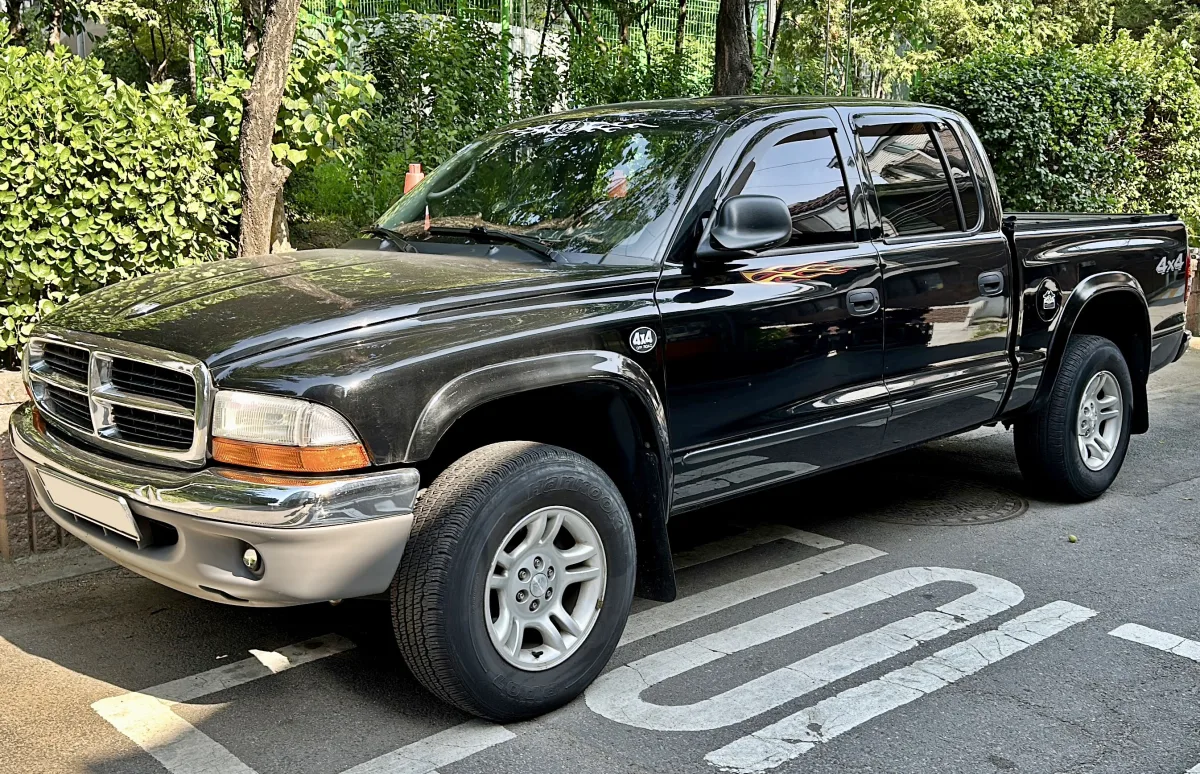
Dodge Dakota: three generations, engines, and what to know when buying used
Dodge Dakota — a mid-sized American pickup, produced from 1986 to 2011. In Lithuania, it often arrives from the USA. In this article, we review the three generations, engines, body styles, and what to check before buying.






Dakota in brief
The Dakota was created as a mid-sized option between compact and full-sized pickups. It offered a mid-sized truck with American technology: powerful V6 and V8 engines and rear-wheel or four-wheel drive.
Several body styles were available: two-door with a regular cab, extended (Club Cab), and four-door (Quad Cab) cab. During the first generation, a convertible version was also produced.
Which generation to choose
The first generation (around 1987–1996) is simpler, older in design, and today is mostly sought by enthusiasts. The second generation (around 1997–2004) has a sturdier, more American-style design, a wider range of engines, and is the most popular in the used market.
The third generation (2005–2011) is larger, more modern, and comfortable, with a better interior and safety features. If you're looking for the best for daily use, you'll often find the second or third generation to be the best bet.
Engines and transmissions
The Dakota had four-cylinder, six-cylinder, and eight-cylinder engines. Most commonly found are the V6 (around 3.9 litres) and V8 (from 4.7 to 5.9 litres). The most powerful second-generation version is the R/T with a 5.9-litre V8 engine.
Transmissions — manual or automatic. Some cars have rear-wheel drive, others have four-wheel drive (4x4), so make sure the transmission works.
What to check when buying a used Dakota
Pickup truck bodies and frames can rust badly, especially if the vehicle has been used where salt is spread in winter. Check the frame, sills, wheel arches, and boot floor.
Test the four-wheel drive, transmission, and cold engine start. Be mindful of high fuel consumption and the fact that some parts might need to be ordered from abroad. Ensure the car is properly registered and has a valid MOT.


Trim levels
Names and equipment vary by market and year; we list the versions most commonly found in Europe.
Sport
Second generationOften a mid-range trim with a sportier look.
- Often — lightweight alloy wheels
- Sportier exterior styling
- Often — V6 or V8 engine
SLT
Second and third generationBetter-equipped version with more comfort.
- Often — air conditioning and electric windows
- Higher-quality interior trim
- Often — lightweight alloy wheels
R/T
Second generationSporty version with the most powerful V8 engine.
- 5.9-litre V8 engine
- Sporty suspension setup
- Distinctive exterior styling
Laramie
Third generationTop-tier third-gen spec with plush equipment.
- Often — leather interior
- Often — larger alloy wheels
- More comfort features
Dakota versions compared
| Sport | SLT | R/T | Laramie | |
|---|---|---|---|---|
| Who it's for | For everyday use and looks | For daily comfort | For sporty driving | For ultimate comfort |
| Most common searches | 16–17 column | 16–17 column | 17 column | 17–18 column |
| Interior | Base trim | Better trim | Sport trim | Often leather |
| Engine | V6 or V8 | V6 or V8 | 5.9-litre V8 | V6 or V8 |
| Price in the used market (relatively) | € | € | €€ | €€ |
Many buyers opt for a well-maintained second or third-gen Dakota with a V6 or smaller V8 engine. The R/T is sought after for its powerful engine, but it's more expensive to run.
Pros
- Robust, simple construction
- Wide range of body styles and engines
- Large cargo capacity and towing capabilities
- Option for four-wheel drive
Cons
- High fuel consumption
- Rust and frame condition
- Hard to find some parts in Europe
Frequently asked questions
Is the Dakota suitable for daily use?
Yes, if you're happy with a large body and fuel consumption. It might be cumbersome in city streets, but it's excellent for hauling and long trips.
Which Dakota generation is the best?
Often recommended are the second or third gen — they are more modern and robust. The first gen is more for enthusiasts and collectors.
Does the Dakota have four-wheel drive?
Yes, both rear-wheel and four-wheel drive (4x4) versions were offered. When buying, it's crucial to ensure the drivetrain works and has a service history.
Updated 2026-10-19 · Trim levels and equipment vary by market and model year — check the equipment of the specific car. · Translated automatically


