 English
 Lietuvių
 Latviešu
 Eesti
 Polski
 Русский
 Українська
 Deutsch
 Nederlands
 Čeština
 Slovenčina
 Svenska
 Norsk
 Dansk
 Suomi


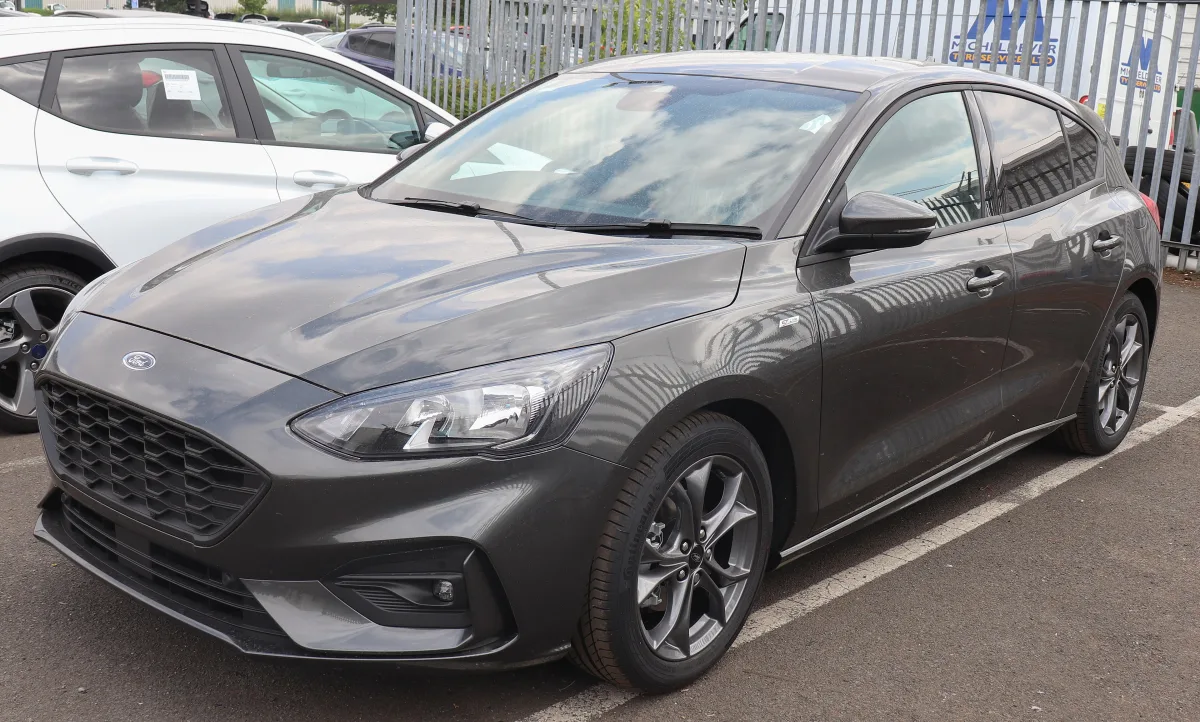
Ford Focus: Mk3 and Mk4 generations, engines, and trims
The Ford Focus is a compact car praised for its precise handling and well-balanced chassis. There are plenty of them on the Lithuanian used-car market, especially the estate versions. We're looking at the third and fourth generations, engines, trims, and what to check before buying.






Focus in brief
The Focus was introduced in 1998 and has seen four generations, with Ford announcing that the fourth generation will be the last. It comes in hatchback, estate, and saloon bodystyles, with sporty versions badged as ST and RS.
The Focus is valued for its precise steering, comfortable ride, and good price-to-equipment ratio. In the used market, it's often cheaper than a similarly aged Volkswagen Golf, offers a wide range, and spare parts are readily available.
Mk3 and Mk4 — what's the difference
The third generation (Mk3, 2011–2018) is a modern and well-equipped car. The 2014 facelift brought a new front end, more user-friendly cabin controls, often SYNC 2 multimedia with a touchscreen, and new 1.5-litre engines. It's the most affordable way to get a relatively modern Focus.
The fourth generation (Mk4, from 2018) is built on a new platform: it's roomier, safer, and comes with more driver-assistance systems. The range includes the crossover-style Focus Active, and mild hybrids (EcoBoost Hybrid) have been available since 2020.
The 2022 facelifted Mk4 gained a new front end and a large 13.2-inch multimedia screen, replacing most of the physical buttons. It's the most modern, but also the most expensive Focus on the used market.
Engines and gearboxes
Mk3 models most commonly feature the 1.0 EcoBoost (100–125 hp), 1.6 Ti-VCT, and 1.6 and 1.5 EcoBoost petrol engines, along with 1.6, 1.5, and 2.0 TDCi diesels. The Focus ST came with a 250 hp 2.0 EcoBoost, while the Focus RS boasted 350 hp and all-wheel drive.
Mk4 models primarily offer the 1.0 EcoBoost (later available with a mild hybrid) and 1.5 EcoBoost petrol engines, along with 1.5 and 2.0 EcoBlue diesel engines. The Focus ST comes with a 280 hp 2.3 EcoBoost or a 190 hp 2.0 EcoBlue diesel.
Mk3 automatics typically have the PowerShift dual-clutch transmission, Mk4 models feature a conventional 8-speed automatic, and mild hybrids post-update come with a 7-speed dual-clutch. Manuals are 5 or 6-speed.
What to check when buying a used Focus
Mk3 models with the PowerShift box should be tested for smooth take-off and slow driving in traffic — juddering, vibration, or hesitation when shifting could indicate a need for clutch or control unit repair. This transmission is known as one of the Focus's weak points.
The timing chain for the 1.0 EcoBoost engine operates in oil, so it's crucial that the oil is changed on time and the manufacturer's recommended type is used. For early models, roughly from 2012–2014, ask about cooling system repairs or recall work — there were known cases of overheating. For diesel cars, check the DPF and EGR, and for Mk4 EcoBlue models, also check the AdBlue system.
Many estates were used in businesses and have high mileage, so check this against service records and MOT history. Inspect the body for repainted panels and ensure that the multimedia and assistance systems work.


Trim levels
Names and equipment vary by market and year; we list the most common trim levels found in Europe.
Trend
Mk3, Mk4Base or near-base trim — simple and the cheapest.
- Often steel wheels
- Air conditioning
- Simpler multimedia system
Titanium
Mk3, Mk4The most popular choice — more daily comfort.
- Light-alloy wheels
- Often — automatic climate control
- Often — SYNC multimedia with touchscreen and navigation
ST-Line
Late Mk3, Mk4Sporty-looking version without a sporty engine.
- Sporty bumpers and larger wheels
- Often — a sportier setup with a lower ride height
- Sport seats and steering wheel
Active
Mk4An all-wheel-drive style version without four-wheel drive.
- Increased ground clearance and protective body cladding
- Roof rails
- Additional driving modes for slippery roads and gravel
Vignale
Late Mk3, Mk4The most luxurious Focus version.
- Single-tone interior trim
- Distinctive exterior styling
- Often — more comfort and driver assistance systems
ST
Mk3, Mk4Sport version for driving pleasure.
- Powerful petrol or diesel engine
- Sport suspension and larger brakes
- Often — Recaro sport seats
Mk4 trim comparison
| Trend | Titanium | ST-Line | Active | |
|---|---|---|---|---|
| Who it's for | For the sensible buyer | For most families | Sporty looks | For off-roaders and a higher driving position |
| Wheels (most common) | 16-inch | 16–17-inch | 17–18-inch | 17–18-inch |
| Styling | Standard | More chrome details | Sporty bumpers | Body protection kit |
| Interior | Basic | More comfortable, more equipment | Sport seats | More comfortable, more equipment |
| Price in the used market (relatively) | Budget | Mid-range | Mid-range | Mid-range |
For most buyers, the best choice is the Titanium with a 1.0 EcoBoost or 1.5 EcoBlue engine. The ST-Line is worth considering for its looks and driving feel, while the Active is ideal if you often drive on rough roads.
Pros
- Precise steering and well-balanced chassis
- Wide range of parts and readily available spares
- Often cheaper than rivals in the used market
- Economical engines, especially diesels
Cons
- Reliability of the Mk3 PowerShift gearbox
- The 1.0 EcoBoost requires careful maintenance
- The Mk3 has less space in the rear seats and boot than some rivals
Frequently asked questions
Which Focus generation is best when buying used?
If the budget allows, the best choice is the Mk4: it's roomier, safer and more modern. The Mk3 is suitable for a tight budget; in that case, opt for a 2014–2018 model with a manual gearbox or a proven PowerShift.
Is it worth buying a Focus with a 1.0 EcoBoost?
Yes, if the engine has been well-maintained: oil changed on time and using the manufacturer's recommended type. The 1.0 EcoBoost is great for city driving and relaxed out-of-town cruising, but avoid cars with a murky history or have it checked by a service before buying.
Focus hatchback or estate?
The estate has a significantly larger boot, making it more suitable for families and frequent travellers. The hatchback is more compact and easier to manoeuvre in the city, while the mechanics and trim levels are essentially the same.
Updated 2026-10-09 · Trim levels and equipment vary by market and model year — check the equipment of the specific car. · Translated automatically


