 English
 Lietuvių
 Latviešu
 Eesti
 Polski
 Русский
 Українська
 Deutsch
 Nederlands
 Čeština
 Slovenčina
 Svenska
 Norsk
 Dansk
 Suomi


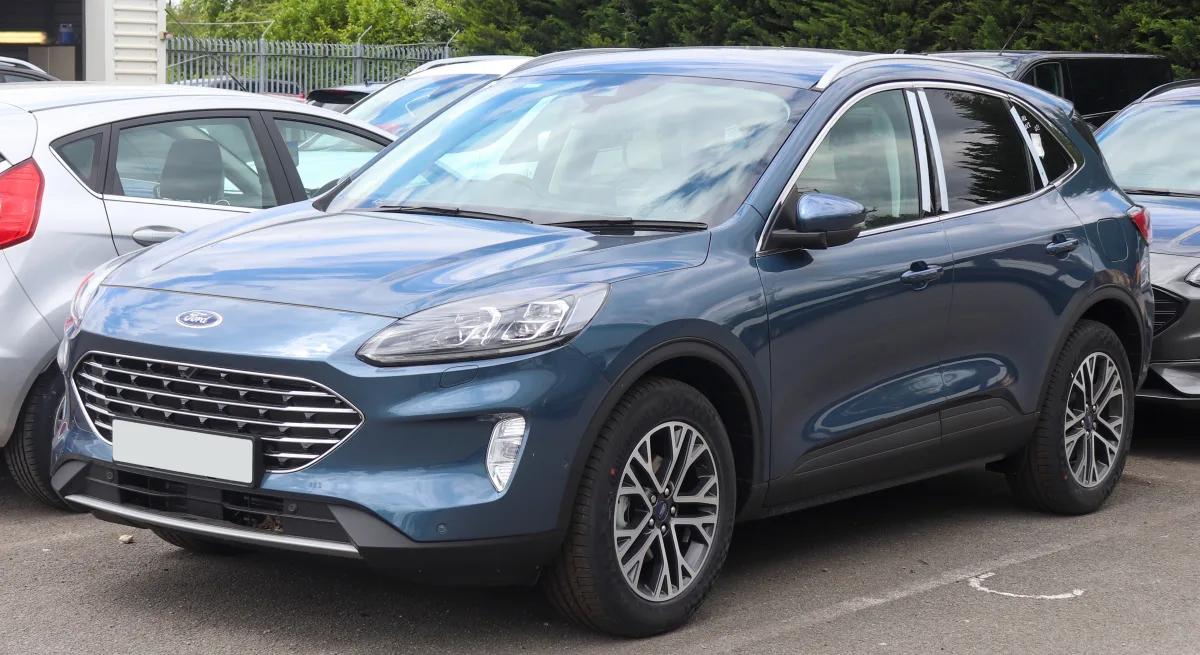
Ford Kuga: I, II and III generations, engines and trims
Ford Kuga — a compact SUV, one of Ford's most popular models in Europe. We look at all three generations, focusing mainly on the II (2012–2019) and III (from 2019) generations: how they differ, which engines, including hybrids, are the most popular, how the trims differ and what to check when buying used.






Kuga in brief
The first Kuga was introduced in 2008 and was based on the Ford Focus. From the second generation, the Kuga became a global model — in North America, it is sold as the Ford Escape.
The Kuga is praised for its precise handling, comfortable ride and wide range of engines — from economical diesels to a plug-in hybrid. Many versions offered all-wheel drive (AWD), but there are plenty of front-wheel-drive models in the used market.
II and III generation — how they differ
The I generation (2008–2012) was offered with a 2.0 TDCi diesel or a five-cylinder 2.5-litre turbo petrol engine. Today, it's an affordable compact SUV, but most cars have high mileage.
The II generation (2012–2019) is larger and more spacious, featuring EcoBoost petrol engines and more equipment. The 2016 update refreshed the front end, brought the SYNC 3 infotainment system, a 1.5 TDCi diesel, and the ST-Line and Vignale trims — this is the most popular Kuga generation in the used market.
The third generation (from the end of 2019) is built on the same platform as the Focus IV: it's longer, lower, and lighter, with a more modern interior. The big news is the electrified engines: a mild hybrid, a full hybrid, and a plug-in hybrid (PHEV). The 2024 refreshed version gets a new front end and a larger infotainment screen.
Engines and transmissions
In the second generation, you'll most commonly find 2.0 TDCi diesels (around 120–180 hp), and from 2016, the 1.5 TDCi (around 120 hp). Petrol options include the 1.5 and 1.6 EcoBoost (around 120–182 hp). Transmissions are either 6-speed manuals or automatics; diesels are often paired with the dual-clutch PowerShift box.
The third generation is anchored by the 1.5 EcoBoost petrol (around 120–150 hp), 1.5 and 2.0 EcoBlue diesels (around 120–190 hp), with the most powerful diesel mated to an 8-speed automatic and all-wheel drive.
Hybrids: the plug-in 2.5 PHEV (around 225 hp, front-wheel drive) can cover several dozen kilometres on electric power alone, while the non-plug-in 2.5 FHEV (around 180–190 hp) is also available with all-wheel drive. Both work with a smooth, step-less automatic transmission.
What to check when buying a used Kuga
In diesel engines, check the particulate filter (DPF) and EGR valve, listen for any two-mass flywheel issues, and ensure there are no AdBlue system errors in EcoBlue diesels. The PowerShift box should shift smoothly, without juddering — ask if its fluid has been changed.
In EcoBoost petrol engines, pay attention to the coolant level and signs of overheating. Some Kuga engines and plug-in hybrid batteries (especially in 2020 models) were subject to recall campaigns — check with the dealer using the VIN to ensure all work has been done.
In the case of a plug-in hybrid, test the charging and assess how many kilometres are shown when driving purely on electric. In an all-wheel-drive vehicle, listen for any grinding noises, and always check the service history for technical inspections and maintenance records.


Trim Levels
Names and equipment vary by market and year; we list the most commonly found trims in Europe.
Trend
First and Second GenerationsBase trim with essential equipment.
- Often — lightweight alloy wheels
- Often — manual or automatic air conditioning
- Simpler infotainment system
Titanium
First to Third GenerationsThe most popular choice — a good balance of price and comfort.
- Larger lightweight alloy wheels
- Often — dual-zone climate control and parking sensors
- Often — keyless entry and navigation
ST-Line
Second Generation from 2016 and Third GenerationA sporty-looking version without a sporty engine.
- Sporty bumpers and dark exterior details
- Larger alloy wheels, often with a sportier suspension
- Sport seats and steering wheel
ST-Line X
Third generationSporty ST-Line look with more generous equipment.
- Larger alloy wheels
- Often — partial leather upholstery
- Often — digital instrument cluster and projection screen
Vignale
Second Generation from 2016 and Third GenerationThe most luxurious Kuga version with distinctive trim.
- Leather interior
- Distinctive front grille and more chrome details
- Often — generous comfort and safety kit
Comparison of third-gen trims
| Titanium | ST-Line | Vignale | |
|---|---|---|---|
| Who it suits | Daily driving | Sporty styling | Comfort and luxury |
| Wheels (most common) | 17–18 inch | 18–19 inch | 18–19 inch |
| Exterior styling | Chrome details | Sporty bumpers, dark accents | Distinctive grilles, more chrome |
| Interior | Standard trim | Sport seats | Premium trim |
| Price in the used market (relatively) | € | €€ | €€€ |
Most buyers will find the Titanium or ST-Line with a hybrid or 2.0 EcoBlue engine to be the best choice. The Vignale is worth considering if you prioritise a more luxurious interior and a greater array of features.
Pros
- Precise handling and stability on the road
- A wide range of engines, including hybrids
- Four-wheel drive available
- Plenty of used examples on the market
Cons
- The second-generation boot is smaller than some rivals'
- Diesel and PowerShift gearbox repairs can be costly
- Recall campaigns — check if the work has been done
Frequently asked questions
Which Kuga generation is best to buy used?
For many buyers, the best used Kuga is the 2016–2019 second-generation model — it's reliable, well-equipped, and holds its value. If low fuel consumption and newer tech are important, opt for the third-generation with a hybrid engine.
Is it worth buying a plug-in hybrid Kuga (PHEV)?
It is if you can regularly charge the car at home or work and mostly drive short distances — then a large portion of your journeys will be electric. If charging isn't an option, a non-plug-in hybrid (FHEV) or diesel is more sensible.
Do all Kugas come with all-wheel drive?
No. All-wheel drive was offered with more powerful engines, but there are plenty of front-wheel-drive models in the used market. The third-generation plug-in hybrid (PHEV) is only available with front-wheel drive.
Which Kuga engine is the most economical?
For long journeys, the 1.5 and 2.0-litre diesels are the most economical. In the city and mixed cycles, the hybrid (FHEV) keeps running costs low, while the regularly charged PHEV can travel mostly on electric power.
Updated 2026-10-09 · Trim levels and equipment vary by market and model year — check the equipment of the specific car. · Translated automatically


